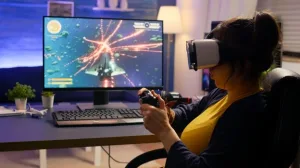
Player engagement mirrors customer engagement in broader brand strategy. It centers on encouraging players to spend more time with a game, return regularly, and deepen their involvement. Highly engaged players are also more likely to recommend a game within their social circles, increasing overall visibility and recognition.
Themed digital games play a key role in strengthening engagement. In the past, gameplay was rigid and players had to adapt to a fixed structure. Today, many games are designed to be more flexible, allowing players to approach a single concept through different play styles that match their preferences. This shift makes the experience more personalized and immersive.
Players as Co-Creators
Most themed games now have player-driven designs. That means, players not only play but also co-create the game, thanks to user-generated content (UGC). It’s any form of content created by players or users rather than the official game developers or brands.
Research found that UGC increases player retention by 30-50%. One reason for this is the salary co-creators can earn, which can be as low as $75 to as high as $750 per video. Another is how satisfied players feel when they can contribute creatively.
Player-Owned Economies
Another way players can make money is through themed digital games on Web3. This infrastructure is often dubbed as “read-write-own” web. It turns players’ in-game assets, such as skins, weapons, or virtual land, into non-fungible tokens (NFTs) that they can sell without developers’ permission.
In Axie Infinity, players earn NFTs through their pets called Axies. It is technically free to start, but earning back requires an upfront investment or a profit-sharing agreement. This year, a competitive team costs roughly $300 USD. If you don’t want to pay upfront, you can join a “scholarship” where a manager loans you their NFTs in exchange for a 30–50% cut of your earnings.
Player Authorship
Players can also shape a game’s narrative through emergent storytelling. Rather than following a fixed script, meaning develops organically from player choices and interactions within the game’s systems. In this way, players act as co authors of their own experiences.
This effect is often linked to apophenia, the human tendency to recognize patterns and assign meaning to them. For example, in Huff N More Puff, if a Wolf symbol appears near a House, players may instinctively interpret that placement as a sign the Wolf is about to “huff and puff.” Even though each spin operates independently and randomly, the mind connects the elements into a cause and effect sequence, adding narrative depth to the experience.
Vitality and Perceived Value as Engagement Drivers
Emergent storytelling can also lead to vitality. It refers to how “alive” or dynamic the game world feels in response to player actions, like how NPCs remember a past interaction with a player. This makes players get attached because their specific “take” on the theme has created a world that feels vital and unique to them.
Another V that drives high engagement in themed digital games is value. It is the tangible or perceived worth a player gains from their time and effort. Players often see this in visual hierarchies (e.g, bronze to gold) in themed games. Once they see them, they often feel a stronger sense of accomplishment, which typically makes them less likely to abandon their progress.
Cultural Relevance and Player Connection
Top-performing games now embrace cultural adaptation. Themes that have local jokes, slang, and traditional festivals (e.g., Diwali or Lunar New Year) make players feel that the game “gets” them. In fact, an industry report shows it leads to a 30% higher retention because they align with the player’s real-world mood and traditions.
The survival game PUBG Mobile often has updates based on its players’ cultural calendars. Just recently, the game features a “Golden Moon” theme in celebration of Ramadan. Players can participate in a 30-day sign-in event, a Ramadan-themed lobby, and a “Golden Moon Bazaar” to exchange items.
The Rise of Player-Centered Gaming
In 2026, themed digital games drive player engagement by becoming more player-centered. Many games now allow players to actively contribute to development through user-generated content and interactive systems. They also provide opportunities for players not only to enjoy the game but to earn income through creator economies and digital asset ownership.
In addition, developers recognize and respect players’ identities by incorporating cultural references and celebrations into the game experience. All of these factors make players feel valued, empowered, and personally connected, which encourages them to keep coming back.