As of April 2, 2026, Eli Lilly and Company (NYSE: LLY) stands as the preeminent titan of the global healthcare sector. Historically recognized as a steady, century-old pharmaceutical giant, the company has undergone a radical transformation over the last half-decade, evolving into a high-growth innovation engine. With a market capitalization that recently breached the historic $1 trillion milestone, Lilly has transcended the typical "Big Pharma" label to become a cornerstone of the modern "metabolic revolution."
Today, Lilly is the primary beneficiary of a paradigm shift in chronic disease management. Driven by its pioneering work in incretin therapies for diabetes and obesity, as well as breakthroughs in Alzheimer’s disease, the company finds itself at the intersection of massive unmet medical needs and unprecedented commercial success. This deep dive explores how Lilly successfully navigated a treacherous "patent cliff" era to become the most valuable healthcare entity in the world.
Historical Background
Founded in 1876 by Colonel Eli Lilly, a pharmaceutical chemist and veteran of the American Civil War, the company began with a commitment to high-quality manufacturing and research in Indianapolis. Lilly’s early fame was cemented in the 1920s when it became the first company to mass-produce insulin, a breakthrough that transformed Type 1 diabetes from a death sentence into a manageable condition.
Throughout the 20th century, Lilly expanded into antibiotics (penicillin, cephalosporins), oncology, and neuroscience. The 1980s saw the launch of Prozac, which revolutionized the treatment of depression and became one of the first true "blockbuster" drugs. However, the early 2010s were marked by significant challenges, as the company faced the loss of patent protection for several key products, leading to a period of stagnant growth and skepticism from Wall Street. The modern era of Lilly, defined by its leadership in metabolic health, began in the late 2010s with a pivot toward aggressive R&D and a massive bet on a new class of drugs known as GLP-1 and GIP receptor agonists.
Business Model
Lilly operates as a global, research-based biopharmaceutical corporation. Its business model is centered on the discovery, development, manufacturing, and sale of human pharmaceuticals. The company’s revenue streams are currently categorized into four primary therapeutic pillars:
- Metabolic Health (Diabetes & Obesity): This is the flagship segment, dominated by tirzepatide (Mounjaro and Zepbound). It accounts for the majority of recent growth.
- Oncology: Focused on precision medicines for solid tumors and blood cancers, led by products like Verzenio and Jaypirca.
- Immunology: Targeting autoimmune disorders such as plaque psoriasis and ulcerative colitis through drugs like Taltz, Omvoh, and Ebglyss.
- Neuroscience: A resurgent sector focused on neurodegeneration, specifically Alzheimer’s disease with the 2024 launch of Kisunla (donanemab).
Lilly utilizes a vertically integrated model, increasingly bringing manufacturing in-house to control supply chains—a strategic move that has proven critical during the recent global shortage of weight-loss medications.
Stock Performance Overview
Over the past five years, LLY has delivered returns that rival the "Magnificent Seven" tech giants, consistently outperforming the broader S&P 500 and the NYSE Arca Pharmaceutical Index.
- 1-Year Performance: Over the last 12 months (leading into April 2026), the stock has seen a consolidation phase following its run to $1,000. It remains up approximately 15% year-over-year as it digests its massive 2024–2025 gains.
- 5-Year Performance: Since early 2021, the stock has surged from roughly $185 to over $1,000, representing a return of more than 440%. This growth was fueled by the clinical success and subsequent commercial "moonshot" of tirzepatide.
- 10-Year Performance: For long-term holders, the transformation has been staggering. LLY has outperformed nearly all peers in the Dow Jones Industrial Average, evolving from a $75 stock in 2016 to a four-digit powerhouse today.
Financial Performance
Lilly’s financial profile as of early 2026 reflects a company in its peak earnings-acceleration phase.
- Revenue Growth: In FY2025, Lilly reported total revenue of $65.2 billion, a staggering 45% increase from the previous year. For FY2026, the company has guided for revenue between $80 billion and $83 billion.
- Margins: Operating margins have expanded significantly to nearly 40% as the company achieves economies of scale in its metabolic franchise.
- Net Income: Q4 2025 net income reached $6.6 billion, demonstrating the high-margin nature of its new-to-market specialty drugs.
- Valuation: LLY trades at a trailing P/E ratio of approximately 45x and a forward P/E of 28x. While expensive relative to legacy peers like Pfizer (NYSE: PFE) or Bristol-Myers Squibb (NYSE: BMY), Lilly’s PEG (Price/Earnings-to-Growth) ratio remains under 1.0, suggesting the valuation is supported by its unprecedented EPS growth.
Leadership and Management
David Ricks, who has served as CEO since 2017, is widely regarded as one of the most effective leaders in the pharmaceutical industry. Under his tenure, Lilly’s market value has increased more than tenfold.
Ricks’ strategy has been defined by three pillars:
- Manufacturing Sovereignty: Investing over $50 billion in domestic and international production capacity to ensure Lilly is not reliant on third-party manufacturers.
- R&D Speed: Reducing the time from drug discovery to commercialization by over three years, allowing Lilly to beat competitors to market.
- Portfolio Concentration: Divesting non-core assets to focus entirely on high-impact, high-growth therapeutic areas.
The management team is noted for its disciplined capital allocation, prioritizing internal R&D and manufacturing over the massive, dilutive M&A deals common in the pharmaceutical sector.
Products, Services, and Innovations
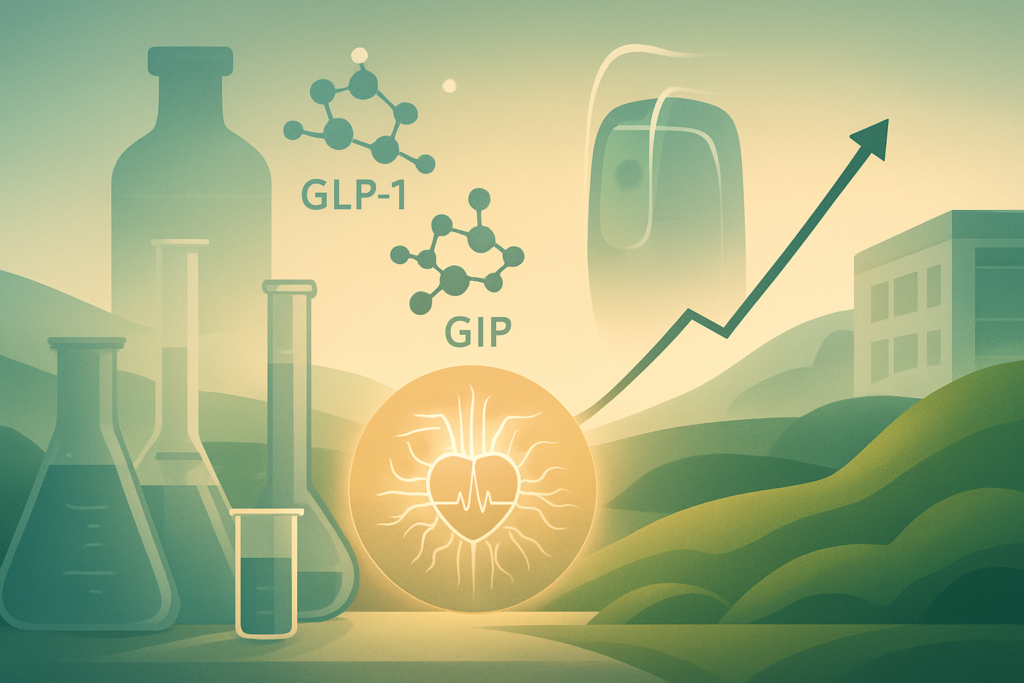
The crown jewel of Lilly’s portfolio is the tirzepatide molecule, marketed as Mounjaro for Type 2 diabetes and Zepbound for chronic weight management. These drugs, which act on both GLP-1 and GIP receptors, have shown weight loss efficacy exceeding 20% in clinical trials, setting a gold standard in the industry.
Beyond tirzepatide, Lilly has recently launched:
- Foundayo (orforglipron): An oral, non-peptide GLP-1 agonist approved in early 2026, offering a "pill-version" of weight loss therapy that eliminates the need for injections.
- Kisunla (donanemab): A therapy for early-stage Alzheimer’s disease that uniquely allows patients to stop treatment once amyloid plaques are cleared.
- Ebglyss: A high-growth treatment for atopic dermatitis (eczema).
Lilly is also pioneering the use of Artificial Intelligence (AI) in drug discovery. In late 2025, it entered a multi-billion dollar partnership with NVIDIA (NASDAQ: NVDA) to utilize generative AI to simulate molecular interactions, potentially cutting the R&D cycle for new oncology candidates by half.
Competitive Landscape
The pharmaceutical market in 2026 is dominated by the "metabolic duopoly" of Eli Lilly and Novo Nordisk (NYSE: NVO).
- Market Share: As of early 2026, Lilly has captured approximately 60% of the U.S. incretin market, largely due to its superior manufacturing capacity and the slightly higher weight-loss efficacy of tirzepatide compared to Novo’s semaglutide (Wegovy).
- Pipeline Rivalry: Novo Nordisk remains a formidable threat with its next-generation candidate, CagriSema. However, Lilly has responded with Retatrutide, a "triple agonist" currently in Phase III that targets three different hormones and shows weight loss potential approaching 30%.
- Generic Threats: While older insulin products face generic competition, the metabolic and immunology portfolios are protected by robust patent thickets that extend well into the 2030s.
Industry and Market Trends
The healthcare sector is currently being reshaped by three macro trends that favor Lilly:
- Obesity as a Gateway Disease: There is a growing clinical consensus that treating obesity is the most effective way to prevent cardiovascular disease, sleep apnea, and chronic kidney disease. This has vastly expanded the addressable market for Lilly's metabolic drugs.
- Decentralized Manufacturing: Supply chain fragility during the mid-2020s has led to "on-shoring." Lilly’s multi-billion dollar investments in Indiana, North Carolina, and Ireland have positioned it as a leader in supply chain resilience.
- Direct-to-Consumer Healthcare: Lilly’s "LillyDirect" portal, which allows patients to access prescriptions and home delivery directly from the manufacturer, is disrupting traditional pharmacy benefit manager (PBM) dominance.
Risks and Challenges
Despite its dominance, Lilly faces several critical risks:
- Regulatory Pricing Pressure: The U.S. government, through the Inflation Reduction Act (IRA), has begun negotiating prices for top-selling drugs. Jardiance and Tradjenta were among the first impacted, and Trulicity is slated for price adjustments in 2028.
- Supply Chain Execution: If any of Lilly’s massive new manufacturing "mega-sites" face regulatory delays or technical failures, the company could lose market share to competitors like Amgen (NASDAQ: AMGN) or Roche (OTC:RHHBY), who are developing their own metabolic candidates.
- Valuation Compression: Trading at nearly 30x forward earnings, the stock has "priced in" a significant amount of future success. Any miss in quarterly earnings or a clinical trial setback for a next-gen drug like Retatrutide could lead to a sharp correction.
Opportunities and Catalysts
- Retatrutide Data: Upcoming Phase III data for the triple agonist could solidify Lilly's dominance for the next decade.
- MASH Expansion: Clinical trials for MASH (liver disease) using tirzepatide are nearing completion; an approval would open a multibillion-dollar market with no current dominant therapy.
- Sleep Apnea & CKD Labels: Expanding the label for Zepbound to include specific treatments for sleep apnea and chronic kidney disease would force insurance companies to broaden coverage.
- Dividends and Buybacks: With massive cash flows, Lilly is expected to significantly increase its dividend in late 2026, attracting more income-oriented institutional investors.
Investor Sentiment and Analyst Coverage
Wall Street sentiment remains overwhelmingly bullish, though more selective than in 2024. Most major investment banks maintain "Buy" or "Overweight" ratings, with price targets ranging from $1,100 to $1,300.
Hedge fund positioning has remained high, with many managers viewing Lilly as a "defensive growth" play—a company that provides tech-like growth with the relative safety of a healthcare balance sheet. Retail sentiment is also strong, driven by the personal experiences of millions of consumers who have successfully used Lilly’s weight-loss products.
Regulatory, Policy, and Geopolitical Factors
The regulatory landscape is in a state of flux. In early 2026, Lilly entered a "Most-Favored-Nation" (MFN) agreement with the U.S. administration, voluntarily lowering the list prices of some vials to avoid more aggressive federal price-capping.
Geopolitically, Lilly’s heavy reliance on high-tech manufacturing makes it sensitive to trade relations involving specialized laboratory equipment and chemical reagents. However, its shift toward domestic manufacturing in the U.S. and EU has mitigated much of the "China-plus-one" risk that plagues other pharmaceutical firms.
Conclusion
Eli Lilly and Company has successfully transitioned from a traditional pharmaceutical manufacturer to a global leader in metabolic and neurological health. As of April 2026, the company’s "moat" is built on two primary strengths: a best-in-class R&D pipeline and a massive, proprietary manufacturing footprint.
While the high valuation and the ongoing impact of the Inflation Reduction Act represent genuine risks, Lilly’s ability to define a new standard of care for obesity and Alzheimer’s provides a multi-year growth runway. For investors, Lilly is no longer just a "dividend stock"; it is a premier growth asset that is fundamentally changing the economics of global healthcare. Investors should closely watch the launch of the oral GLP-1 (Foundayo) and the Phase III results of Retatrutide as the key indicators for the company's next phase of market dominance.
This content is intended for informational purposes only and is not financial advice.