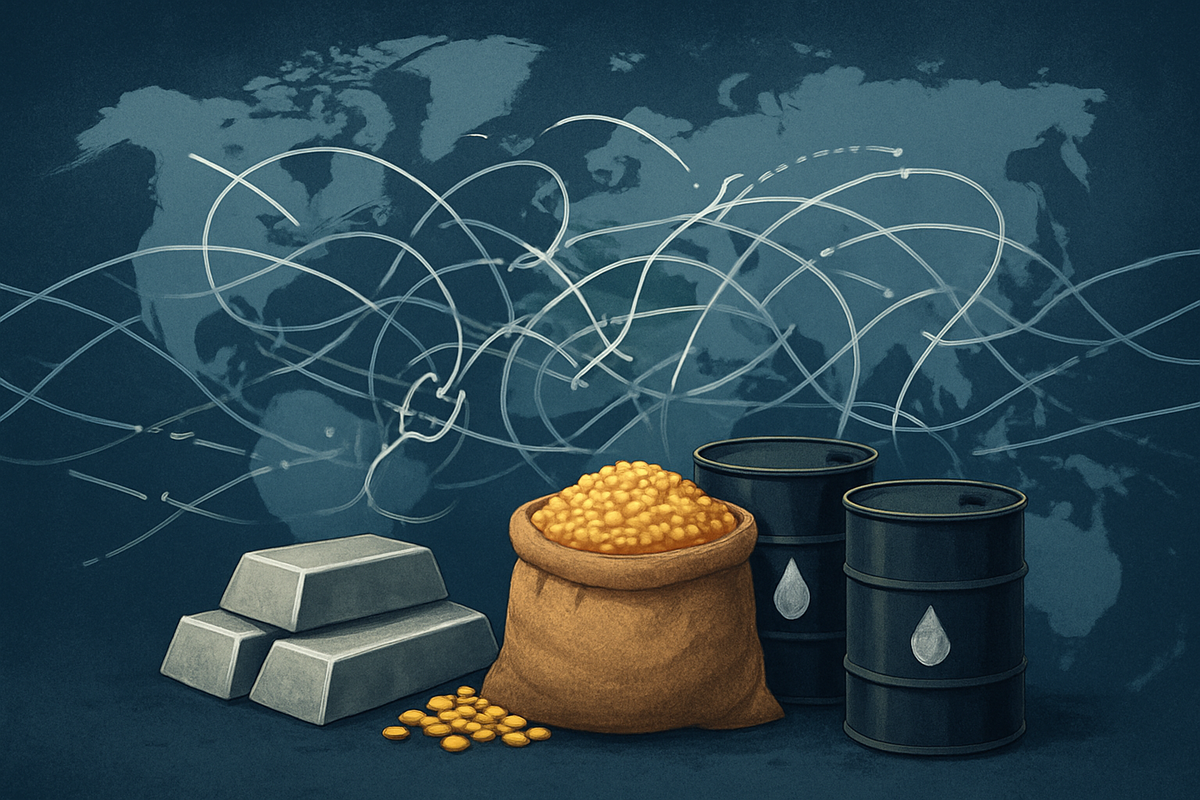
December 1, 2025 – The intricate web of global supply chains continues to face unprecedented strain, leading to a sustained upward pressure on commodity prices worldwide. As of December 1, 2025, a confluence of geopolitical tensions, climate-induced disasters, and deep-seated logistical inefficiencies are severely limiting the availability and significantly increasing the cost of essential raw materials. This ongoing disruption is not merely a transient challenge but a structural shift that reverberates through every layer of the global economy, from manufacturing floors to consumer markets.
The immediate implication of these persistent bottlenecks is a continued inflationary environment, where the cost of everything from construction materials to fresh produce remains elevated. Businesses are grappling with higher input costs, unpredictable delivery schedules, and the constant threat of stockouts, forcing them to adapt swiftly or face significant operational and financial headwinds. Consumers, in turn, are bearing the brunt of these increased costs, impacting household budgets and overall economic stability.
A Tangled Web: Unpacking the Roots of Disruption
The current state of global supply chain turmoil is the culmination of several interconnected crises, creating a complex and volatile landscape for raw material markets. Geopolitical instability remains a primary driver, with ongoing conflicts such as the Russia-Ukraine war continuing to alter trade routes and impose sanctions that reshape global commodity flows. Notably, the Red Sea crisis, necessitating prolonged diversions around the Cape of Good Hope, is projected to persist well into 2026, adding significant transit times and costs to international shipping. Furthermore, escalating US-China trade tensions, characterized by new tariffs and policy shifts, are fragmenting supply networks and introducing substantial uncertainty for manufacturers and traders alike.
Beyond geopolitics, the escalating impact of climate change and extreme weather events is a critical factor. The year 2025 has seen a continuation of severe weather patterns, from wildfires in Southern California in January that disrupted regional supply networks and presaged demand surges for construction materials, to widespread climate-induced disruptions impacting agricultural commodities globally. These events damage infrastructure, disrupt transportation, and directly affect the harvesting and extraction of raw materials. Compounding these issues are emerging threats like cyberattacks, exemplified by a major incident in the food supply chain earlier this year that caused nationwide ripple effects in the US, leading to delayed order fulfillment and temporary stockouts.
Logistical challenges and bottlenecks are further exacerbating the situation. Despite efforts to expand shipping fleets, port congestion remains at a three-month high across key hubs in Asia, Europe, and the Americas, leading to significant delays. Freight costs, while showing some fluctuations, remain stubbornly higher than in the previous year, influenced by sustained demand, capacity constraints, and operational hurdles, including new EU carbon taxes set to rise by 75% in January. Inadequate infrastructure, particularly in developing regions, along with labor shortages in critical sectors like construction and potential port worker strikes, further contribute to inefficiencies and inflate logistics expenses. These multifaceted disruptions directly translate into increased raw material costs, with prices for steel, aluminum, and copper notably higher than in 2023, and availability challenges persisting across various sectors, from critical minerals for electrification to essential construction components. A mine accident in 2025, for instance, slashed global copper output by an estimated 591,000 metric tons, pushing prices to a 15-month high and highlighting the fragility of supply.
Corporate Fortunes: Navigating the Supply Chain Maze
The persistent global supply chain disruptions create a distinct bifurcation in the corporate landscape, yielding both significant winners and substantial losers. Companies with robust, diversified supply networks, strong inventory management, or those providing solutions to these very challenges are poised to gain, while those heavily reliant on single-source suppliers, just-in-time inventory, or specific raw materials face mounting pressures.
Potential Winners:
- Logistics and Shipping Companies: Major shipping lines and logistics providers (e.g., A.P. Møller-Mærsk (CPH: MAERSK B), FedEx (NYSE: FDX), United Parcel Service (NYSE: UPS)) stand to benefit from elevated freight rates and increased demand for their services, particularly as companies seek expedited shipping or alternative routes. While fleet expansions are underway, the sustained demand and operational complexities ensure pricing power. Companies specializing in supply chain technology and optimization also see increased adoption of their solutions.
- Domestic Raw Material Producers: Producers of commodities within less disrupted regions or those with robust domestic supply chains (e.g., certain North American steel manufacturers, local lumber companies) may see increased demand and pricing power as international alternatives become more expensive or unreliable. This could benefit companies like Nucor Corporation (NYSE: NUE) or Cleveland-Cliffs Inc. (NYSE: CLF) if they can leverage domestic production advantages.
- Companies with Strong Balance Sheets and Diversified Sourcing: Large corporations with the financial muscle to absorb higher costs, invest in inventory stockpiling, or diversify their supplier base across multiple geographies are better positioned to weather the storm. Those that have strategically nearshored or reshored production will also gain a competitive edge.
- Alternative Material Developers: Companies innovating in sustainable or alternative materials that can substitute for scarce or expensive traditional raw materials may experience a surge in demand.
Potential Losers:
- Manufacturers Reliant on Specific Imported Raw Materials: Industries heavily dependent on a narrow range of imported raw materials, such as automotive (semiconductors, specific metals), electronics, and certain construction sectors, face significant production delays and increased costs. Companies like General Motors (NYSE: GM) or Tesla (NASDAQ: TSLA) could see continued pressure on their production lines due to component shortages.
- Retailers with Thin Margins: Retailers operating on tight margins, especially those in fast fashion or consumer goods, are vulnerable to rising shipping costs, inventory delays, and unpredictable stock availability, which can lead to lost sales and reduced profitability.
- Small and Medium-Sized Enterprises (SMEs): Smaller businesses often lack the negotiating power, financial reserves, or logistical expertise to navigate complex supply chain disruptions, making them disproportionately vulnerable to rising costs and delays.
- Construction and Infrastructure Companies: While some construction materials are in high demand, companies (e.g., Fluor Corporation (NYSE: FLR), KBR Inc. (NYSE: KBR)) face accelerating cost bases for steel, aluminum, copper, and cement, directly impacting project profitability and timelines, especially for fixed-price contracts.
The ability of companies to adapt their procurement strategies, invest in supply chain resilience, and effectively pass on increased costs to consumers will largely determine their success or failure in this challenging environment.
Wider Significance: A New Era of Economic Vulnerability
The persistent global supply chain disruptions transcend immediate market fluctuations, signaling a profound shift in the broader economic landscape. This phenomenon is not merely a transient post-pandemic hangover but rather an ingrained characteristic of a more fragmented and volatile global economy, fitting into broader trends of deglobalization, regionalization, and increased economic nationalism. The drive for supply chain resilience has become a strategic imperative, often superseding pure cost efficiency, as nations and corporations prioritize security of supply.
The ripple effects are pervasive, extending beyond direct competitors to entire industry ecosystems. Partners reliant on consistent and affordable raw material flows, such as smaller component manufacturers or distributors, face existential threats if their larger upstream suppliers struggle. Conversely, companies that have invested in localized production or robust inventory management are emerging as more reliable partners, potentially reshaping long-term business relationships.
Regulatory and policy implications are significant. Governments worldwide are increasingly recognizing supply chain security as a matter of national economic and even national security. This is leading to policy discussions around incentivizing domestic production, stockpiling critical materials, and strengthening international trade agreements to mitigate future shocks. For instance, discussions around subsidies for semiconductor manufacturing or critical mineral extraction are gaining traction. The new EU carbon taxes on shipping, set to increase, exemplify regulatory efforts that, while aiming for sustainability, also add another layer of cost and complexity to global logistics.
Historically, periods of significant geopolitical tension or widespread natural disasters have led to commodity price spikes, but the current confluence of factors presents a unique challenge. Unlike previous, more localized disruptions, the current situation is characterized by its global reach and multifaceted origins. Comparisons can be drawn to the oil shocks of the 1970s or the early 2000s commodity supercycle, but the underlying mechanisms today involve a far more complex interplay of physical bottlenecks, digital vulnerabilities (cyberattacks), and a shifting geopolitical order. This era highlights the vulnerability of highly optimized, just-in-time global systems to even minor perturbations, forcing a re-evaluation of efficiency versus resilience.
What Comes Next: Navigating an Uncertain Future
Looking ahead, the short-term outlook suggests a continued period of volatility and elevated commodity prices, with no immediate end in sight for the underlying supply chain pressures. Companies will likely continue to prioritize building inventory buffers, diversifying their supplier bases, and exploring nearshoring or reshoring options to mitigate risks. The increased fleet capacity in ocean freight might offer some relief on certain routes, but port congestion and geopolitical flashpoints will likely keep overall shipping costs and lead times unpredictable. For consumers, this means continued inflationary pressures on goods reliant on these raw materials.
In the long term, the global economy is poised for significant strategic pivots and adaptations. We can expect to see a more regionalized approach to manufacturing and sourcing, with a greater emphasis on redundant supply chains rather than single points of failure. Investments in advanced manufacturing technologies, such as automation and additive manufacturing, could also gain traction as companies seek to reduce reliance on complex global logistics. The development of new trade routes and infrastructure projects aimed at bypassing problematic choke points, particularly in critical mineral supply chains, will also be crucial.
Market opportunities will emerge for businesses that can offer innovative solutions to supply chain resilience, including advanced analytics platforms, logistics optimization software, and sustainable alternative materials. Furthermore, countries rich in critical raw materials or with stable domestic production capabilities may see increased foreign direct investment. However, challenges will persist for industries unable to absorb higher costs or adapt their production models. Potential scenarios range from a gradual, uneven normalization of supply chains by late 2026 or early 2027, contingent on geopolitical de-escalation and successful infrastructure investments, to a more prolonged period of elevated costs and fragmented trade if current tensions persist or worsen. Investors should prepare for continued commodity price volatility and a re-evaluation of traditional investment strategies, favoring companies with proven resilience and adaptability.
Wrap-up: Resilience as the New Imperative
The persistent impact of global supply chain disruptions on commodity prices represents a defining economic challenge of our time. The key takeaways from this ongoing saga are clear: the era of frictionless global trade, driven solely by cost optimization, is giving way to one where resilience, security, and diversification are paramount. Geopolitical instability, climate change, and logistical bottlenecks have converged to create a "new normal" where raw material availability and cost are inherently less predictable.
Moving forward, the market will increasingly reward companies that have proactively invested in robust supply chain strategies, including localized sourcing, strategic inventory management, and technological integration to enhance visibility and agility. Those that fail to adapt risk significant competitive disadvantages and erosion of profitability. The inflationary pressures stemming from these disruptions are likely to persist, challenging central banks and policymakers to manage economic stability in a structurally altered global environment.
Investors in the coming months should closely monitor geopolitical developments, particularly in key trade routes and raw material-producing regions. Attention should also be paid to government policies aimed at supply chain fortification and the performance of companies across the logistics, manufacturing, and raw materials sectors. The ability of businesses to innovate and adapt their supply chain models will be a critical determinant of success, making resilience not just a buzzword, but a fundamental driver of long-term value in a perpetually interconnected yet increasingly unpredictable world.
This content is intended for informational purposes only and is not financial advice