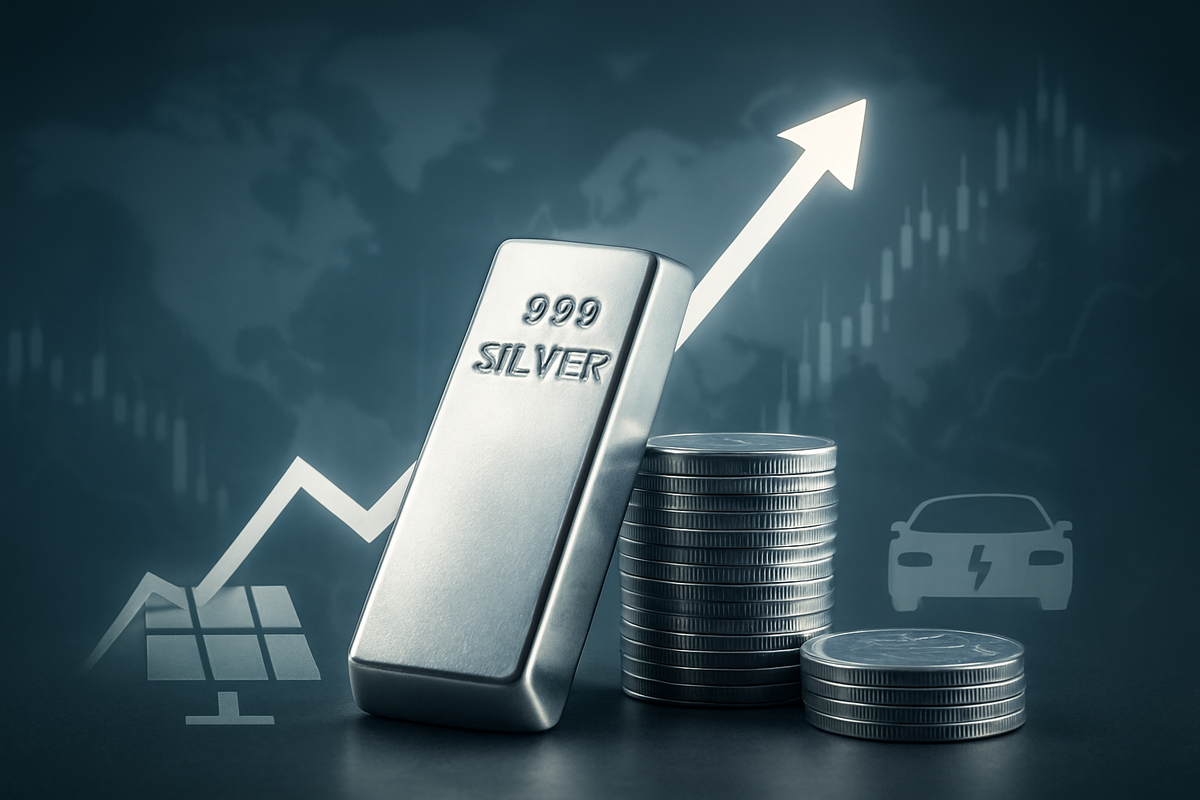
In a stunning display of market strength, silver has recently achieved a historic milestone, soaring to a record high of $66 per ounce around December 17, 2025. This unprecedented rally, which has seen the precious metal outperforming gold with gains exceeding 100% year-to-date, has captivated global financial markets and sent a clear signal of shifting investor sentiment. The surge is not merely a fleeting moment, but rather a reflection of a confluence of powerful economic and industrial forces that are reshaping the landscape for this critical commodity.
The immediate implications of this surge are multifaceted, offering both significant opportunities and considerable challenges. For existing investors, the dramatic price appreciation has translated into substantial profits, while new market entrants are eyeing the potential for silver to breach the $70 mark. However, silver's characteristic volatility means that while rewards can be high, risks are equally pronounced. Beyond the speculative appeal, this rally underscores silver's growing importance as a dual-purpose asset—a safe haven in uncertain times and an indispensable component in the burgeoning green energy and technology sectors.
The Silver Streak: A Deep Dive into the Record-Breaking Rally
Silver's ascent to a record $66 per ounce, with intra-day peaks reported as high as $66.51, marks a pivotal moment in the commodity markets. This remarkable surge is the culmination of several powerful, converging trends that have been building throughout 2025. The rally has seen silver's value more than double, and in some analyses, even triple, since the beginning of the year, significantly outpacing its yellow metal counterpart, gold, which has also reached record highs (over $4,000 per ounce).
The timeline leading up to this moment reveals a steady strengthening of bullish factors. Throughout 2025, persistent weak U.S. economic data, including a rising unemployment rate (4.6% in November), mixed jobs reports, and subdued retail sales, fueled growing fears of an impending recession. This economic uncertainty, coupled with ongoing geopolitical tensions, has driven investors towards traditional safe-haven assets. Simultaneously, the accelerating global push towards renewable energy and advanced technology has dramatically amplified industrial demand for silver. Early in 2025, the U.S. government's designation of silver as a "critical mineral" further cemented its strategic importance, providing a long-term demand floor.
Key players in this rally include institutional investors seeking portfolio diversification and hedge funds betting on continued price appreciation. Retail investors have also played a significant role, drawn by silver's relative affordability compared to gold and its potential for substantial gains. The initial market reaction has been overwhelmingly positive among commodity traders and precious metals enthusiasts, with many analysts now revising their price targets upwards, with $70 per ounce being a commonly cited near-term goal. However, some cautious voices warn of potential short-term pullbacks due to the rapid pace of the rally, advising investors to brace for volatility.
Companies Poised to Win and Lose in the Silver Surge
The unprecedented surge in silver prices to $66 an ounce is creating a ripple effect across various industries, establishing clear winners and potential losers. Companies involved in silver mining and exploration are undoubtedly at the forefront of those set to benefit, while industries heavily reliant on silver as a raw material face increasing cost pressures.
Mining companies with significant silver reserves or those primarily focused on silver extraction stand to gain immensely. Firms such as Pan American Silver Corp. (NASDAQ: PAAS), Hecla Mining Company (NYSE: HL), and First Majestic Silver Corp. (NYSE: AG) are experiencing a substantial boost to their revenue and profit margins as the value of their primary product skyrockets. Increased prices allow these companies to realize greater returns on their output, potentially leading to higher earnings, increased exploration budgets, and improved shareholder value through dividends or share buybacks. Even diversified miners like BHP Group (NYSE: BHP) or Rio Tinto (NYSE: RIO), which produce silver as a byproduct, will see a positive impact on their overall profitability, although silver's contribution to their total revenue might be smaller.
Conversely, industries with high silver consumption are likely to face headwinds. Manufacturers of solar panels, electric vehicles (EVs), and various electronic components will see their raw material costs escalate significantly. Companies like First Solar, Inc. (NASDAQ: FSLR) in the solar sector, or major automotive manufacturers like Tesla, Inc. (NASDAQ: TSLA) and General Motors Company (NYSE: GM) that utilize silver in their EV batteries and electrical systems, will need to absorb these higher costs, pass them on to consumers, or find innovative ways to reduce silver content. This could lead to compressed profit margins, increased consumer prices, or a slowdown in production if cost pressures become too severe. The electronics sector, encompassing a vast array of companies from smartphone manufacturers to data center equipment providers, will also feel the pinch, potentially impacting their competitive landscape and pricing strategies.
Wider Significance: Silver's Role in a Shifting Global Economy
The surge in silver prices to a record $66 and the outlook towards $70 carry a wider significance that extends beyond mere commodity trading, reflecting profound shifts in global economic trends, geopolitical landscapes, and industrial evolution. This event underscores silver's increasingly critical role in both the financial and industrial spheres, positioning it as a bellwether for broader market dynamics.
This rally fits perfectly into the broader industry trend of increasing demand for "green metals" and critical minerals. As the world accelerates its transition to renewable energy sources, the demand for materials like silver, copper, and lithium is skyrocketing. Silver, being a crucial component in solar panels, electric vehicles, and 5G technology, is benefiting directly from this global push. The U.S. government's recent designation of silver as a "critical mineral" is not just symbolic; it signals a strategic national interest in securing supply chains for this metal, potentially leading to policy implications that favor domestic production or strategic stockpiling. This move could further tighten supply in the open market and exert upward pressure on prices.
The ripple effects of this silver surge are substantial. Competitors in the precious metals market, particularly gold, are seeing renewed interest, though silver's percentage gains have been more dramatic. For industrial consumers, higher silver prices could spur innovation in material science, pushing companies to research and develop alternative, less expensive conductive materials or more efficient ways to use silver. Regulatory bodies might also begin to scrutinize the silver market more closely, especially if price volatility leads to concerns about market manipulation or excessive speculation. Historically, periods of high inflation and economic uncertainty have often seen precious metals perform strongly, and the current environment—marked by persistent inflation fears, geopolitical instability, and dovish monetary policy expectations—mirrors these precedents, reinforcing silver's safe-haven appeal.
What Comes Next: Navigating Silver's Future Trajectory
The future trajectory of silver, following its historic surge to $66 an ounce and with analysts eyeing the $70 mark, presents a complex interplay of short-term volatility and long-term bullish potential. Investors and industries alike must prepare for various scenarios and adapt their strategies accordingly.
In the short term, while the momentum is strong, the market could experience pullbacks or corrections as some investors lock in profits. Silver's inherent volatility means that rapid price swings are not uncommon. However, the fundamental drivers—persistent supply deficits, escalating industrial demand, and ongoing macroeconomic uncertainty—are expected to provide strong support, preventing any significant or prolonged downturn. Short-term opportunities may emerge for nimble traders to capitalize on these fluctuations, while long-term investors might view any dips as buying opportunities.
Looking further ahead, the long-term possibilities for silver remain overwhelmingly positive. The continued expansion of solar energy, the accelerating adoption of electric vehicles, and the build-out of 5G infrastructure are structural demand drivers that are unlikely to abate. This sustained industrial demand, coupled with diminishing mine supply and increasing safe-haven appeal, suggests that silver could establish a new, higher price floor. Potential strategic pivots for companies include accelerated investment in silver exploration and mining technologies to boost output, or for consuming industries, a renewed focus on recycling silver and optimizing its use to mitigate rising costs. Market opportunities will emerge in innovative recycling technologies, advanced material substitutes, and potentially new financial instruments designed to hedge against silver price fluctuations.
Comprehensive Wrap-Up: Silver's Enduring Significance
The unprecedented surge in silver prices to a record $66 an ounce, with a clear path towards $70, stands as one of the most significant financial market events of 2025. This rally is not merely a speculative bubble but a robust affirmation of silver's dual and increasingly vital role as both a safe-haven asset in turbulent economic times and an indispensable industrial commodity fueling the global technological and green energy revolutions.
Key takeaways from this event highlight the powerful confluence of factors driving silver's ascent: dwindling supply amidst persistent deficits, skyrocketing industrial demand from critical sectors like solar and EVs, and heightened investor demand for hedges against inflation and economic uncertainty. The market is moving forward with a clear recognition of silver's strategic importance, further solidified by its recent designation as a "critical mineral" by the U.S. government. This transformation from a somewhat overlooked precious metal to a strategic asset with profound industrial implications underscores its lasting impact on global supply chains and economic development.
Investors should watch for several key indicators in the coming months. These include further economic data releases from major economies, particularly the U.S., which could influence safe-haven demand. Developments in global renewable energy policies and technological advancements in silver-consuming industries will also be crucial. Furthermore, monitoring the supply side, including new mine discoveries and production capacities, will be essential for gauging market balance. While short-term volatility is to be expected, the long-term outlook for silver appears robust, making it a compelling asset for diversification and a strategic holding in a forward-looking portfolio.
This content is intended for informational purposes only and is not financial advice