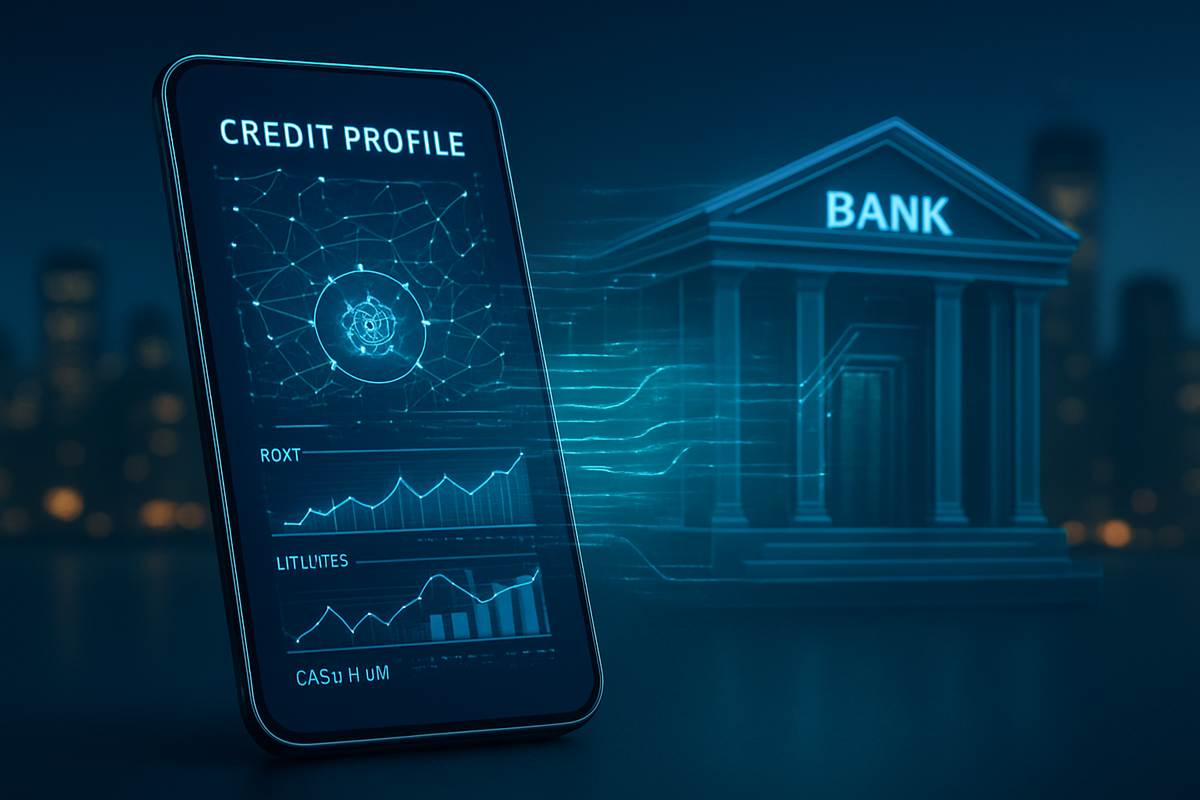
As of January 1, 2026, the United States consumer finance sector stands at a pivotal crossroads, caught between a cooling macroeconomic climate and a regulatory landscape undergoing a massive "recalibration." Following a cycle of interest rate adjustments and a landmark shift in how consumer data is handled, the industry is moving away from traditional, static credit scoring toward a dynamic, AI-driven model. This evolution is fundamentally altering the relationship between lenders, fintech platforms, and the millions of Americans seeking credit in an increasingly complex economy.
The immediate implications are profound: while the Federal Reserve has managed to guide the economy toward a "soft landing" with interest rates now hovering between 3.25% and 3.50%, the cost of borrowing remains "sticky" for many. This environment has accelerated the adoption of alternative credit data, as lenders look for more precise ways to assess risk. For companies like Intuit (NASDAQ: INTU), this transition represents a massive opportunity to leverage their vast data ecosystems, even as traditional banking institutions grapple with the technical and regulatory costs of a new "open banking" era.
The Regulatory Tug-of-War and a "K-Shaped" Macro Reality
The journey to 2026 has been marked by significant regulatory drama, specifically regarding Section 1033 of the Dodd-Frank Act. Originally intended to mandate "open banking" by allowing consumers to easily share their financial data with third-party apps, the CFPB's October 2024 final rule hit a major roadblock in July 2025 when it was stayed by court order. Since then, the regulatory focus has shifted from a mandatory "one-size-fits-all" implementation to a more nuanced recalibration. Under new leadership in late 2025, the CFPB issued an Advance Notice of Proposed Rulemaking to address concerns over cost allocation—potentially allowing banks to charge fees for API access—and the fiduciary duties of fintech "representatives."
While the legal battles continue, the macroeconomic backdrop has forced the industry’s hand. Entering 2026, PCE inflation has moderated to approximately 2.7%, yet consumer sentiment remains cautious. A late-2025 government shutdown and a cooling labor market, with unemployment ticking up to 4.5%, have created a "K-shaped" credit environment. High-income borrowers continue to enjoy prime rates, while middle-to-low-income households are increasingly reliant on "thin-file" credit assessments to access liquidity. This has made the transition to modern scoring models like VantageScore 4.0—which incorporates rent and utility payments—a necessity rather than a luxury for lenders.
The timeline leading to this moment was punctuated by the Federal Housing Finance Agency’s (FHFA) decision in early 2025 to allow "bi-merge" credit reports for mortgages, reducing the burden on lenders to pull data from all three major bureaus. Meanwhile, the mandatory transition to FICO 10T, once slated for a hard deadline, has been pushed into a "TBD" status as the industry awaits more comprehensive historical data. This delay has inadvertently benefited VantageScore, which has become the de facto standard for lenders looking to capture the "thin-file" market in early 2026.
Winners and Losers in the New Credit Paradigm
In this shifting landscape, Intuit (NASDAQ: INTU) has emerged as a dominant force. By integrating its TurboTax and Credit Karma platforms into a singular "Agentic AI" ecosystem, Intuit has effectively bypassed many of the regulatory hurdles facing its competitors. Its new "Credit Spark" tool allows users to build credit profiles using non-traditional data, which Intuit then uses to match them with lenders on its marketplace. This "year-round financial concierge" model saw Intuit report an 18% revenue growth in its most recent quarterly earnings, proving that owning the data-consumer interface is more valuable than holding the balance sheet risk.
On the other side of the ledger, traditional regional banks and smaller credit unions are facing a "tech tax" crisis. The potential for banks to charge for API access, a debate still raging in the halls of the CFPB, could provide a lifeline for some. However, companies like JPMorgan Chase (NYSE: JPM) are already well-ahead, having invested billions in proprietary data layers that allow them to compete with fintechs on speed and personalization. For smaller institutions, the cost of upgrading legacy systems to meet even the "recalibrated" Section 1033 standards is proving to be a significant barrier to entry, likely leading to further consolidation in the banking sector throughout 2026.
Fintech pioneers like SoFi Technologies (NASDAQ: SOFI) and Upstart Holdings (NASDAQ: UPST) are also finding a second wind. After a grueling 2024 and 2025 defined by high interest rates, the 2026 "insurance cuts" by the Fed have lowered their cost of capital. Upstart, in particular, is benefiting from the industry’s wider acceptance of AI-driven underwriting. As traditional FICO scores (NYSE: FICO) lose their monopoly on creditworthiness, Upstart’s ability to use thousands of variables to predict default risk is becoming increasingly attractive to partner banks who are desperate to find yield in a low-growth GDP environment.
Wider Significance: The Death of the Static Credit Score
The events of 2026 represent a fundamental shift in the philosophy of US consumer finance. We are witnessing the "death of the static credit score." For decades, a consumer’s financial life was distilled into a single three-digit number that updated once a month. Today, the industry is moving toward "cash-flow underwriting"—a real-time assessment of a person’s ability to pay based on their actual bank transactions, spending habits, and even employment stability. This trend fits into a broader global move toward "Open Finance," where a consumer’s data is their most valuable asset.
This shift has significant ripple effects on data privacy and policy. As AI agents begin to manage finances—automatically moving money to high-yield accounts or refinancing debt the moment a better rate appears—the definition of "consumer protection" is being rewritten. The CFPB’s ongoing debate over whether fintechs should have a fiduciary duty to their users is a direct response to this "agentic" shift. Historically, this is comparable to the transition from manual ledger banking to the introduction of the first credit cards in the 1950s; it is a total re-plumbing of the financial system.
Furthermore, the delay in Section 1033 and FICO 10T implementation highlights a growing tension between innovation and stability. Regulators are wary of moving too fast and breaking the mortgage market, which remains the bedrock of the US economy. However, by allowing "optionality" in credit models, the FHFA has created a competitive laboratory where the most accurate algorithms—not the most established ones—will eventually win. This competition is expected to drive down the cost of credit for millions of previously "unscoreable" Americans, potentially adding billions to the economy over the next decade.
What Comes Next: The Rise of the Financial AI Agent
In the short term, expect a flurry of strategic pivots as lenders race to integrate "Agentic AI" into their consumer-facing apps. By the end of 2026, the standard banking app will likely function more like a sophisticated GPS for money, proactively steering users away from high-interest debt and toward wealth-building opportunities. For investors, the key will be identifying which companies successfully transition from "tools" to "agents." Intuit’s early lead in this space suggests that the future of consumer finance may belong to those who can provide the most seamless, automated experience.
Long-term, the industry is bracing for a potential "API Economy" where financial data is traded as a commodity. If the CFPB eventually allows banks to charge for data access, we could see a new revenue stream emerge for traditional institutions, offsetting some of the losses from the decline in traditional lending margins. However, this could also create a "pay-to-play" environment that favors large incumbents over scrappy startups. The market will likely see a series of "strategic partnerships" in the coming months as fintechs seek to secure long-term data access agreements with major banks to bypass future regulatory uncertainty.
A New Era for the American Borrower
As we navigate the first half of 2026, the US consumer finance sector is more dynamic—and more fragmented—than ever before. The "Great Unlocking" of financial data is well underway, even if the regulatory roadmap has hit a few detours. The key takeaway for the market is that the technological genie is out of the bottle; whether through Section 1033 or private API agreements, the move toward open, AI-driven finance is irreversible.
Investors should keep a close eye on the "spread" between traditional FICO-based lending and the newer, alternative data models. If VantageScore 4.0 and AI-driven models like Upstart's continue to show lower default rates during this period of economic cooling, the shift away from traditional scoring will accelerate. For the average consumer, 2026 promises a world where their creditworthiness is defined by their total financial picture, not just a historical snapshot. The coming months will determine who owns the "interface" to that picture, and the stakes could not be higher.
This content is intended for informational purposes only and is not financial advice