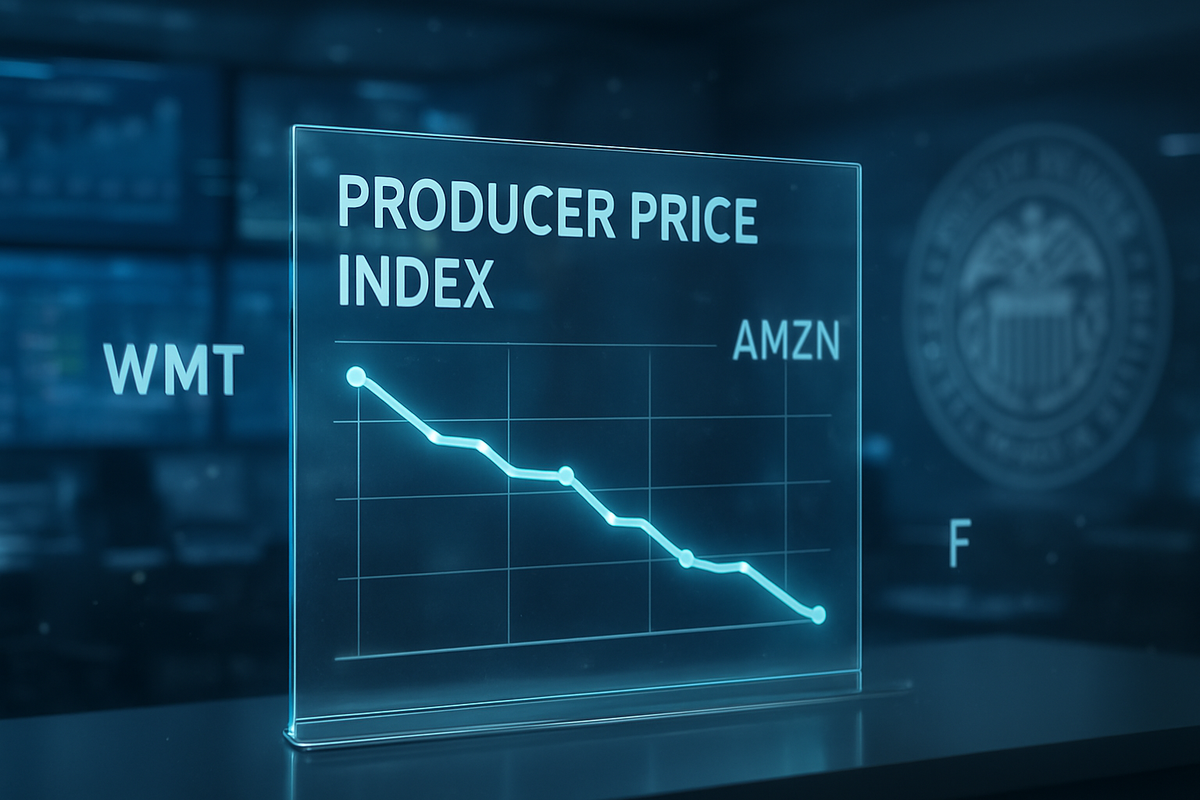
The long-awaited release of the November Producer Price Index (PPI) has finally provided a clear, if delayed, signal that wholesale inflation is continuing its downward trajectory. In a report that market participants have been anticipating for weeks, the Bureau of Labor Statistics revealed that wholesale prices rose by just 0.2% in November. This figure came in notably lower than the 0.3% increase forecasted by most Wall Street economists, offering a rare moment of optimism as the market navigates a complex transition into the new year.
This "beat" on the headline number suggests that the inflationary pressures that plagued the supply chain throughout much of 2025 are finally losing their grip. For a Federal Reserve currently caught between a cooling labor market and political pressure, this data point serves as a crucial piece of evidence that the "soft landing" remains a viable scenario for 2026. The immediate market reaction saw a modest rally in interest-rate-sensitive sectors, as investors began to price in a more accommodative stance from the Fed in the coming quarters.
The 43-Day Blackout: How We Got Here
The release of this data on January 22, 2026, marks the end of a chaotic period in economic reporting. The November PPI data was initially delayed by a historic 43-day federal government shutdown that paralyzed administrative agencies from October 1 through mid-November 2025. During this "data blackout," the Bureau of Labor Statistics (BLS) was forced to suspend its price collection and processing, leaving the Federal Reserve and private sector analysts "flying blind" during one of the most critical windows for monetary policy.
The timeline leading up to today's announcement was fraught with logistical hurdles. Even after the government reopened on November 12, the BLS faced a massive backlog, requiring a "catch-up" period where October and November data were processed simultaneously. The 0.2% reading for November, following a similarly subdued performance in core metrics, indicates that the supply-side shocks—once the primary driver of the post-pandemic inflation surge—have largely neutralized. Key players, including Fed Chair Jerome Powell and National Economic Council Director Kevin Hassett, have been closely monitoring this specific release to determine if the 2025 rate-cut cycle should be extended into early 2026.
Initial market reactions were swift. Treasury yields, which had been creeping higher on fears of "sticky" inflation, eased slightly following the report. The cooling in wholesale prices was particularly evident in the final demand services category, which remained unchanged, suggesting that the wage-price spiral that many feared would take root in the service sector is failing to materialize. This data release effectively serves as a "reset" for the economic narrative, shifting the focus from inflation persistence to the sustainability of economic growth.
Winners and Losers in a Lower-Cost Environment
The ripple effects of lower wholesale prices are felt most acutely by large-scale retailers and manufacturers who have spent the last two years battling margin compression. Walmart Inc. (NYSE: WMT) stands out as a primary beneficiary; the retail giant has leveraged its massive scale and AI-driven supply chain automation to capitalize on falling wholesale costs. With PPI coming in lower than expected, Walmart's ability to maintain its "Everyday Low Price" strategy while expanding its operating margins has pushed its stock toward record highs this January.
Similarly, Amazon.com, Inc. (NASDAQ: AMZN) is poised to gain significantly. As the company continues to dominate U.S. e-commerce, lower input costs for its private-label goods and reduced logistics expenses—which were previously inflated by energy prices—provide a tailwind for its retail division. Conversely, the manufacturing sector presents a more nuanced picture. While Caterpillar Inc. (NYSE: CAT) has benefited from an "Industrial Supercycle" driven by data center construction, the lower PPI data suggests that the company may lose some of its hard-earned pricing power as its competitors also see their input costs fall.
On the losing end of this trend are the traditional energy-heavy firms. A significant portion of the PPI's moderation came from a stabilization in energy and raw material costs. While this is a win for the broader economy, it signals a period of lower revenue growth for upstream producers. Furthermore, mid-tier retailers that lack the logistical efficiency of a Walmart or Amazon may find themselves in a "margin squeeze" if they are forced to lower prices to stay competitive before they can fully realize the benefits of lower wholesale costs in their own inventory cycles.
Broader Significance and the Fed's New Path
This latest PPI print fits into a broader trend of "disinflationary momentum" that has been the hallmark of the late 2025 economic landscape. Historically, when the PPI begins to lead the Consumer Price Index (CPI) downward by a significant margin, it signals that the inflationary "pipe" is clearing. For the Federal Reserve, this 0.2% reading provides the intellectual cover needed to maintain the current federal funds rate of 3.50%–3.75%, or perhaps even consider another cut if employment data continues to soften.
The regulatory and policy implications are equally profound. The Fed is currently under intense scrutiny, with Jerome Powell facing a DOJ investigation and the Trump administration advocating for more aggressive rate cuts to stimulate a slowing labor market, which added only 50,000 jobs in December. This PPI data validates the "dovish" argument, suggesting that the Fed has successfully tightened enough to contain prices without triggering a deep recession. It draws comparisons to the "Goldilocks" environment of the mid-1990s, where productivity gains and supply-side cooling allowed for growth without a price surge.
However, the shadow of the 2025 government shutdown remains. The "data vacuum" created by the 43-day lapse has made the Fed more "look-back" dependent than usual. There is a risk that the delay in this data has caused a policy lag; if the Fed had seen this 0.2% figure in mid-December, they might have been even more aggressive in their year-end meeting. The precedent set by this shutdown-induced delay will likely lead to calls for more resilient, non-governmental data collection methods to prevent such "blackouts" in the future.
What Comes Next: The 2026 Strategy
In the short term, all eyes will shift to the upcoming FOMC meeting on January 27–28. While a "hold" is the consensus, the tone of the meeting is expected to shift significantly toward "normalization." Investors should prepare for a strategic pivot where the Fed officially moves away from its "restrictive" stance and begins discussing a "neutral" rate—likely closer to 3.0%. This would represent a significant opportunity for growth-oriented stocks and the real estate sector, which have been sidelined by high borrowing costs.
Long-term, the market will need to adapt to a "low-inflation, low-growth" scenario. As wholesale prices stabilize, the competitive advantage will shift from those who can manage inflation to those who can drive volume and efficiency. Companies like Ford Motor Company (NYSE: F), which is already pivoting toward hybrid vehicles to meet affordability demands, will need to accelerate their strategic transitions to stay ahead of a consumer base that remains cautious despite the cooling price data.
Potential scenarios include a "re-acceleration" of the economy if the Fed cuts rates too quickly in response to this PPI beat, or a "slow burn" where growth remains sluggish despite the lack of inflation. The primary challenge for investors will be distinguishing between a healthy cooling of the economy and a more concerning slowdown in demand. The January 30 release of the December PPI data will be the next major hurdle to confirm today's encouraging trend.
Conclusion: A Market in Transition
The 0.2% November PPI print is more than just a data point; it is a signal that the extreme volatility of the 2020s inflationary era may finally be concluding. The combination of supply chain normalization and a cautious Federal Reserve has created a window of stability that the market has not seen in years. The key takeaway for investors is that the "inflation bogeyman" is receding, but it is being replaced by questions about the strength of the underlying consumer and the stability of the labor market.
Moving forward, the market is likely to reward "efficiency leaders" and companies with strong balance sheets that can thrive in a lower-interest-rate environment. What investors should watch for in the coming months is the "pass-through" effect—how quickly these lower wholesale prices translate into lower costs for consumers. If CPI follows PPI downward without a collapse in spending, the elusive "soft landing" will be more than just a theory; it will be the defining economic reality of 2026.
This content is intended for informational purposes only and is not financial advice.