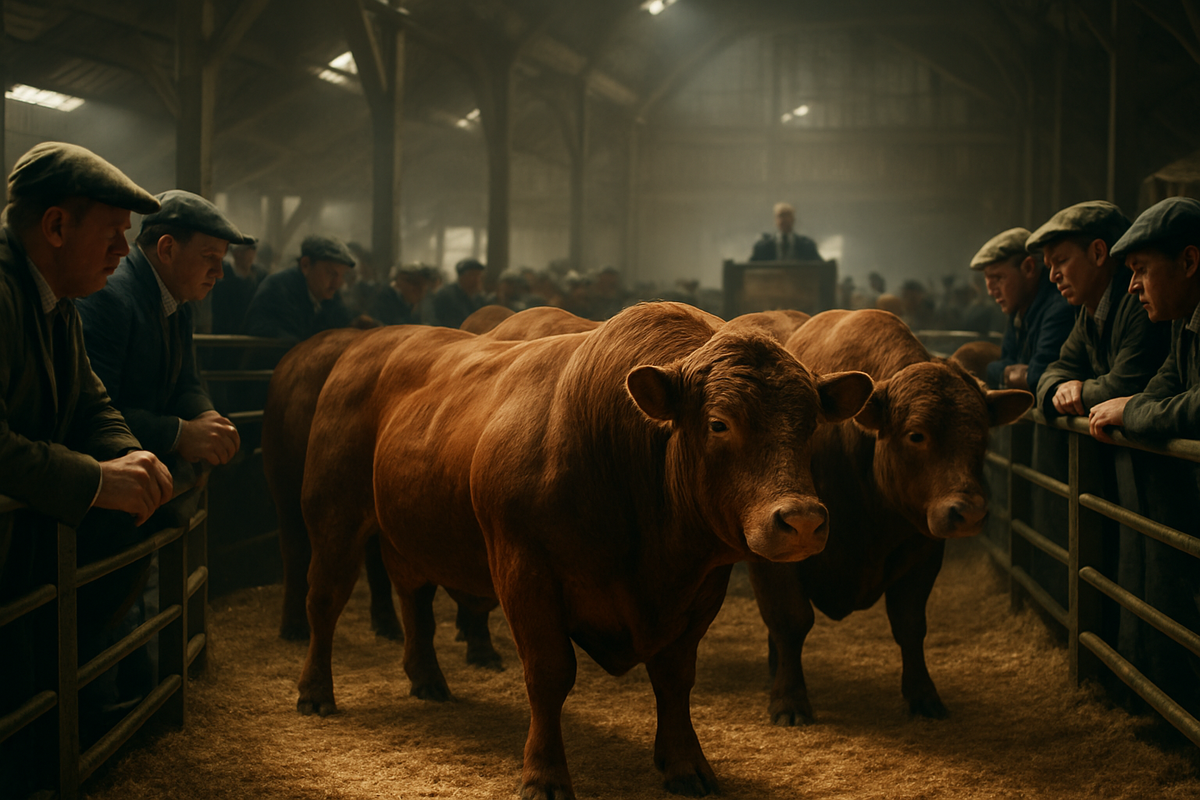
The livestock market has kicked off 2026 with a surge of activity, as tight supplies and robust demand continue to push prices toward historic highs. At the recent Holsworthy Market auction on January 7, 2026, the atmosphere was described by traders as "on fire," with a massive entry of livestock meeting a fierce bidding environment. While the broader agricultural sector has faced headwinds from policy shifts and high interest rates, the cattle trade has remained remarkably resilient, buoyed by a contraction in the national herd and a stabilizing cost of production.
This momentum is not limited to a single category. From store cattle to finished steers, the market is reflecting a fundamental imbalance between supply and demand. A standout figure from the recent Holsworthy auction was the average price of 337.1ppk for medium weights in the sheep sector, a benchmark that underscores the aggressive pricing currently permeating the entire livestock pavilion. For cattle, the story is equally compelling, with top-tier steers fetching upwards of £2,300 per head, signaling that the "bull run" of 2025 has transitioned into a sustained period of high-value trading in early 2026.
A "Mammoth" Start at Holsworthy: Breaking Down the Auction Results
The first major sales of 2026 have provided a clear barometer for the year ahead. At the Holsworthy livestock market, the entry of 453 calves and weaned calves was described as "mammoth," yet the high volume did nothing to dampen prices. The top price of the day reached £2,300 for a 24-month-old Aberdeen Angus steer, highlighting the premium that buyers are willing to pay for well-finished, native-breed cattle. This follows a timeline of escalating values throughout 2025, where prime deadweight prices hit an all-time peak of over 700p/kg in May before stabilizing in the 630p/kg to 650p/kg range as we enter January 2026.
Key stakeholders, including auctioneers at Kivells and regional farming unions, have noted that the "store" trade—cattle intended for further fattening—is exceptionally strong. Finishers are currently paying record prices to secure stock, with 12-to-18-month native steers averaging approximately £1,556 per head. This aggressive buying is driven by a decrease in the total UK cattle population, which has fallen to roughly 9.29 million head. The contraction of the suckler herd, down 12% over the last five years, has created a "supply floor" that prevents prices from retreating, even as consumer spending remains under pressure.
Initial market reactions to the January reports suggest that the industry has largely shrugged off the volatility of late 2025. While changes to inheritance tax thresholds and agricultural property relief caused a brief dip in farmer confidence in November, the stabilization of these policies has allowed producers to refocus on the market fundamentals. The demand for manufacturing-grade beef also remains a critical driver; cull cow prices are currently averaging between 358p/kg and 366p/kg, narrowing the gap between processing beef and prime cuts.
Winners and Losers in the Livestock Value Chain
The current pricing environment creates a complex landscape for public companies involved in the meat processing and retail sectors. Hilton Food Group PLC (LSE:HFG), a major international food packaging and processing business, stands in a delicate position. While high livestock prices can squeeze margins for processors, Hilton’s highly automated facilities and long-term retail partnerships often allow them to pass through costs or find efficiencies. However, prolonged high raw material costs may eventually test the limits of consumer price elasticity.
On the retail side, giants like Tesco PLC (LSE:TSCO) and J Sainsbury PLC (LSE:SBRY) are navigating a difficult balancing act. To maintain their "British-sourced" commitments, they must pay the premium prices demanded by the current market. However, with red meat inflation hovering near 13.7%, they risk losing volume to cheaper protein alternatives or discount retailers. Conversely, meat processors like Cranswick PLC (LSE:CWK), which has been diversifying its protein portfolio, may find better resilience than pure-play beef processors, though the high cost of cattle remains a significant line item on their balance sheets.
Global players like JBS S.A. (OTCMKTS:JBSAY) and Tyson Foods (NYSE: TSN) are also watching the UK and European markets closely. As UK supply tightens, there is an opening for high-quality imports, though strict post-Brexit standards and the UK's new "negligible risk" status for BSE (Bovine Spongiform Encephalopathy) make the UK a more formidable competitor on the global stage. For these international firms, the UK's high price floor makes it an attractive destination for premium exports, provided they can navigate the regulatory landscape.
Structural Shifts and the "Negible Risk" Milestone
The wider significance of the current cattle market trends lies in the structural evolution of the industry. The UK’s achievement of "negligible risk" status for BSE in 2025 is a historical turning point that is only now beginning to pay dividends. This status has opened new export markets for British beef, particularly for "fifth-quarter" products (offal) in Asia and North America. This added value for parts of the animal that were previously discarded or sold for low value is providing an essential boost to the overall carcass value, supporting the high prices seen at auctions like Holsworthy.
Furthermore, there is a notable shift in production strategies. Lower feed and fertilizer costs in late 2025 have encouraged farmers to keep cattle on-farm longer, leading to heavier finished weights. The average prime carcass weight has risen to approximately 348kg, up nearly 2kg year-on-year. However, this increase in weight is being met by a change in quality; as the specialized suckler herd contracts, a higher percentage of beef is being sourced from the dairy herd. This trend toward "dairy-beef" is resulting in leaner carcasses with lower conformation scores, a shift that processors must adapt to as they meet consumer demand for consistent quality.
This event fits into a broader global trend of "protein security." As climate change and regulatory pressures on nitrogen emissions affect herds in Ireland and the Netherlands, the UK’s relatively stable production environment—despite its own internal herd contraction—makes it a critical player in the European meat trade. The ripple effect is clear: high prices in the UK are supporting values across the Irish Sea, as Irish processors compete for the same tightening pool of cattle.
The Road Ahead: 2026 and Beyond
Looking forward, the cattle market is expected to remain in a "high-price, low-volume" cycle for the foreseeable future. In the short term, the high cost of store cattle means that finishers will need to see sustained high deadweight prices to maintain their margins. Any sudden drop in retail demand could leave those who bought expensive stores at Holsworthy in a precarious financial position. However, with the national herd at its lowest level in decades, a sudden glut of supply is highly unlikely.
Strategically, the industry is likely to see further integration between the dairy and beef sectors. We can expect more "integrated supply chains" where retailers and processors provide genetic and financial support to dairy farmers to produce high-quality beef-cross calves. This "calf-to-beef" model will be essential for maintaining supply consistency as the traditional suckler model faces ongoing economic pressure. Additionally, the transition to the Sustainable Farming Incentive (SFI) in the UK will likely encourage more extensive, grass-based systems, which may further influence carcass weights and finishing times.
Market opportunities will emerge in the export of premium, grass-fed British beef to high-growth markets. If the UK can leverage its new BSE status to secure a larger foothold in the US and Chinese markets, the domestic price floor could move even higher. Investors should watch for potential strategic pivots from companies like Cranswick PLC (LSE:CWK) as they potentially expand their beef processing capabilities to capture this export value.
Summary and Investor Outlook
The start of 2026 has confirmed that the livestock market is operating in a new era of value. The Holsworthy auction results, characterized by £2,300 steers and a vibrant trade across all categories, reflect a market where supply scarcity is the dominant force. While the 337.1ppk average for medium weights in the sheep sector served as a headline-grabbing figure, the underlying strength of the cattle trade is what will define the industry's profitability this year.
For investors, the key takeaway is the resilience of the livestock sector in the face of broader economic uncertainty. While the high cost of raw materials poses a challenge for processors and retailers, the fundamental shortage of cattle provides a level of price support rarely seen in agricultural commodities. Moving forward, the market will be defined by how well the industry can balance these high prices with the evolving demands of the "squeezed" consumer.
In the coming months, stakeholders should closely monitor carcase weight trends and export volumes to Asia. If the UK can maintain its production levels while expanding its global reach, the current high prices may not be a temporary peak, but rather the new baseline for the British cattle industry.
This content is intended for informational purposes only and is not financial advice.