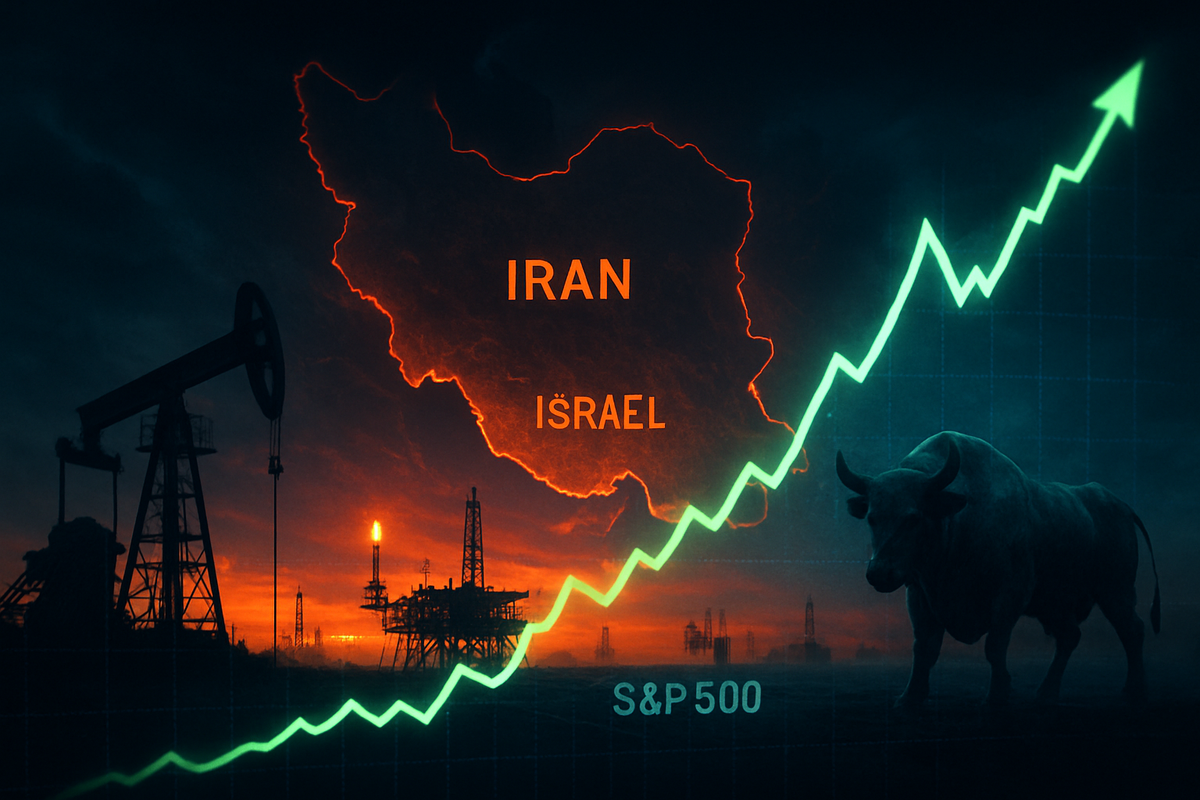
Global energy markets are currently navigating a "perfect storm" of geopolitical volatility as military escalations between Iran and Israel have sent crude oil prices to levels not seen in years. As of March 24, 2026, the risk of a prolonged conflict in the Middle East has introduced a massive "war premium" to global benchmarks, with Brent crude surging past $110 per barrel and domestic West Texas Intermediate (WTI) briefly touching the triple-digit mark earlier this month. The immediate implications are being felt far beyond the gas pump, as the surge in energy costs threatens to derail the fragile post-inflationary recovery of the global economy.
In the United States, the spike in energy prices has reignited fears of "stagflation"—a toxic economic cocktail of stagnant growth and high inflation. While the broader stock market has retreated under the weight of rising input costs and dampened consumer sentiment, the energy sector has emerged as a rare bright spot. Investors are aggressively rotating into "real assets," leading to a significant decoupling where energy equities are hitting record highs while tech and small-cap stocks face heavy selling pressure.
A Timeline of Escalation and Market Turmoil
The current crisis traces its roots to late February 2026, when a series of targeted strikes on energy infrastructure and a partial blockade of the Strait of Hormuz fundamentally altered the risk profile of global oil supplies. What began as localized skirmishes rapidly evolved into a broader regional confrontation, involving key players across the Levant and the Persian Gulf. By early March, reports of drone strikes on major regional refineries sent Brent crude from $73 per barrel to a peak of $119.50 within weeks. As of today, March 24, 2026, Brent is trading between $103 and $112 per barrel, reflecting a market that is hyper-sensitive to every diplomatic rumor or military maneuver.
The timeline of events has been relentless. Following the initial maritime disruptions, the United States and its allies scrambled to ensure the freedom of navigation in critical waterways, but the uncertainty remains high. The immediate market reaction was a "flight to safety," which ironically meant a flight to the very commodities causing the economic pain. Domestic prices for WTI crude followed Brent’s lead, climbing from the mid-$60s in 2025 to a current range of $90 to $98 per barrel. For the American consumer, this has manifested as a sharp rise in gasoline prices, with the national average hitting $3.88 per gallon and exceeding $5.00 in West Coast states like California and Washington.
Energy Giants Surge While Broader Markets Retreat
The divergence in corporate fortunes has been stark. Major oil companies, flush with cash and benefitting from integrated supply chains, have seen their valuations soar. ExxonMobil (NYSE: XOM) has been a primary beneficiary, with its shares surging 30% year-to-date and trading near record highs in the $160 range. Analysts estimate that ExxonMobil is currently generating approximately $1 billion in free cash flow every two weeks with oil sustained at these levels. Similarly, Chevron (NYSE: CVX) has seen its stock approach all-time highs, supported by its recent integration of Hess and a production increase of nearly 10%. The Energy Select Sector SPDR Fund (NYSE Arca: XLE), a proxy for the broader sector, is up 27% since the start of the year, effectively operating in a bull market of its own.
Conversely, the "losers" of this event are found in the broader indices and sectors sensitive to interest rates and fuel costs. The S&P 500 (NYSE Arca: SPY) has dropped roughly 7% since late February, as the prospect of higher-for-longer inflation dampens hopes for Federal Reserve rate cuts. The tech-heavy Nasdaq Composite (NASDAQ: IXIC) has faced even steeper declines, falling nearly 6% this month as investors discount future earnings against rising energy-driven overhead. Small-cap stocks, represented by the iShares Russell 2000 ETF (NYSE Arca: IWM), entered correction territory in mid-March, highlighting the vulnerability of domestic-focused firms that lack the pricing power to pass on surging energy and logistics costs to consumers.
Historical Precedents and the Specter of Stagflation
The current environment draws uncomfortable parallels to the energy crises of the 1970s and the early days of the 2022 conflict in Ukraine. In those instances, sudden supply shocks led to persistent inflation that the traditional monetary policy toolkit struggled to address. Today, this phenomenon is being labeled "Stagflation Lite" by some economists. While the U.S. labor market remains relatively resilient, core inflation (PCE) is forecast to stay stubbornly above 3% for the remainder of 2026. This creates a policy trap for the Federal Reserve: raising rates to combat energy-driven inflation could further stifle a slowing economy, while cutting rates could fuel the inflationary fire.
The ripple effects extend into the regulatory and geopolitical spheres. This energy surge has accelerated discussions around domestic energy independence and the strategic petroleum reserve (SPR), which had already been drawn down significantly in previous years. Furthermore, the decoupling of energy stocks from the S&P 500 suggests a shift in investor psychology. We are seeing a move away from the "growth at any price" mantra of the last decade toward a defensive posture focused on companies with tangible assets and reliable cash flows. This shift may persist as long as the geopolitical stability of the Middle East remains in question, potentially forcing a long-term re-valuation of the technology sector relative to traditional industry.
Navigating the Volatile Road Ahead
Looking forward, the market’s path depends heavily on the duration of the Iran-Israel conflict. In the short term, price volatility is expected to remain extreme. Any significant diplomatic breakthrough or a "ceasefire pause" could lead to a rapid $10 to $15 per barrel correction in oil prices as the war premium evaporates. However, should the conflict expand to involve more direct attacks on production facilities in other Gulf nations, some analysts warn that oil could test the $150 mark, a scenario that would almost certainly trigger a global recession.
For public companies, the strategic pivot is already underway. Airlines and logistics firms are aggressively hedging their fuel costs, while manufacturers are looking for ways to further optimize energy efficiency. Market opportunities may emerge in the renewable energy sector and defense industries, which often act as hedges during times of fossil fuel instability. Investors should watch for "demand destruction"—the point at which prices become so high that consumers significantly cut back on spending—as this would signal the end of the energy bull run and the beginning of a deeper economic downturn.
Final Assessment for Investors
The surge in energy prices driven by Middle Eastern tensions has fundamentally altered the investment landscape for 2026. The key takeaway is the resilience of the energy sector amidst broader market fragility. While companies like ExxonMobil and Chevron are providing a haven for capital, the "stagflationary" pressure on the S&P 500 cannot be ignored. The market is currently pricing in a protracted period of uncertainty, where the cost of energy acts as a persistent tax on both corporations and consumers.
Moving forward, the primary indicators for investors to monitor will be the monthly CPI and PCE data, as well as any shifts in the rhetoric from the Federal Reserve regarding the "neutral rate" of interest. Additionally, the physical status of the Strait of Hormuz remains the single most important geopolitical variable for global crude prices. For the next several months, the energy sector will likely remain the driver of market sentiment, and the ability of the broader economy to absorb these costs will determine whether 2026 is remembered as a year of resilience or the start of a new era of stagflation.
This content is intended for informational purposes only and is not financial advice