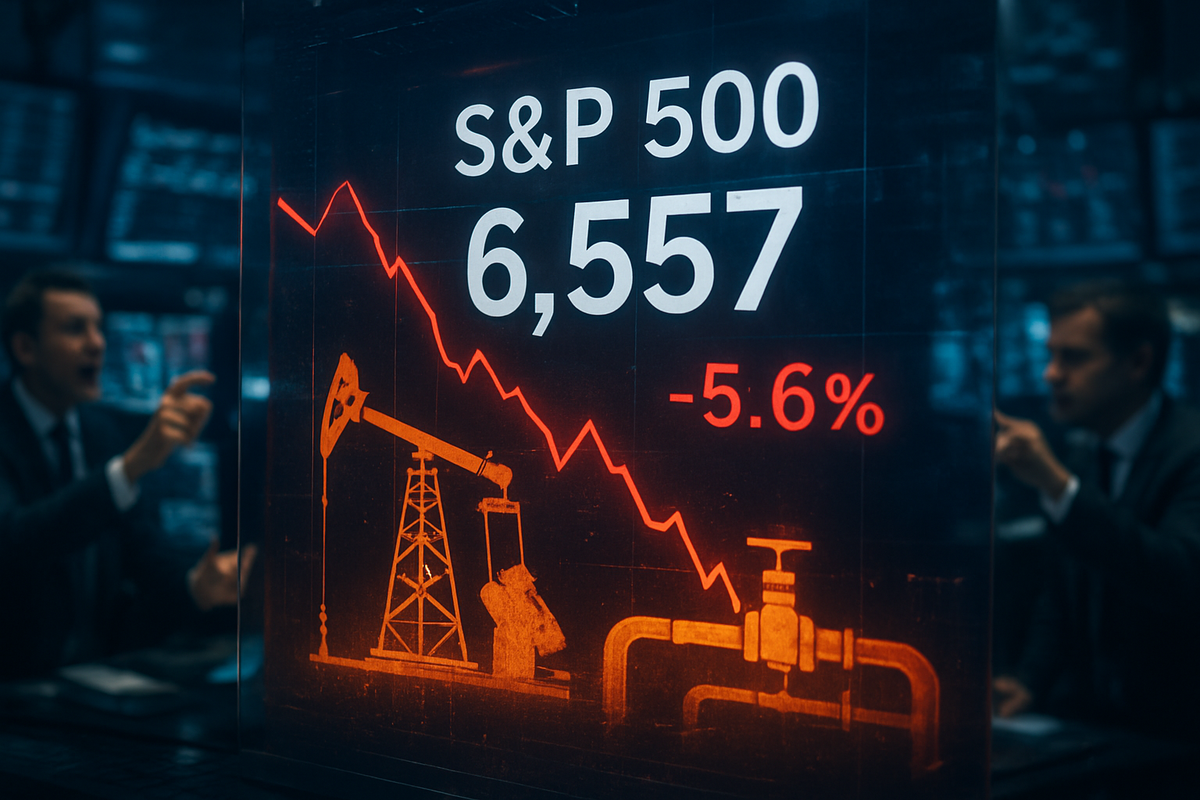
The relative calm of the early 2026 markets was shattered this Tuesday as the S&P 500 (NYSEARCA: SPY) plummeted to 6,557 points, marking a definitive end to the optimistic "AI Supercycle" rally that defined the start of the year. This latest slide represents a sharp 5.6% decline over the past month, leaving investors to grapple with a reality where high energy costs and stubborn inflation are no longer just theoretical risks, but active market disruptors.
The decline has effectively erased a significant portion of the gains made during the first quarter, as the broader market retreats from the record-breaking highs seen in January. As energy prices continue their upward trajectory, the specter of stagflation—a toxic mix of stagnant economic growth and rising prices—has moved from the fringes of economic white papers to the center of trading floor anxiety.
The sell-off on March 24, 2026, was characterized by a broad-based retreat, but the primary catalyst was a renewed spike in energy benchmarks. Brent Crude spiked toward $100 per barrel following continued instability in the Middle East and the lingering effects of the closure of the Strait of Hormuz earlier this month. This "energy tax" has rippled through the economy, forcing the S&P 500 to break through critical support levels that had held firm since late 2025.
The timeline of this retreat traces back to January 12, 2026, when the S&P 500 hit an all-time high of 6,977.32. At that time, the narrative was dominated by NVIDIA (NASDAQ: NVDA) and its next-generation Blackwell-2 architecture, which promised to keep the AI boom alive indefinitely. However, the euphoria was short-lived. By mid-February, a disappointing fourth-quarter GDP report and a "hotter than expected" CPI print of 3.0% began to sour the mood.
Key institutional players, including the Federal Reserve, find themselves in a policy corner. While Chair Jerome Powell had previously hinted at a mid-year rate cut, the recent surge in energy-driven inflation has forced a hawkish pivot. Market participants now expect the Fed to maintain high interest rates well into the autumn, a move that has historically pressured high-growth tech valuations and consumer-facing equities.
The initial reaction from the industry has been one of "defensive rotation." Trading volumes were 20% higher than the 30-day average on Tuesday as portfolio managers dumped growth stocks in favor of cash and energy infrastructure. This flight to safety suggests that the market is bracing for a prolonged period of volatility rather than a quick "buy the dip" recovery.
The current environment has created a stark divide between the "haves" and "have-nots" of the S&P 500. The clear winners in this stagflationary environment are the traditional energy giants and infrastructure providers. ExxonMobil (NYSE: XOM) and Chevron (NYSE: CVX) have seen their stock prices climb as they capitalize on higher margins from crude oil. Meanwhile, GE Vernova (NYSE: GEV) has emerged as a major beneficiary, with its natural gas turbines and nuclear power services sold out through 2028 due to the immense power demands of AI data centers.
On the other side of the ledger, consumer discretionary stocks are bearing the brunt of the pain. Nike (NYSE: NKE) and Starbucks (NASDAQ: SBUX) both reported weakening domestic sales this week, as the national gas price average of $3.54 per gallon eats into household budgets. When consumers are forced to pay more at the pump and for home heating, high-end sneakers and artisanal coffees are often the first items to be cut from the monthly budget.
The tech sector, which spearheaded the 2025 rally, is also under significant pressure. Tesla (NASDAQ: TSLA) has struggled with rising logistics costs and slowing demand for EVs in a high-interest-rate environment. Even Amazon (NASDAQ: AMZN), despite its dominant cloud business, has seen its retail margins squeezed by the increased cost of shipping and fuel. For these giants, the current market is a test of operational efficiency and pricing power.
Conversely, discount retailers are finding a silver lining. Walmart (NYSE: WMT) and Costco (NASDAQ: COST) have seen increased foot traffic as consumers trade down from premium brands to private labels. Their ability to negotiate better prices with suppliers gives them a defensive moat that more specialized retailers lack, making them the preferred harbor for investors seeking shelter from the stagflationary storm.
The significance of the S&P 500's fall to 6,557 extends beyond a simple price correction; it signals a fundamental shift in the global macroeconomic landscape. We are witnessing a transition from the "Goldilocks" era of low inflation and steady growth into a period that many analysts compare to the mid-1970s. The parallels are striking: an energy shock coupled with geopolitical tension and a central bank that is hesitant to ease for fear of losing control over price stability.
This event also highlights the "K-shaped" nature of the 2026 economy. While the infrastructure build for artificial intelligence continues to provide a long-term floor for certain sectors, the immediate reality for the average consumer and the broader retail market is increasingly bleak. The "Great Rotation" out of growth and into defensive value is not just a tactical shift; it is a strategic repositioning based on the belief that the era of "easy money" is firmly in the rearview mirror.
Regulatory and policy implications are also looming. Lawmakers are already facing pressure to address the energy crisis, with renewed debates over domestic drilling permits and strategic reserve releases. Any aggressive move by the government to cap energy prices or subsidize consumption could further complicate the Federal Reserve's battle against inflation, potentially leading to more aggressive rate hikes later in the year.
Historically, market retreats from all-time highs of this magnitude often precede a period of consolidation. The 5.6% drop over the past month suggests that the 2025 rally may have been overextended, and the market is now searching for a new valuation floor based on a more realistic outlook for corporate earnings and consumer spending.
Looking ahead, the short-term outlook remains cautious. Investors will be laser-focused on the upcoming earnings season to see if companies can successfully pass on higher costs to consumers. If margins continue to contract across the board, the S&P 500 could test support levels as low as 6,300 before finding a stable bottom. Short-term tactical pivots toward utilities and high-quality dividend payers are likely to continue as the dominant strategy.
In the long term, the primary challenge for the market will be decoupling growth from energy volatility. The rapid expansion of AI-driven data centers has created a floor for energy demand that may keep prices structurally higher than in previous decades. This necessitates a strategic adaptation for many companies, forcing them to invest in energy-efficient technologies and diversified supply chains to mitigate future shocks.
Potential scenarios range from a "soft landing" if energy prices stabilize and the Fed begins cutting rates in late 2026, to a more severe recession if stagflation becomes entrenched. Market participants should watch for any easing of geopolitical tensions or a significant increase in domestic energy production as potential catalysts for a turnaround.
The S&P 500’s decline to 6,557 on March 24, 2026, serves as a stark reminder of the fragility of market sentiment. While the start of the year was fueled by the promise of technological revolution, the current reality is being dictated by the age-old fundamentals of energy costs and inflation. The 5.6% decline over the last month is more than just a number; it is a reflection of a market recalibrating its expectations for the future of the global economy.
Moving forward, the focus will shift from headline index numbers to sector-specific resilience. Investors should prioritize balance sheet strength and pricing power over speculative growth. The coming months will be a period of discovery, as the market determines whether the January peaks were the start of a multi-year bull run or the final gasp of an over-leveraged era.
For the savvy investor, the key will be patience. Watching for signs of cooling energy prices and stability in the consumer discretionary sector will be essential before committing significant capital back into growth stocks. The stagflationary risk is real, and the road back to 7,000 may be far more arduous than the rally that took us there in the first place.
This content is intended for informational purposes only and is not financial advice.