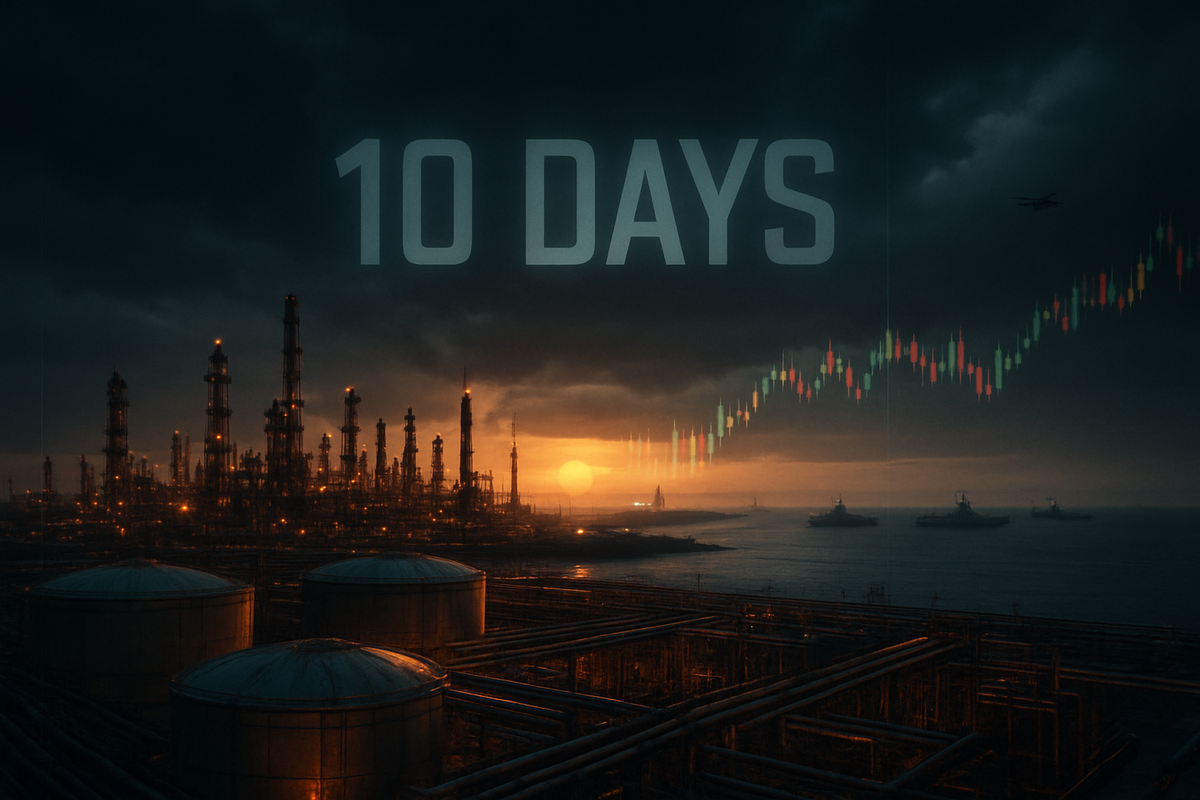
WASHINGTON D.C. — In a move that has sent shockwaves through global commodities desks and diplomatic circles alike, President Donald Trump has announced a 10-day moratorium on military strikes against Iranian energy infrastructure. The pause, which began on the evening of March 26, 2026, is set to expire on Monday, April 6, at 8:00 P.M. Eastern Time. While the administration frames the delay as a "final chance" for Tehran to accept a sweeping 15-point peace proposal, the global markets remain in a state of high-octane anxiety, as the threat of a catastrophic escalation looms just over the horizon.
The announcement has triggered a "relief sell-off" in the energy sector, but analysts warn that the reprieve is likely temporary. As of today, March 27, Brent crude futures have retreated from their harrowing peak of $120 per barrel to approximately $92, yet the underlying volatility remains extreme. Traders are pricing in a "binary outcome": either a historic diplomatic breakthrough or the systematic destruction of the world’s fourth-largest oil reserves.
The Path to the April 6 Deadline
The current standoff is the culmination of a month of unprecedented military action. On February 28, 2026, the United States and Israel launched Operation Epic Fury, a series of coordinated strikes that reportedly decapitated the Iranian leadership and crippled much of the country's air defense. This followed the reinstatement of the "Maximum Pressure 2.0" doctrine early in the Trump administration's second term, which aimed to bring Iranian oil exports to zero.
The 10-day window was reportedly opened after the Iranian government, facing internal collapse and the loss of key leadership, signaled a willingness to negotiate through intermediaries in Pakistan. According to White House sources, the U.S. has demanded a permanent end to uranium enrichment, the dismantling of ballistic missile sites, and a guaranteed reopening of the Strait of Hormuz, which has been effectively shuttered since the conflict began. While President Trump posted on social media that Iran is "begging to make a deal," Tehran’s remaining officials have pushed back, labeling the moratorium a form of "psychological and economic warfare."
Winners and Losers: A Market Divided
The moratorium has created a stark divide across the New York Stock Exchange and the NASDAQ, as investors attempt to hedge against both peace and total war.
The Energy Giants: Domestic oil producers like Exxon Mobil Corporation (NYSE: XOM) and Chevron Corporation (NYSE: CVX) have seen their shares fluctuate wildly. While lower oil prices typically hurt margins, these companies are viewed as the "safe haven" of the energy world. If Iranian facilities are permanently neutralized, the long-term demand for American-produced crude and Liquefied Natural Gas (LNG) is expected to skyrocket. Cheniere Energy, Inc. (NYSE: LNG) has particularly benefited from the regional instability, as European and Asian buyers look to decouple from Middle Eastern volatility.
Defense and Aerospace: The primary beneficiaries of the ongoing "Operation Epic Fury" remain the major defense contractors. Lockheed Martin Corporation (NYSE: LMT) and RTX Corporation (NYSE: RTX) have seen increased order flows as the U.S. replenishes munitions used in the February and March strikes. However, the 10-day pause has caused a slight cooling in their stock prices as some investors take profits, betting on the possibility that the "hot" phase of the war might conclude by April 6.
Transportation and Consumer Goods: On the losing end, the airline industry continues to struggle with the baseline price of jet fuel. Delta Air Lines (NYSE: DAL) and United Airlines Holdings, Inc. (NASDAQ: UAL) have seen their recovery hampered by the threat of $150 oil should the moratorium expire without a deal. Similarly, global logistics giants like United Parcel Service, Inc. (NYSE: UPS) are facing surging operational costs that are being passed directly to consumers, fueling fears of a renewed inflationary spike.
A New Precedent in Geopolitical Brinkmanship
This event represents a significant departure from historical precedents. Unlike the 2015 JCPOA or the 2020 tensions following the Soleimani strike, the 2026 conflict has moved beyond "proxy wars" into direct, sustained kinetic engagement against sovereign energy assets. The use of a public "ticking clock" moratorium is a hallmark of the Trump administration's "Art of the Deal" approach applied to high-stakes geopolitics.
The ripple effects are being felt globally. Saudi Aramco has increased security around its own facilities, fearing retaliatory "asymmetric" strikes from Iranian proxies if the moratorium fails. Meanwhile, the halt in Qatari LNG production due to drone threats in the Persian Gulf has forced European nations to restart coal plants, reversing years of green energy policy in a matter of weeks. The April 6 deadline is not just a U.S.-Iran milestone; it is a pivot point for the global transition to energy security over environmental targets.
What Comes Next: Diplomacy or Destruction?
As we approach the April 6 expiration, the market anticipates two primary scenarios. The first is a "Grand Bargain," where Iran accepts the 15-point proposal in exchange for total sanctions relief. This would likely cause oil prices to crash toward $60 per barrel as the Strait of Hormuz reopens and Iranian crude floods back into a stabilized market.
The second, and more volatile, scenario is the resumption of hostilities. If the 8:00 P.M. deadline passes without a signature, military analysts expect a "Level 3" strike package targeting Iran’s refinery complexes at Abadan and Bandar Abbas. Such an outcome would likely send crude prices into uncharted territory, with some analysts at Goldman Sachs warning of a "super-spike" toward $200 per barrel.
Summary and Investor Outlook
The 10-day moratorium has provided a much-needed breathing room for the global economy, but it has not provided clarity. The primary takeaway for investors is that the "geopolitical risk premium" is no longer a theoretical concept but a daily reality.
Moving forward, the market will remain extremely sensitive to any leaks regarding the Pakistan-led negotiations. Investors should watch for:
- Shipping Rates: Any movement of tankers near the Strait of Hormuz will be a leading indicator of a deal.
- Defense Spending: Congressional moves to further fund "Operation Epic Fury" may signal a lack of confidence in the diplomatic track.
- Currency Fluctuations: The U.S. Dollar remains strong as a safe haven, but a peace deal could see a rapid rotation back into emerging markets.
The significance of the April 6 deadline cannot be overstated. It represents the ultimate test of "Maximum Pressure" and will define the energy landscape for the remainder of the decade.
This content is intended for informational purposes only and is not financial advice.