BALTIMORE & LONDON — In a move that redraws the map of the global consumer staples landscape, McCormick & Company (NYSE: MKC) and Unilever PLC (NYSE: UL) announced today, March 31, 2026, a definitive agreement to merge Unilever’s global food business—excluding its operations in India—with McCormick. The $44.8 billion deal, structured as a tax-efficient Reverse Morris Trust, creates a preeminent global flavor and food solutions powerhouse with projected annual revenues exceeding $20 billion.
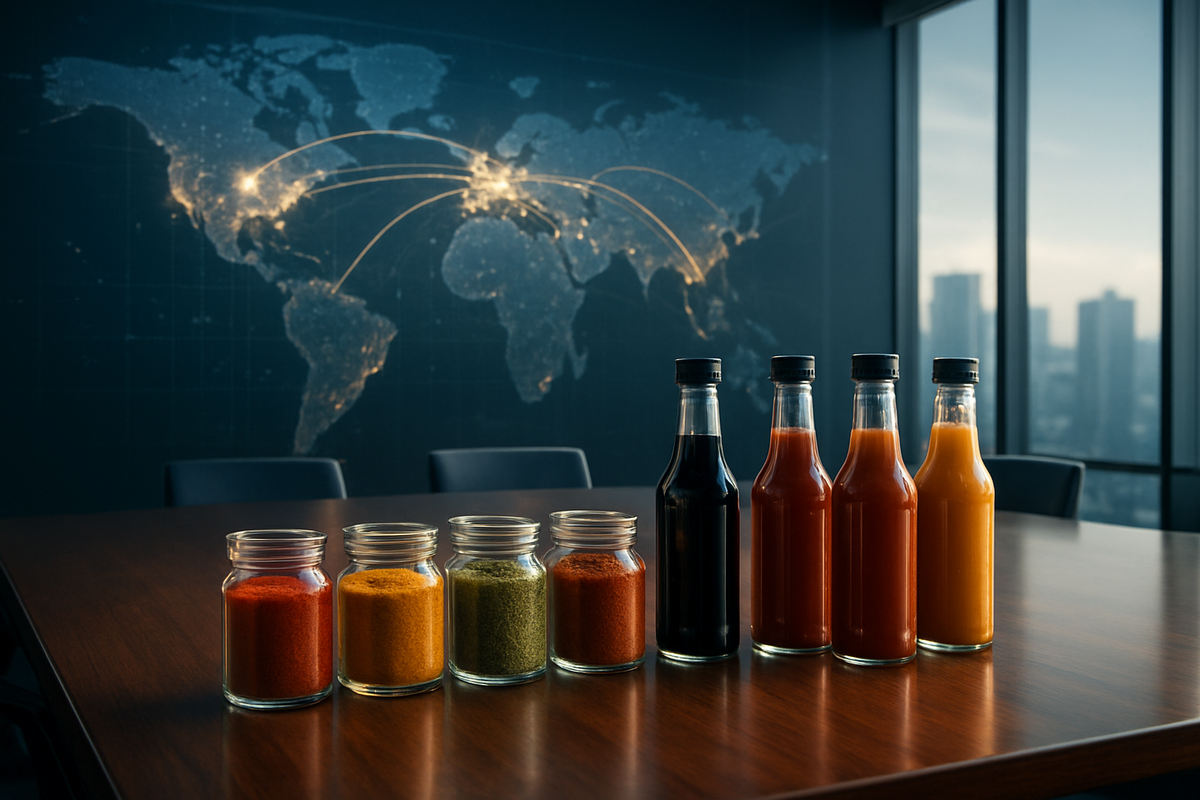
The transaction marks the culmination of Unilever’s multi-year "Growth Action Plan" to pivot toward high-growth beauty and personal care sectors, while simultaneously catapulting McCormick from a spice-cabinet staple into a dominant force across the entire global food value chain. By combining McCormick’s expertise in "heat" and seasoning with Unilever’s iconic pantry staples, the new entity aims to capture the shifting preferences of a global middle class hungry for flavor, convenience, and premium ingredients.
Inside the $44.8 Billion "Flavor Powerhouse" Deal
The merger is meticulously crafted to maximize value for shareholders through a Reverse Morris Trust (RMT) structure. Under the terms of the agreement, Unilever will first spin off its global food business—comprising legendary brands such as Knorr, Hellmann’s, and Maille—into a standalone entity. This entity will then immediately merge with a subsidiary of McCormick. Upon completion, Unilever shareholders will own approximately 55.1% of the newly combined company, while existing McCormick shareholders will hold 35%. Unilever PLC will retain a strategic 9.9% minority stake, ensuring a continued interest in the synergies generated by the union.
The $44.8 billion valuation includes $15.7 billion in cash to be paid to Unilever, funded through a combination of new debt and committed bridge financing, and approximately $29.1 billion in newly issued McCormick stock. This structure allows the divestiture to be virtually tax-free for Unilever and its shareholders, a critical factor in the deal's negotiation. The exclusion of the Indian food business—a high-growth region where Unilever maintains a complex joint-venture structure—was reportedly a strategic decision to simplify regulatory hurdles and allow the new entity to focus on consolidating Western and emerging markets in Southeast Asia and Latin America.
The timeline leading to this historic announcement was catalyzed by Unilever’s 2024 separation of its ice cream business. Following that successful spin-off, CEO Fernando Fernandez and the Unilever board identified the food division as the next candidate for value realization. For McCormick, led by CEO Brendan Foley, the deal represents the largest acquisition in its 137-year history, dwarfing its $4.2 billion purchase of RB Foods in 2017. Integration teams have already identified $600 million in expected annual cost synergies, largely driven by supply chain optimization, shared procurement, and the consolidation of administrative functions over the next 36 months.
Industry Impact: Identifying the Winners and Losers
The immediate "winner" in this transaction appears to be McCormick & Company (NYSE: MKC). By absorbing Unilever's massive distribution network, McCormick gains an "instant" global infrastructure, particularly in Europe and Latin America, where its presence was previously overshadowed by local players. The addition of Knorr and Hellmann’s provides McCormick with "center-of-the-plate" relevance, moving beyond the spice rack into sauces, dressings, and meal starters. Investors reacted positively to the news, with McCormick shares rising 4.2% in pre-market trading on the news of the $600 million synergy target.
Conversely, traditional competitors in the packaged foods space, such as The Kraft Heinz Company (NASDAQ: KHC) and Conagra Brands (NYSE: CAG), face a daunting new reality. These companies now find themselves competing against a "Flavor Powerhouse" that possesses superior scale and a more diverse portfolio ranging from industrial flavor solutions to consumer condiments. Analysts suggest that Kraft Heinz, in particular, may feel the pressure as Hellmann’s and McCormick’s French’s mustard unite under one corporate roof, potentially squeezing Kraft’s market share in the essential condiments category.
Retailers like Walmart (NYSE: WMT) and Carrefour (EPA: CA) may find themselves with less bargaining power as the combined McCormick-Unilever entity becomes a "must-have" partner for every grocery aisle. However, the deal also presents a challenge for the new entity: managing a massive debt load. With $15.7 billion in new cash payments, McCormick’s leverage ratio will spike significantly. The success of the deal rests entirely on the management's ability to execute the $600 million in cost savings without stifling the innovation that has kept brands like Cholula and Frank’s RedHot at the forefront of consumer trends.
A New Era for Consumer Staples: Broader Significance
This merger is a textbook example of the "portfolio pruning" trend currently sweeping the consumer staples sector. As global giants like Nestlé and Procter & Gamble (NYSE: PG) seek to streamline operations to focus on high-margin, high-growth categories, the "big-to-bigger" merger provides a blueprint for how legacy brands can find new life under specialized management. The Reverse Morris Trust structure, previously used in the 2022 AT&T (NYSE: T) and Discovery merger to form Warner Bros. Discovery (NASDAQ: WBD), highlights a growing preference for tax-efficient divestitures over traditional cash sales in an era of high interest rates and scrutiny on capital gains.
The regulatory implications are significant. Antitrust authorities in the U.S. and the European Union are expected to scrutinize the deal heavily, particularly in categories where the two companies overlap, such as salad dressings and bouillon. However, because McCormick's primary strength is in dry spices and Unilever’s is in wet condiments and prepared foods, the "complementary" nature of the portfolios may ease the path to approval. Historically, deals of this magnitude have required minor brand divestitures to satisfy competition commissions, and industry insiders expect several smaller condiment brands may be offloaded to satisfy regulators in the UK and France.
Furthermore, the exclusion of India signals a shift in how multinational corporations handle "frontier" markets. By keeping the Indian business, Unilever retains its foothold in one of the world's fastest-growing consumer markets through its existing, highly successful local infrastructure, while offloading the more mature, slower-growth global portfolio to a partner better equipped to extract operational efficiencies. This "two-speed" strategy could become a model for other conglomerates looking to balance mature cash cows with emerging market growth.
The Road Ahead: Integration and Strategic Pivots
In the short term, the new McCormick-Unilever entity will focus on "Day 1" readiness, ensuring that the supply chains for thousands of products across 150 countries remain uninterrupted. The $600 million synergy goal is ambitious and will likely require a painful consolidation of manufacturing plants and regional headquarters. Investors will be looking for a detailed roadmap of these cuts in the second half of 2026. McCormick’s management has already hinted at a "Digital-First" flavor strategy, using Unilever’s consumer data to drive AI-powered product development for new spice blends and sauces.
Long-term, the combined company faces the challenge of staying relevant to Gen Z and Alpha consumers, who increasingly favor artisanal, local, and health-conscious brands over legacy "Big Food" names. The "Flavor Powerhouse" must pivot its newly acquired brands like Knorr toward "clean label" and plant-based innovations to maintain growth. If successful, the company could expand its "Flavor Solutions" division—which provides ingredients to fast-food giants and industrial food producers—into a dominant global B2B supplier, creating a stable, high-margin revenue stream that offsets the volatility of the retail grocery market.
Strategic adaptations will also be required to handle the debt. McCormick has committed to a "deleveraging glide path" to return to its investment-grade credit rating within four years. This may limit the company’s ability to pursue further acquisitions in the late 2020s, potentially leaving a vacuum for smaller, more agile competitors to capture the "niche" segments of the market. The success of this pivot will be a litmus test for whether massive scale still provides a competitive advantage in a fragmented, post-pandemic consumer world.
Final Assessment: What to Watch for in 2026
The McCormick-Unilever merger is more than just a corporate marriage; it is a bold bet on the enduring value of iconic brands in an increasingly complex global economy. For Unilever, the deal completes a transformation into a streamlined beauty and wellness company. For McCormick, it is an audacious leap into the global big leagues, transforming the "Spice King" into a comprehensive food solutions architect. The primary takeaway is the market's continued appetite for consolidation as a means to combat inflationary pressures and supply chain fragility.
Moving forward, the market will be hyper-focused on three metrics: the pace of synergy realization, the regulatory approval process in the EU, and the performance of the newly independent "Unilever Beauty" entity. If McCormick can successfully integrate the Unilever brands while maintaining its industry-leading margins, it will likely be rewarded with a premium valuation. However, any hiccups in the Reverse Morris Trust execution or significant pushback from antitrust regulators could quickly sour investor sentiment.
Investors should watch for the first joint earnings guidance expected in Q3 2026. This will provide the first real glimpse into the "Flavor Powerhouse's" combined balance sheet and its ability to navigate the high-interest-rate environment with its new debt load. For now, the world of consumer staples has a new titan, and the "spice of life" has never been more expensive—or more strategically vital.
This content is intended for informational purposes only and is not financial advice.