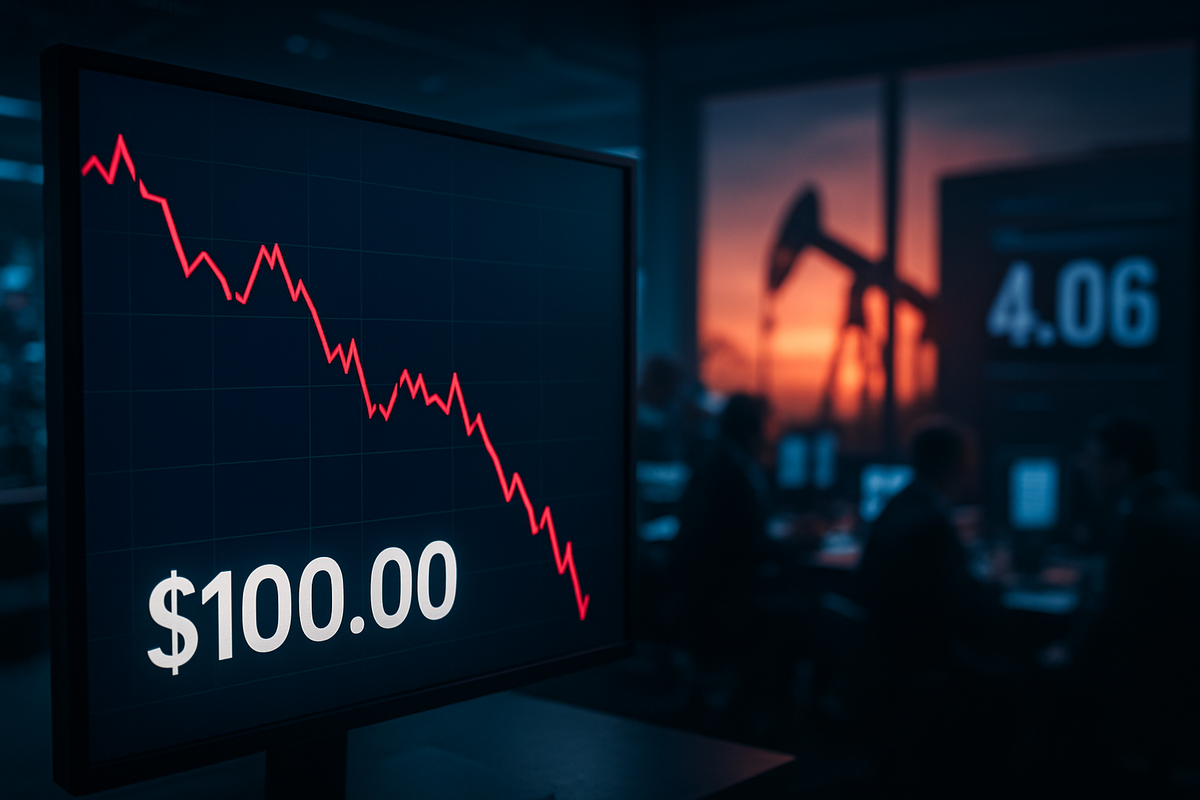
The sharp decline in prices follows reports of high-level, "back-channel" negotiations occurring in Muscat, Oman, between representatives from Washington and Tehran. These talks aim to establish a "partial reopening" of the Strait of Hormuz in exchange for a temporary cessation of the aerial campaigns that have defined the early months of 2026. Investors, who had priced in a long-term disruption to 20% of the world’s daily oil supply, began a rapid "bearish repricing" as news of the diplomatic progress leaked.
This moment follows a tumultuous timeline that began in February 2026 with "Operation Epic Fury," a coordinated military effort targeting regional nuclear and military infrastructure. The subsequent maritime blockade on March 4 sent Brent crude soaring from its January lows of $60 toward a peak of $120. However, the underlying market fundamentals—specifically a massive structural supply surplus known as the "Americas Glut"—have made this geopolitical spike fragile. Leading up to today’s drop, the International Energy Agency (IEA) had already warned that non-OPEC+ production from the U.S., Brazil, and Guyana was at record highs, creating a "cushion" that diplomats are now using as leverage.
Corporate Winners and Losers in a Volatile Energy Landscape
The easing of oil prices has created a stark divide in the corporate world. The airline sector, which has seen its 2026 fuel expense projections rise by nearly 11% over the last month, reacted with immediate gains. Major carriers such as Delta Air Lines (NYSE: DAL) and United Airlines (NASDAQ: UAL) saw their shares climb by more than 4% in pre-market trading, as investors bet on widening operating margins and a stabilization of ticket prices. Similarly, logistics giants like FedEx (NYSE: FDX) and consumer-facing retailers like Walmart (NYSE: WMT) are expected to benefit from reduced transportation costs and increased consumer discretionary spending as gas prices retreat from their $4.06 peak.
Conversely, the "Supermajors" are facing a reality check. Energy giants like ExxonMobil (NYSE: XOM) and Chevron (NYSE: CVX), which saw windfall profits during the March price spike, faced selling pressure as the "war premium" began to evaporate. While these companies remain highly profitable at $100 oil, the prospect of a return to the $70–$80 range threatens the aggressive share buyback programs that have sustained their stock prices over the past year. Additionally, the shipping sector, including players like A.P. Moller - Maersk (CPH:MAERSK-B), may see a cooling of the "vertical" freight rates that characterized the Q1 blockade period, as the necessity for long-haul diversions around the Cape of Good Hope potentially diminishes.
Historical Context and the Changing Energy Mix
This 2026 price correction fits into a broader industry trend of "energy decoupling." Unlike the 2022 energy crisis, the current market is supported by significant efficiency gains and a higher penetration of electric vehicles, which have slightly dampened total gasoline demand despite the supply shocks. The "Americas Quintet"—comprised of the U.S., Canada, Brazil, Guyana, and Argentina—has effectively challenged the traditional dominance of OPEC+, making the global market more resilient to Middle Eastern disruptions than in previous decades.
The current situation draws comparisons to the "exhausted realignments" of the mid-2010s, where geopolitical tension eventually gave way to the reality of oversupply. However, the policy implications today are more complex. The U.S. administration is balancing the need for lower energy costs ahead of mid-term considerations with the long-term goal of reducing reliance on fossil fuels. Regulatory pressure on domestic producers to maintain high output while adhering to stricter 2026 emissions standards remains a central point of contention in Washington.
The Path Forward: Strategic Pivots and Market Scenarios
Looking ahead, the market is bracing for two primary scenarios. If the Oman negotiations lead to a formal de-escalation by the summer of 2026, analysts suggest Brent crude could plummet toward the $50–$60 range as the underlying "Americas Glut" takes center stage. This would require a strategic pivot from energy companies, who would likely shift focus toward capital discipline and cost-cutting to survive a lower-price environment. Market participants should also watch for a potential "OPEC+ counter-move," as the cartel may attempt to implement deeper production cuts to defend the $80 floor.
In the short term, the volatility provides a "tactical opportunity" for investors in the technology and consumer sectors. As the "geopolitical risk premium" of $10–$15 per barrel is shed, the broader S&P 500, which is down 9% year-to-date, may find a floor. The key challenge will be whether the cooling of energy costs can happen quickly enough to prevent a "stagflationary" trap, where high prices have already done irreparable damage to consumer confidence.
Wrap-Up and Investor Outlook
The events of April 1, 2026, mark a potential turning point in the year’s most significant economic crisis. The retreat of Brent crude toward $100 signals that diplomacy may finally be gaining the upper hand over military posturing. While the national gas average of $4.06 remains a burden for many, the trend line suggests that the worst of the 2026 energy shock may be in the rearview mirror.
For the market, the move is a double-edged sword. It offers a lifeline to sectors sensitive to input costs but signals a period of uncertainty for the energy stocks that have led the market for months. Investors should keep a close eye on the progress of the Oman talks and the weekly EIA production reports. The resilience of the global economy now rests on whether this de-escalation is a permanent shift or merely a brief pause in a larger regional conflict.
This content is intended for informational purposes only and is not financial advice