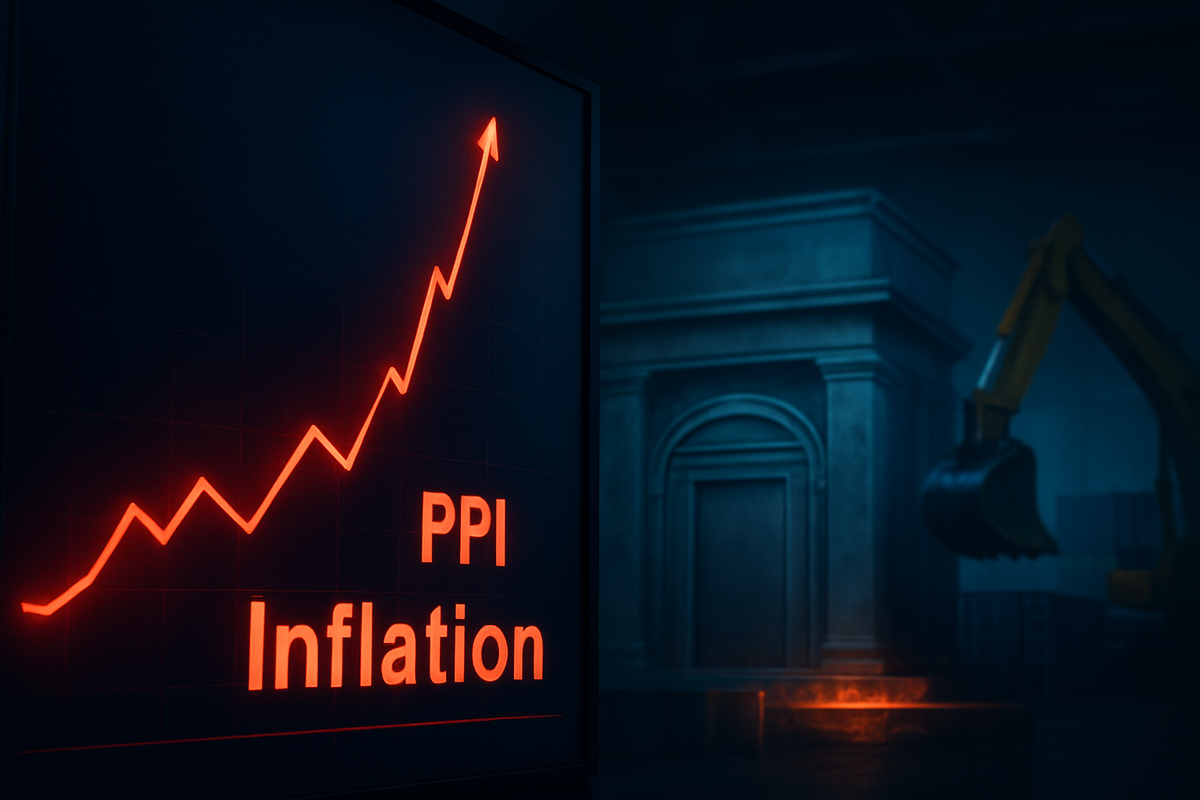
The Federal Reserve’s anticipated march toward a lower-rate environment hit a significant roadblock this quarter, following the release of the December Producer Price Index (PPI) data. Headline wholesale inflation surged by 0.5%, more than doubling analyst expectations of a modest 0.2% increase. Even more concerning for policymakers, the Core PPI—which strips out the volatile food and energy sectors—climbed by 0.6%, marking its sharpest monthly jump in five months. These figures, released earlier this year and still reverberating through the market today, April 2, 2026, have effectively ended the "disinflation narrative" that defined much of late 2025.
The immediate fallout has been a wholesale recalibration of market expectations. Investors who had entered the new year pricing in a series of aggressive interest rate cuts for the first half of 2026 have been forced to retreat. The hotter-than-expected data suggests that the "last mile" of the inflation fight is proving to be a marathon rather than a sprint, reviving fears of a "higher-for-longer" monetary policy stance that many hoped was a relic of the past.
A Perfect Storm of Energy Spikes and Service Margins
The December PPI report, published by the Bureau of Labor Statistics on January 30, 2026, caught the market off guard with its breadth and intensity. While many had expected a cooling trend to continue, the data revealed a dual-threat of rising service costs and a sudden energy shock. Unprocessed energy materials saw a staggering 5.5% advance, primarily fueled by a 34.8% spike in natural gas prices mid-winter. However, the rot was deeper than just energy; final demand services jumped 0.7%, driven by a 4.5% surge in machinery and equipment wholesaling margins.
Timeline analysis shows that this inflationary pulse coincided with the implementation of the "Liberation Day" tariffs in late 2025, which introduced a 10–15% global floor on various imported goods. The December data confirmed that these costs were being passed through the supply chain with surprising speed. Following the release, the 10-year Treasury yield surged to 4.255%, as fixed-income traders quickly realized that the Federal Reserve would likely keep the federal funds rate steady at the 3.50%–3.75% range for much longer than anticipated. Major institutions like Goldman Sachs (NYSE: GS) and JP Morgan (NYSE: JPM) immediately adjusted their forecasts, with the former pushing its expectation for the first 2026 rate cut back to September.
Sector Divergence: Winners and Losers in a High-Cost Environment
The persistence of wholesale inflation has created a sharp divide between companies capable of absorbing costs and those caught in the squeeze. In the manufacturing sector, John Deere (NYSE: DE) has emerged as a primary victim of the trend. The company recently reported a 14% drop in net income, citing a "sluggish farm economy" and rising production costs that are difficult to pass on to cash-strapped growers. Similarly, Caterpillar (NYSE: CAT) has warned that persistent wholesale price increases and tariff-related costs could impact its bottom line by as much as $1.5 billion through the 2026 fiscal year.
Conversely, the retail landscape is seeing a "Great Divergence." Walmart (NYSE: WMT) has become a sanctuary for investors, with its stock hitting all-time highs this spring. The retail giant has benefited from high-income households "trading down" to seek value as "price tag shock" returns to the grocery aisles. Amazon (NASDAQ: AMZN) has also shown resilience; while its retail margins have felt the pinch of higher wholesale costs, its cloud division, Amazon Web Services (AWS), continues to provide a massive financial buffer, growing 24% on the back of sustained AI demand. In contrast, Target (NYSE: TGT) has struggled, as its core consumer base proves less resilient to the 2–4% gap between rising input costs and what the company can realistically charge at the register.
The Death of the "Soft Landing" Narrative?
The significance of the December PPI surprise extends far beyond a single data point. It marks a fundamental shift in the macroeconomic environment for 2026. For much of late 2025, the prevailing trend was one of moderating CPI and cooling PPI, leading many to believe a "soft landing" was guaranteed. The December data, however, suggests that inflation has become structural rather than transitory, fueled by policy-driven tariffs and sticky service-sector margins. This has forced the Federal Reserve into a defensive crouch, prioritizing price stability over economic stimulus.
Historically, this period draws comparisons to the "stop-go" inflation cycles of the late 1970s, where premature celebrations of cooling prices led to secondary spikes that required even more drastic monetary intervention. The current policy implications are clear: the Federal Reserve is now unlikely to reach its "neutral" terminal rate of 3.0%–3.25% until late 2027. This prolonged period of restrictive credit is expected to weigh heavily on capital-intensive industries, including the utility sector, where companies like Duke Energy (NYSE: DUK) and NextEra Energy (NYSE: NEE) are already seeking record rate hikes to fund infrastructure despite rising wholesale fuel costs.
Looking Ahead: The September Pivot and Strategic Adaptation
As we move deeper into the second quarter of 2026, all eyes remain fixed on the Fed’s September meeting. Short-term, companies are likely to engage in "strategic pivots," focusing on efficiency and automation to offset labor and wholesale cost increases. We may see a wave of consolidation in the manufacturing and mid-tier retail sectors, as smaller players find it impossible to navigate the dual pressure of high borrowing costs and rising input prices.
Long-term, the market is bracing for a scenario where inflation remains stubbornly above the 2% target, hovering closer to 2.5%–3.0%. For investors, this means a shift away from high-multiple growth stocks that are sensitive to interest rates and toward "cash-cow" enterprises with strong pricing power and low debt loads. The possibility of a "one-and-done" rate cut in late 2026 is now a very real scenario, a far cry from the four to five cuts markets were dreaming of just six months ago.
Summary and Investor Outlook
The December PPI report served as a cold shower for a market that had grown intoxicated on the hope of easy money. With headline and core figures both exceeding expectations, the path toward lower interest rates has been effectively blocked for the first half of the year. The key takeaways for the coming months are centered on margin protection and Fed vigilance. Investors should closely monitor the quarterly earnings of major manufacturers and discretionary retailers to see who is successfully navigating the "tariff pass-through" and who is seeing their profitability erode.
Moving forward, the market will likely remain in a state of high volatility, sensitive to every inflation-related headline. The "higher-for-longer" mantra has been revived, and its lasting impact will be felt in everything from mortgage rates to corporate debt refinancing. As we wait for the September FOMC meeting, the mantra for the 2026 market is clear: caution over conviction, and value over growth.
This content is intended for informational purposes only and is not financial advice