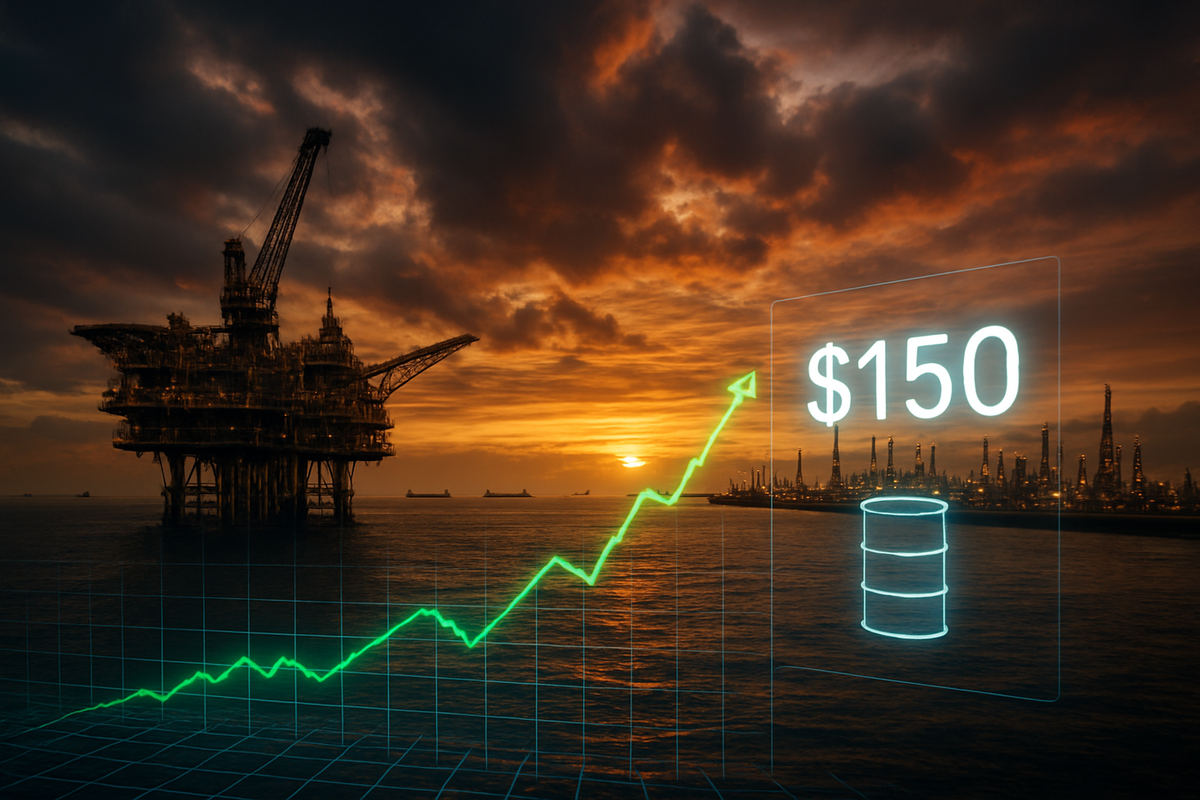
As of April 3, 2026, the global energy landscape is undergoing a seismic shift, with crude oil prices hurtling toward the $150-per-barrel mark. This dramatic ascent, driven by a volatile cocktail of geopolitical conflict and structural supply deficits, has propelled the energy sector to the top of the leaderboard for the first quarter of the year. Investors, seeking shelter from broader market instability, have flooded into energy-focused exchange-traded funds (ETFs) and closed-end funds, driving record-breaking returns.
The immediate implications are stark: while the broader S&P 500 struggles with stagflationary headwinds, the energy sector has decoupled from the pack. The rally is no longer just about recovery; it is a full-blown "energy supercycle" that is reshaping portfolio allocations. For the average consumer, this translates to skyrocketing prices at the pump and rising utility bills, but for the strategic investor, it has created a rare pocket of high-conviction growth in an otherwise uncertain financial climate.
The Perfect Storm: A Timeline of the Climb to $150
The road to the current price environment began in earnest in February 2026, following the commencement of "Operation Epic Fury," a U.S.-led coalition strike against Iranian military infrastructure. The subsequent retaliation—a strategic blockade of the Strait of Hormuz—has effectively choked off nearly 20% of the world's daily oil and liquefied natural gas (LNG) transit. This maritime chokepoint closure sent Brent crude futures soaring from $75 in early January to over $126 by late March, with Goldman Sachs and Wood Mackenzie now forecasting a breach of $150 by early summer if the blockade persists.
Supply scarcity has been further exacerbated by a continued lack of spare capacity among OPEC+ members. Despite domestic pressure in various nations to increase output, years of underinvestment in upstream exploration have left the world with a razor-thin margin for error. Saudi Arabia and Kuwait have reported technical limitations in rapidly scaling production, leaving the market in a structural deficit of an estimated 2.3 million barrels per day.
The market's reaction has been one of aggressive defensive positioning. Institutional capital has rotated out of high-multiple technology stocks and into "real assets." This rotation was fueled by the realization that the current energy crisis is not merely a temporary supply shock but is also being driven by a permanent increase in power demand. The massive expansion of artificial intelligence data centers over the last two years has quintupled the electricity load on the U.S. grid, turning natural gas into a critical, non-cyclical commodity.
Winners and Losers: XLE and PEO Dominate the Field
Leading the charge in this bull market is the Energy Select Sector SPDR Fund (NYSE Arca: XLE). As of today, XLE has posted a staggering 33% year-to-date return, far outstripping any other sector in the S&P 500. The fund’s performance is anchored by its heavy concentration in industry titans like Exxon Mobil (NYSE: XOM) and Chevron (NYSE: CVX), which together represent over 40% of the fund’s weight. Exxon Mobil, in particular, reached a historic high of $157 per share this month, buoyed by its massive Guyana projects and robust refining margins. Other top performers within the XLE portfolio include Occidental Petroleum (NYSE: OXY) and APA Corporation (NASDAQ: APA), both of which have seen their valuations swell as their Permian Basin assets become increasingly valuable.
On the income-seeking side, the Adams Natural Resources Fund (NYSE: PEO) has captured significant attention. Unlike traditional ETFs, PEO is a closed-end fund with a storied history dating back to 1929. One of its most compelling features in the 2026 market is its significant discount to Net Asset Value (NAV), which has hovered between 10% and 13% throughout the quarter. For savvy investors, this represents an opportunity to buy a high-quality energy portfolio at a price lower than the sum of its parts.
Furthermore, PEO’s managed distribution policy, which targets an annual yield of 8%, has made it a favorite for those seeking cash flow during an inflationary period. Its recent quarterly distribution of $0.49 per share reflects the massive dividends being funneled upward by its top holdings, including ConocoPhillips (NYSE: COP) and EOG Resources (NYSE: EOG). While the "losers" in this environment include fuel-sensitive sectors like airlines and logistics, the diversified energy producers and their shareholders are reaping the rewards of disciplined capital allocation and high commodity prices.
A New Paradigm: AI Demand and Geopolitical Risk
The current rally is more than a standard commodity cycle; it fits into a broader trend of "energy-intensive computing." The explosive growth of AI models has necessitated a 24/7 power supply that renewable sources are not yet equipped to handle alone. This has repositioned traditional oil and gas companies not as relics of the past, but as essential providers for the digital future. Natural gas, in particular, has become the "bridge fuel" that refuses to be phased out, providing nearly 40% of the electricity needed for the world’s burgeoning data center hubs.
Historically, oil spikes of this magnitude have been followed by rapid demand destruction and economic recessions. However, the 2026 surge is different due to the lack of alternative "always-on" power. Previous precedents, such as the 1970s oil shocks or the 2008 peak, were primarily driven by supply-side politics or financial speculation. Today, the demand side is reinforced by the global race for AI supremacy, creating a floor for energy prices that may be higher than anything seen in the previous decade.
Regulatory and policy implications are also mounting. As $150 oil threatens to trigger a worldwide recession, governments are under immense pressure to release strategic reserves and provide subsidies to low-income households. However, with many strategic reserves already depleted to combat the inflation of the early 2020s, policy levers are limited. This has led to a renewed, though controversial, focus on domestic drilling and the fast-tracking of nuclear power permits to ensure long-term energy sovereignty.
The Road Ahead: Scenarios for the Second Half of 2026
In the short term, the primary catalyst to watch is the resolution—or escalation—of the Strait of Hormuz blockade. If diplomatic efforts fail and military tensions rise further, the $150 target could be just a pit stop on the way to $200. Conversely, a breakthrough in negotiations could lead to a sharp, "v-shaped" correction in oil prices as the geopolitical risk premium evaporates. Strategic pivots will be required for companies within the XLE and PEO portfolios; many are already using their windfall profits to accelerate share buybacks and pay down debt, preparing for the eventual normalization of prices.
Market opportunities may also emerge in the midstream and service sectors. Companies like Schlumberger (NYSE: SLB) and Halliburton (NYSE: HAL) are likely to see increased demand as producers finally ramp up exploration to capitalize on high prices. However, the challenge for these firms will be navigating the "green transition" mandates that still linger in many jurisdictions, even as the immediate focus shifts back to fossil fuels for national security.
The Market Minute Wrap-up
The first quarter of 2026 has solidified energy as the dominant theme for the year. With XLE delivering a 33% return and PEO offering a unique combination of income and value through its NAV discount, the sector has proven its worth as a hedge against both inflation and geopolitical chaos. The key takeaway for investors is that the "energy transition" is proving to be far more complex and reliant on traditional fuels than many had predicted, especially as the AI revolution demands more power than ever before.
Moving forward, the market will be hyper-sensitive to any news regarding global supply routes and OPEC+ production targets. Investors should watch for signs of demand destruction—particularly in emerging markets where $150 oil could cause significant economic hardship. For now, the momentum remains firmly behind the producers and the funds that hold them, as the world navigates one of the most significant energy disruptions in modern history.
This content is intended for informational purposes only and is not financial advice.