WASHINGTON D.C. / NEW YORK — On the eve of the Good Friday market closure, global stability was pushed to a breaking point as President Trump delivered a defiant prime-time address from the Oval Office, vowing "extremely hard" military strikes against Iranian critical infrastructure. The speech, which specifically targeted the Islamic Republic’s power grid and transportation arteries, sent shockwaves through a global economy already reeling from the closure of the Strait of Hormuz. With no ceasefire plan on the horizon and diplomatic channels essentially dark, the U.S. stock market experienced one of its most volatile sessions of the decade on Thursday, April 2, 2026, as investors scrambled to price in the reality of a full-scale regional war.
The immediate implications are stark: oil prices have settled into a "conflict premium" regime above $115 per barrel, threatening to ignite a fresh wave of energy-led inflation. As the New York Stock Exchange and Nasdaq remained shuttered for the April 3 holiday, the world waited in a tense silence, watching for the first signs of the promised kinetic escalation. For the American public, the threat of direct strikes on Iranian power plants and bridges signals a departure from the "shadow wars" of the past, moving toward a policy of total infrastructure neutralization.
A "Maximum Pressure" Kinetic Pivot
The escalation that culminated in this week’s rhetoric did not happen in a vacuum. It follows nearly 14 months of deteriorating relations that began in early 2025 with the collapse of the final vestiges of the Oman-led nuclear mediation. By late 2025, the "Axis of Resistance" had stepped up drone attacks on U.S. assets in the region, leading to the launch of "Operation Epic Fury" in February 2026—a coordinated U.S.-Israeli campaign initially focused on Iranian nuclear sites. However, the conflict entered a more dangerous phase this week when Iranian forces successfully disrupted traffic in the Strait of Hormuz, the world’s most vital oil chokepoint.
In his April 2nd speech, President Trump rejected calls for a de-escalation framework, stating that "the time for surgical patience has ended." He explicitly committed the U.S. military to targeting Iranian power plants and the "B1" bridge systems near Tehran, arguing that crippling the regime's domestic mobility and energy capacity is the only way to force a total surrender of their nuclear and proxy ambitions. This "total infrastructure" strategy marks a significant escalation from the tactical strikes of March, suggesting that the U.S. is now targeting the regime's very ability to function as a modern state.
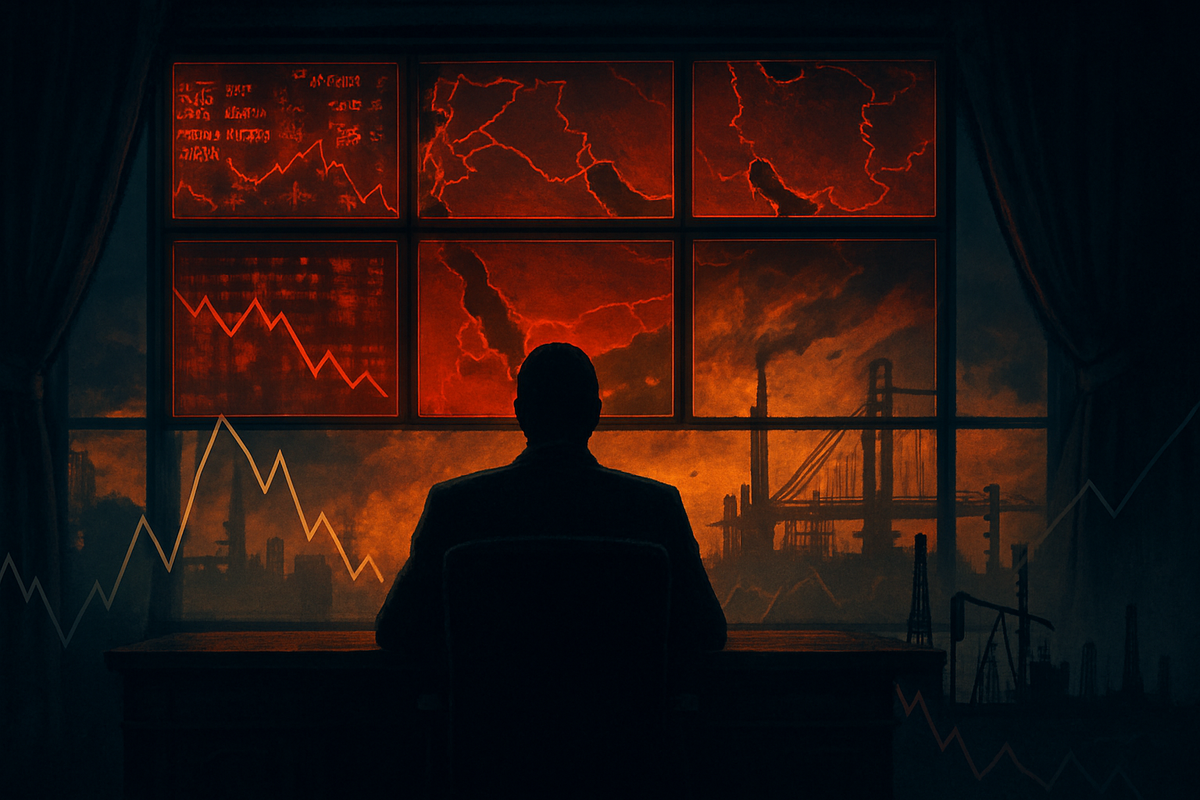
Market reaction on Thursday was characterized by "panic-hedging." The CBOE Volatility Index (VIX) spiked over 30% during the session as traders realized that the long weekend would leave them unable to react to any military movements occurring over the Good Friday break. The lack of a ceasefire plan—or even a viable diplomatic "off-ramp"—has left the market in a state of paralysis, with major indices finishing the day sharply lower as the "buy-the-dip" mentality was replaced by a "flight-to-cash" stampede.
The Bifurcated Market: Winners and Losers
The 2026 conflict has created a radical divergence between sectors. The clear winners in this "war economy" are the traditional defense titans and energy giants. ExxonMobil (NYSE: XOM) and Chevron (NYSE: CVX) both saw significant gains leading into the holiday, up 41% and 37% year-to-date, respectively. As oil prices sustain triple-digit levels, these companies are acting as the new "safe havens," replacing traditional assets like gold. In the defense sector, Lockheed Martin (NYSE: LMT) and Northrop Grumman (NYSE: NOC) have hit all-time highs as the Pentagon accelerates procurement of PAC-3 interceptors and B-21 Raider components to support the ongoing operations in the Persian Gulf.
Conversely, the transport and consumer discretionary sectors are facing an existential crisis. Major airlines such as Delta Air Lines (NYSE: DAL), United Airlines (NYSE: UAL), and American Airlines (NASDAQ: AAL) have seen their 2026 earnings guidance completely "evaporated" by fuel costs. Even with Delta’s structural hedge through its refinery ownership, the sector is down nearly 20% since the start of the year. Logistics giants are also feeling the heat; while FedEx (NYSE: FDX) has managed to pass some costs through via "demand surcharges," UPS (NYSE: UPS) has struggled with margin compression as third-party transportation costs skyrocket.
In a surprising twist, the traditional safe haven of gold, represented by the SPDR Gold Shares (NYSEARCA: GLD), actually saw a sell-off on April 2nd. Analysts attribute this to a liquidity crunch, as institutional investors were forced to liquidate winning gold positions to cover margin calls on their crashing tech and transport portfolios. Instead, the "Maximum Pressure" policy has boosted the U.S. Dollar Index (DXY) to its highest levels in years, making the greenback the ultimate sanctuary for global capital.
The End of the "Goldilocks" Era
This escalation fits into a broader, more ominous trend: the definitive end of the "Goldilocks" economy of the early 2020s. The 2026 Iran conflict is not just a regional skirmish; it is a massive inflationary shock that has forced the Federal Reserve to abandon any plans for interest rate cuts this year. Historically, events like the 1991 Gulf War led to brief market rallies because the conflict was seen as "surgical." However, the 2026 scenario is more akin to the 1973 oil embargo, where the targeting of infrastructure and the closure of shipping lanes created long-term structural shifts in energy pricing.
The regulatory implications are equally significant. We are seeing a rapid shift toward "energy nationalism," where the U.S. government may soon limit energy exports to ensure domestic price stability—a move that would further alienate European allies already struggling with the loss of Middle Eastern supply. This "America First" military and economic posture has effectively dismantled the post-Cold War global trade consensus, replacing it with a world of fortified blocs and high-friction commerce.
The Long Weekend and the Road Ahead
As the world heads into the weekend of April 4th and 5th, the short-term outlook is dominated by the question of "when," not "if," the strikes on Iranian power plants will begin. If the U.S. carries out the threatened destruction of the Iranian power grid, we could see oil prices test the $130 level by Monday’s open. The strategic pivot required for corporations will be massive; airlines may need to ground significant portions of their fleets, and "just-in-time" supply chains may finally be abandoned in favor of regionalized, high-inventory models.
The primary challenge for investors will be navigating the potential for a "Black Swan" event—such as a direct retaliatory strike by Iran on Saudi oil fields or a cyberattack on the U.S. financial system. While the defense and energy sectors offer a temporary hedge, a prolonged conflict with no ceasefire path could eventually lead to "demand destruction," where high prices lead to a global recession that drags down even the current market winners.
A Tense Conclusion for Global Markets
The escalation of the Iran conflict as of April 3, 2026, represents the most significant geopolitical risk to the global economy in decades. President Trump’s vow to strike infrastructure suggests a war of attrition that will not be resolved by simple diplomacy. The key takeaway for investors is that the old "risk-off" playbook has been rewritten: energy and the U.S. dollar are the new defenses, while traditional growth stocks and even gold have become sources of liquidity for panicked traders.
Moving forward, the market will be looking for any sign of a back-channel negotiation, though the current rhetoric makes that seem unlikely. Investors should watch the price of Brent crude and the strength of the dollar as the primary indicators of conflict severity. As we await the reopening of the markets on Monday, April 6, the only certainty is that the period of low-volatility, globalized growth is over, replaced by a new era of kinetic diplomacy and energy-driven market cycles.
This content is intended for informational purposes only and is not financial advice.