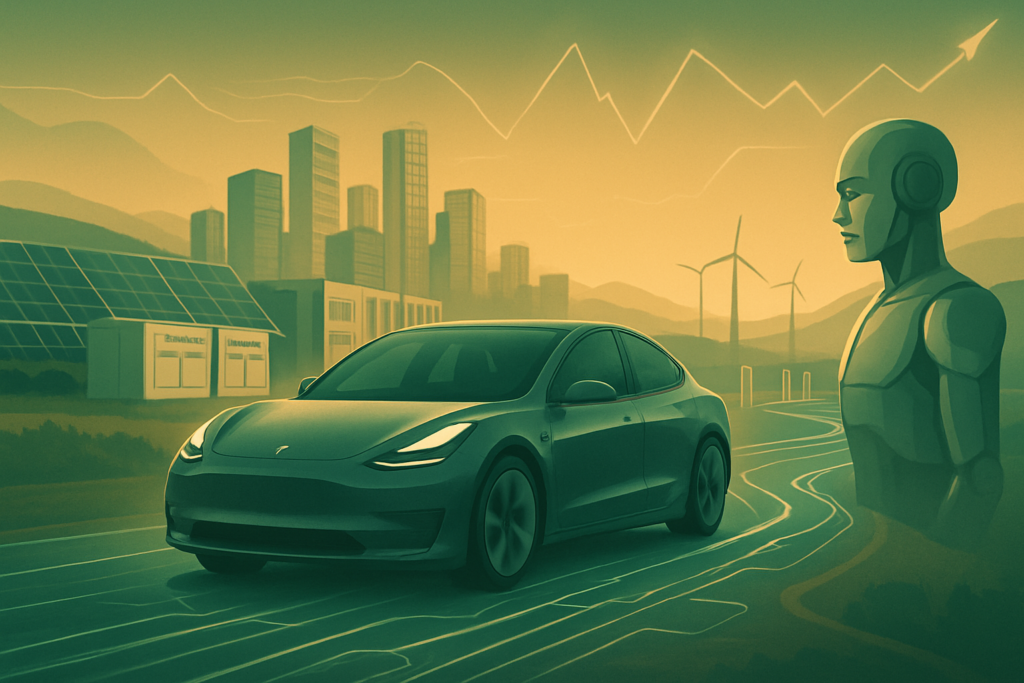
Tesla, Inc. (NASDAQ: TSLA), the American multinational automotive and clean energy company headquartered in Austin, Texas, remains a focal point in global technology and financial markets. Founded in 2003, and famously led by CEO Elon Musk since 2008, Tesla’s mission to accelerate the world's transition to sustainable energy has propelled it to the forefront of the electric vehicle (EV) revolution and into the burgeoning fields of energy storage, artificial intelligence (AI), and robotics.
Tesla’s current relevance stems from its continuous technological innovation, particularly in autonomous driving (Full Self-Driving, or FSD), AI, and robotics (Optimus project), positioning it as a pioneer beyond just automotive manufacturing. The company revolutionized the automotive industry by proving the viability and desirability of high-performance electric vehicles, compelling traditional automakers to fast-track their own electrification strategies. As of December 5, 2025, Tesla’s product line has expanded to include a new, lower-priced Model 3 in Europe, an entry-level Model Y Standard trim, and the ongoing rollout of the Cybertruck. The company is also aggressively pushing its FSD (Supervised) system globally, integrating AI with vehicle functions via "Grok with Navigation Commands (Beta)," and planning a dedicated "robotaxi" (Cybercab) for 2026. Its energy generation and storage segment, encompassing Powerwall and Megapack, continues to show robust growth, with over 30% gross margins and 81% year-over-year deployment growth in Q3 2025.
Despite facing intensifying competition, particularly from Chinese manufacturers like BYD, and softening demand in some markets, Tesla’s strategic adjustments and relentless pursuit of innovation maintain its high relevance in the global technology and automotive landscape. Its stock has experienced volatility throughout 2025, but shows resilience, up approximately 25.83% over the last 12 months, reflecting investor confidence in its long-term vision to become an AI, Robotics, and Sustainable Energy powerhouse.
2. Historical Background
Tesla Motors, Inc. was incorporated on July 1, 2003, by engineers Martin Eberhard and Marc Tarpenning, named after the visionary inventor Nikola Tesla. Their initial vision was to create a technology-driven car manufacturer focused on advanced battery technology, software, and electric motors. Elon Musk’s pivotal $6.5 million investment in February 2004 made him the largest shareholder and chairman, eventually leading him to assume the CEO role in October 2008.
Early milestones were critical in establishing Tesla’s credibility:
- 2006: The prototype for the all-electric Roadster was unveiled.
- 2008: Production of the first-generation Tesla Roadster began, a groundbreaking vehicle with lithium-ion battery cells and a range exceeding 200 miles.
- 2010: Tesla went public on NASDAQ (TSLA) with an IPO at $17 per share, raising $226 million, marking the first IPO by an American car company since Ford in 1956. The Tesla Factory in Fremont, California, was also established.
- 2012: The Model S luxury sedan launched to critical acclaim, and the Supercharger network began its deployment.
- 2013: Tesla achieved its first profitable quarter and became a NASDAQ-100 component.
- 2014: Plans for Gigafactory Nevada were announced, and the Autopilot driver-assistance system was introduced.
Key transformations over time saw Tesla evolve from a niche sports car maker to a broader mass-market and energy solutions provider. This included the expansion of its product line with the Model X SUV (2015), the mass-market Model 3 (2017), and the Model Y crossover (2020), followed by the Tesla Semi (2022) and Cybertruck (2023). A cornerstone of its strategy has been vertical integration and the construction of Gigafactories in Nevada, New York, Shanghai, Berlin, and Texas, significantly scaling battery and vehicle production. The acquisition of SolarCity in 2016 marked a significant expansion into clean energy, leading to the company’s name change to "Tesla, Inc." in 2017, reflecting its focus on solar panels, solar shingles, and stationary battery storage (Powerwall, Megapack). Tesla also pioneered a direct-to-consumer sales model and continuously developed its advanced driver-assistance systems and software capabilities.
3. Business Model
As of December 5, 2025, Tesla's business model is a dynamic blend of electric vehicle manufacturing, energy solutions, and increasingly, software and artificial intelligence. While automotive sales remain the primary revenue driver, the company is strategically diversifying into AI and robotics, which are increasingly central to its long-term vision.
Revenue Sources:
- Automotive Sales: The largest segment, projected to account for 74% of Tesla's total revenues in FY2025 ($77 billion), including vehicle sales and leasing.
- Services and Other: Expected to grow 17% to $12 billion in FY2025, covering vehicle servicing, used vehicle sales, body shop operations, and non-warranty services.
- Energy Generation and Storage: A rapidly growing segment, projected to increase 45% to $15 billion in FY2025, from solar panels, Solar Roof, Powerwall, and Megapack.
- Regulatory Credits: Revenue from selling emissions credits to other automakers.
- Software Upgrades: Sales of Full Self-Driving (FSD) software.
- Charging Network: The expanding North American Charging Standard (NACS) is expected to become a stable recurring revenue source.
Product Lines:
- Vehicles:
- Model S, Model X: Luxury sedan and SUV.
- Model 3, Model Y: Mass-market sedan and compact SUV, with new lower-priced "Standard" variants to boost demand.
- Cybertruck: Unique stainless-steel pickup truck.
- Tesla Semi: Commercial heavy-duty electric truck, mass production anticipated in 2026.
- "Model Q" / Affordable Mass-Market EV: Planned for launch in 2025, aiming for under $30,000.
- Cybercab (Robotaxi): Dedicated robotaxi planned for mass production in 2026.
- Energy:
- Solar Generation: Solar Roof and traditional Solar Panels.
- Energy Storage: Powerwall (home/small business), Megapack (utility-scale), and the newly unveiled Megapack 3 & Megablock (higher capacity, simpler installation).
- Software & Grid Optimization: Autobidder (AI-driven asset optimization) and Virtual Power Plants (VPPs).
- Software:
- Full Self-Driving (FSD) (Supervised): Advanced driver-assistance system with continuous over-the-air (OTA) updates.
- Autopilot: Standard driver assistance features.
- OTA Updates: Regularly deploy new features like Grok (xAI voice assistant), Tron Mode UI, 3D Buildings, and enhanced Dashcam Viewer.
Services: Vehicle servicing, Supercharger Network, home charging products, insurance, financing, and a nascent Robotaxi service.
Market Segments and Customer Base: Tesla primarily targets affluent, tech-savvy, and environmentally conscious individuals aged 25-55, with a median household income of approximately $144,341. While historically appealing to innovators and early adopters, the introduction of more affordable models is broadening its appeal to middle-income segments. The company is also expanding into fleet operators, commercial vehicles, and industrial sectors, particularly with its energy storage solutions.
4. Stock Performance Overview
Tesla (TSLA) has delivered a highly volatile yet substantially rewarding performance across different time horizons, reflecting its disruptive market position and investor sentiment.
1-Year Horizon (December 2024 – December 2025):
The past year has been a rollercoaster. TSLA closed 2024 at approximately $403.84, hitting an all-time high of $479.86 on December 17, 2024, and a 52-week high of $488.54. However, 2025 began with a sharp downturn, plunging over a third of its value by early March to a 52-week low of $167.42. A significant rebound started in April, with shares gaining nearly 64% through late May. As of December 5, 2025, TSLA's closing price was approximately $454.89, representing a 12-month increase of 26.99%.
- Key Drivers: Initial 2025 downturn due to declining revenues, margin woes, and increased competition. The rebound was fueled by optimism surrounding FSD, the unveiling of Robotaxis, and a "Trump bump" post-election. Strong energy division growth also contributed.
5-Year Horizon (December 2020 – December 2025):
Over the past five years, TSLA has seen substantial growth, with a 125.4% increase in closing price. The total return is 127.63%. The period began with a surge in 2020-2021 due to consistent profitability, S&P 500 inclusion, and rising EV demand. However, 2022 brought a slump due to rising interest rates, increased EV competition, and concerns over Elon Musk's acquisition of Twitter. A rebound in 2023-2024 was driven by price cuts, increased production, and improving profitability.
- Key Drivers: EV market boom, S&P 500 inclusion, profitability milestones, macroeconomic headwinds (2022), intensifying competition, and Elon Musk's activities. Continuous technological advancements in battery and FSD have been consistent drivers.
10-Year Horizon (December 2015 – December 2025):
Over the past decade, Tesla has delivered an astounding performance, with an average annual return of 40.12% and a total return of approximately 2,672.6%. An investor buying $1,000 at IPO in 2010 would have approximately $284,609 today.
- Key Drivers: Pioneering the EV market, product line expansion (Model 3, Model Y), global Gigafactory network, technology leadership in batteries and autonomous driving, strong brand, Elon Musk's visionary leadership, and the growth of the energy division.
In summary, Tesla's stock performance reflects a company with explosive growth and market leadership, but also high volatility influenced by competitive pressures, macroeconomic shifts, and the unpredictable nature of its CEO's public actions.
5. Financial Performance
Tesla's financial performance in Q3 2025, reported on October 22, 2025, presented a mixed picture of record revenue and deliveries alongside significant profitability compression.
Recent Earnings:
- GAAP Net Income: $1.4 billion, a 37% year-over-year (YoY) decline.
- Non-GAAP Net Income: $1.8 billion.
- GAAP Diluted EPS: $0.39.
- Non-GAAP Diluted EPS: $0.50, missing analyst expectations of $0.54-$0.56 by 7.41%.
Revenue Growth:
- Total Revenue: Record $28.1 billion, a 12% YoY increase, exceeding analyst expectations. This marked a return to top-line growth after two quarters of declines.
- Automotive Revenue: $21.2 billion, up 6% YoY.
- Energy Generation and Storage Revenue: Surged 44% to $3.4 billion, a significant growth engine.
- Services and Other Revenue: Grew 25% to $3.5 billion.
Gross and Operating Margins:
- Gross Margin: Declined to 18.0% from 19.8% in Q3 2024, significantly below its peak in the 25% range. This was due to lower fixed cost absorption, increased tariffs, and sales mix shifts.
- Operating Margin: Fell to 5.8% from 10.8% YoY, a 5-percentage-point decrease.
- Operating Income: Decreased 40% YoY to $1.6 billion, driven by a 50% increase in operating expenses ($3.43 billion) due to investments in AI, R&D, and higher SG&A costs. Regulatory credit revenue also dropped 44% to $417 million.
Debt Levels:
- Long-Term Debt: $5.609 billion as of September 2025.
- Total Debt (Fiscal Q2 2025): $13.13 billion.
Despite these levels, Tesla maintains a strong liquidity position, with cash, cash equivalents, and investments increasing 24% YoY to $41.6 billion.
Cash Flow:
- Operating Cash Flow: $6.2 billion.
- Free Cash Flow: Record nearly $4.0 billion, well above estimates of $1.25 billion, driven by strong operations and a $1.3 billion YoY reduction in capital expenditures.
Key Valuation Metrics (as of early December 2025):
- Market Capitalization: Approximately $1.4 trillion to $1.51 trillion.
- Trailing Twelve Months (TTM) P/E Ratio: 292x to 313.98x.
- Forward P/E Ratio: 198x to 220.60x.
- Price-to-Sales (P/S) Ratio: 15.0x to 16.55x.
These metrics are significantly higher than the S&P 500 average and traditional automakers, indicating that Tesla's valuation heavily prices in future high growth and the successful commercialization of its emerging AI and robotics businesses.
6. Leadership and Management
As of December 5, 2025, Tesla, Inc. (TSLA) is primarily shaped by its charismatic and often controversial CEO, Elon Musk, supported by a focused leadership team and a board of directors that has faced scrutiny regarding governance.
CEO:
Elon Musk serves as the Chief Executive Officer and "Technoking" of Tesla, a role he has held since October 2008. He is deeply involved in product design, engineering, and manufacturing across Tesla's automotive, battery, and solar energy divisions. Beyond Tesla, Musk leads SpaceX, X (formerly Twitter), The Boring Company, Neuralink, and xAI. His public persona and ambitious pronouncements frequently place Tesla in the spotlight.
Leadership Team:
Tesla's executive team is lean and focused on executing Musk's vision:
- Vaibhav Taneja: Chief Financial Officer & Chief Accounting Officer.
- Tom Zhu: Senior Vice President, Automotive, overseeing global automotive operations.
- Andrew Baglino: Senior Vice President, Powertrain & Energy Engineering, leading battery, motor, and energy system development, and involved in AI infrastructure.
- Lars Moravy: Vice President, Vehicle Engineering.
- Franz von Holzhausen: Chief Designer.
- Ashok Elluswamy: Director, Autopilot Software.
Board of Directors:
The Board, chaired by Robyn M. Denholm, includes:
- Elon Musk
- Ira Ehrenpreis (Independent Director)
- Joe Gebbia (Independent Director)
- James Murdoch (Independent Director)
- Kimbal Musk (Director, Elon's brother)
- JB Straubel (Director, co-founder)
- Kathleen Wilson-Thompson (Independent Director)
- Jack Hartung (Independent Director, joined June 2025)
Corporate Strategy:
Tesla's 2025 strategy is multi-pronged:
- Electric Vehicles (EVs): Innovating its lineup with a lower-priced "Model 3 Standard" and a rumored "Model Q" under $30,000 to counter softening demand and competition.
- Energy Storage and Diversification: Significantly expanding its energy generation and storage segment (Powerwall, Megapack), with a new Shanghai "megafactory" and projected 50%+ growth in 2025.
- Full Self-Driving (FSD) Software: Aiming for an unsupervised, fully autonomous driving service by June 2025 and exploring licensing FSD technology.
- Humanoid Robotics (Optimus): Planning to ramp up Optimus production to 1,000 units per month in 2025, with external deliveries by late 2025, seen as a major long-term technological bet.
- Robotaxi/Cybercab: Launched a "robotaxi" service in Austin and the San Francisco Bay Area, with a dedicated "Cybercab" for mass production in 2026.
Governance Reputation:
Tesla's governance remains a complex and debated topic.
- Musk's Compensation: Shareholders approved a significant performance-based restricted stock award for Elon Musk in November 2025, following a Delaware court's rejection of an earlier $56 billion package. This approval, while aiming to align Musk's interests, has drawn criticism from some institutional investors over dilution and concentration risk. A pending Delaware Supreme Court decision on the 2018 compensation plan could result in a $26 billion accounting charge.
- Shareholder Concerns: Concerns persist over Musk's political activities and their potential impact on Tesla's brand and performance, especially given the stock's year-to-date decline.
- Valuation Debate: The company's high valuation is often seen as disconnected from slowing fundamentals, overly reliant on speculative AI potential.
- Board Accountability: Questions have been raised about the opaque voting structure and its impact on shareholder input regarding executive pay and ESG matters.
7. Products, Services, and Innovations
As of December 5, 2025, Tesla (TSLA) continues to drive innovation across its core automotive business, expanding energy division, and ambitious ventures into artificial intelligence and robotics. This multifaceted approach is supported by significant R&D investments and a strategic patent portfolio.
Current Product and Service Offerings:
Vehicle Lineup:
- Model 3: Available in Standard, Long Range RWD, and Performance configurations, with new "Standard" trims introduced in North America and Europe for affordability.
- Model Y: Offered in Standard RWD, Premium, Performance, and a 7-seater variant. Received a facelift in early 2025 and new entry-level trims.
- Model S and Model X: Premium sedan and SUV.
- Cybertruck: Launched in late 2024, continuing its rollout.
Energy Products:
- Solar Roof and Solar Panels: Integrated solar generation solutions.
- Powerwall: Home and small business battery system for energy storage, backup, and Virtual Power Plant (VPP) participation.
- Megapack: Large-scale battery storage for utility and industrial applications.
Services:
- Supercharging Network: Tesla's extensive fast-charging network, with many major North American EV manufacturers adopting NACS.
- Full Self-Driving (FSD) Software: Advanced driver-assistance system, continuously improved via over-the-air (OTA) updates, with efforts to achieve unsupervised autonomous driving.
- Auto Insurance: Tesla's proprietary insurance services.
Innovation Pipelines:
Upcoming Vehicles and Platforms:
- Affordable EV (Model Q/Model 2): Expected to launch in the first half of 2025, potentially priced under $30,000, to expand market reach.
- Cybercab (Robotaxi): A dedicated robotaxi vehicle planned for mass production in 2026, with autonomous ride-hailing services already in trial.
- New Tesla Semi: Volume production of the updated Semi anticipated in H2 2026.
- Next-Gen Roadster: Tentatively planned for unveiling in April 2026, with production around mid-2027.
- Robovan/Robus: An autonomous electric van for future development, potentially launching around 2028.
AI and Robotics:
- Optimus Robot: Rapidly advancing humanoid robot, with production ramping to 1,000 units/month in 2025 and external deliveries expected in late 2025. Utilizes AI-driven balance modeling and motion optimization.
- Full Self-Driving (FSD) Advancements: Continuous software improvements aiming for fully unsupervised driving capabilities and exploring FSD licensing to other automakers.
- AI Infrastructure: Heavy investment in AI infrastructure, including the development of HW5.0 chips.
Battery Technology and Manufacturing:
- 4680 Battery Cells: Continued focus on in-house development and production for cost reduction and efficiency.
- Gigafactory Expansion: Massive scaling of Gigafactories in Texas, Berlin, Shanghai, and Nevada to support increased output.
R&D Investments:
Tesla has significantly increased R&D, with expenses reaching $5.904 billion for the twelve months ending September 30, 2025 (35.47% YoY increase). Q3 2025 R&D expenses were $1.63 billion, exceeding expectations due to investments in AI, HW5.0 chips, Robotaxi, and Optimus development. Capital expenditures in 2025 are expected to be around $9 billion.
Patents:
Tesla holds a global portfolio of 4060 patents (3028 active) across key areas: power management, solar energy, EV drive systems, battery technology, autonomous vehicle systems (AI, machine learning, computer vision), vehicle safety, and manufacturing processes. Patent activity is increasing in China and Europe.
Sources of Competitive Edge:
- Technological Leadership: Dominance in EV technology, battery innovation, AI, and FSD software.
- Vertical Integration: Control over design, manufacturing, and distribution for efficiency and quality.
- Energy Ecosystem: Tesla Energy's comprehensive solutions (Solar Roof, Powerwall, Megapack, Autobidder, VPPs) position it as a critical infrastructure provider.
- Supercharging Network: Extensive charging infrastructure, now adopted by other automakers via NACS.
- Software and Over-the-Air Updates: Continuous improvements enhance vehicle features and performance.
- Manufacturing Innovation: Focus on efficiency, including 48-volt architecture and cost optimization.
- Brand and Early-Mover Advantage: Strong brand recognition and pioneering role in the EV market.
- Reliability Improvements: Model Y ranked as the most dependable EV in Consumer Reports' 2026 rankings.
- Humanoid Robotics (Optimus): Potential to open new markets and revenue streams.
8. Competitive Landscape
As of December 5, 2025, Tesla faces an increasingly competitive landscape across both its electric vehicle (EV) and energy storage segments, with market share shifts driven by aggressive new entrants and established players.
Major Industry Rivals:
Electric Vehicle (EV) Segment:
- Chinese Manufacturers: BYD (Tesla's most formidable global competitor, often surpassing in total EV sales), Nio, Geely, SAIC, Changan, Chery, and Wuling.
- Traditional Automakers: Volkswagen, General Motors (GM), Ford, Hyundai, Kia, and BMW, all heavily investing in electrification and expanding their EV lineups.
- EV Start-ups: Rivian (electric trucks/SUVs) and Lucid Motors (luxury EVs).
Energy Storage Segment (Powerwall, Megapack):
- Chinese Companies: Sungrow, BYD, CRRC Zhuzhou Institute, Huawei, Pylontech, Deye, CALB, EVE.
- Other Global Players: Fluence Energy (utility-scale), Enphase Energy (residential), LG Energy Solution, Samsung SDI, and CATL (battery manufacturing).
Estimated Market Share in Key Segments (as of 12/5/2025):
Electric Vehicles (EVs):
Tesla's EV market share has declined amidst rising competition.
- Global EV Market Share: Ranked third globally with 7.7% between January and August 2025, trailing BYD (19.9%) and Geely (10.2%). In Q2 2025, Tesla held 8%, behind BYD (22%) and Geely (10%). BYD surpassed Tesla in Q4 2024 for BEV sales.
- U.S. EV Market Share: Dominant but declining, holding 45.2% in February 2025 (down from ~80% in 2019) and ~41% in Q3 2025. For the full year 2024, estimates range from 38% to 49%.
- UK EV Market Share: Dropped to 9.4% in November 2025 from 11.9% in November 2024.
Energy Storage (ESS):
Tesla maintains a leading position.
- Global ESS Market Share: Top global producer in 2024 with 15% share. Among the top five in 1Q-3Q 2025 (alongside Sungrow, BYD, CRRC Zhuzhou Institute, Huawei).
- Residential Battery Market: Powerwall was the most quoted brand in H2 2024 (63% share).
- North American ESS Market Share: Held top spot for the third consecutive year in 2024, capturing 39%.
Competitive Strengths:
- Strong Brand Loyalty: Synonymous with EVs.
- Advanced Battery Technology: Leading in energy density and range.
- Vertical Integration: Control over production stages for quality and innovation.
- Supercharger Network: Unmatched fast-charging infrastructure, now industry-standard.
- Technological Leadership: Advanced software, autopilot, performance, and energy storage solutions.
- Strong Energy Storage Business: Flourishing with high margins.
- High Resale Value: Models like Model Y and Model 3.
- Commitment to Sustainability: Aligns with global trends.
- Reliability Improvements: Model Y ranked as most dependable EV by Consumer Reports.
- Humanoid Robotics (Optimus): Potential for new markets.
Competitive Weaknesses:
- Intensifying Competition: Declining market share due to rivals.
- Quality Control Issues: Persistent reports of build quality issues (e.g., suspension, braking, lighting in TÜV Report 2026).
- Production and Delivery Delays: Struggling to meet timelines for new models.
- Service and Repair Limitations: Fewer service centers than traditional automakers.
- Price Fluctuations: Frequent pricing changes create uncertainty.
- Limited Product Portfolio: Narrow range of EV models.
- High Cost of Premium Features: Expensive FSD and performance versions.
- Dependency on Elon Musk: Controversial persona can impact brand and sales.
- Supply Chain Constraints: Vulnerabilities in critical battery materials and semiconductors.
- Software Glitches: Despite innovation, some users report glitches.
- Inventory Concerns: Potential oversupply risks in some markets.
9. Industry and Market Trends
The electric vehicle (EV) and renewable energy sectors are undergoing profound transformations as of December 5, 2025, driven by a confluence of macro drivers, evolving supply chain dynamics, and distinct cyclical effects. These trends present both significant opportunities and challenges for Tesla.
Macro Drivers:
- Global Electrification and Decarbonization Push: A continued worldwide shift towards clean energy, with renewable electricity projected to surpass coal globally in 2025. Global EV sales are expected to exceed 20 million in 2025, representing over one-quarter of total car sales.
- Government Policies and Incentives: Robust policies like the U.S. Inflation Reduction Act (IRA) spur clean energy manufacturing. However, some policy changes, like the "One Big Beautiful Bill Act," have rolled back tax credits. Europe is accelerating its EV transition with stringent emission regulations.
- Technological Advancements: Innovations in battery technology (solid-state), solar PV (perovskite), and the increasing use of AI for grid optimization and demand forecasting are key.
- Rising Electricity Demand: Driven by widespread electrification, including EVs and energy-intensive data centers.
- Increased Private Investment: Growing private capital flowing into solar, wind, and energy storage.
Supply Chain Dynamics:
- EV Sector:
- Battery Raw Materials: Robust growth in lithium and nickel markets, with supply capacity expected to come online, though project delays are a risk. Lithium prices have stabilized.
- Semiconductors: Automotive chip market growing, but demand for older, larger node size chips remains high. Geopolitical events and talent shortages are vulnerabilities.
- Regionalization: Intense global competition to onshore clean technology supply chains, with the U.S. incentivizing domestic battery and EV component production to reduce reliance on China.
- Renewable Energy Sector (Solar and Energy Storage):
- Solar PV Supply Chain: Highly concentrated in China, leading to vulnerabilities and a push for localization/nearshoring. U.S. investment in solar manufacturing is growing, but reliance on imports for cells/wafers remains.
- Material Shortages & Cost Volatility: Surging demand for solar materials (polysilicon, aluminum, copper) creating shortages, though module and battery component prices have dropped. Copper demand is projected to outstrip supply.
- Logistics: Growth creating challenges in managing global components, tariffs, and infrastructure bottlenecks.
- Energy Storage Systems (ESS): Global ESS shipments saw strong growth in 1Q-3Q 2025 (84.7% YoY). A trend of U.S. battery manufacturers shifting focus to grid-scale storage over EV batteries.
Cyclical Effects:
- EV Market: Global EV sales continue growth, but competition is narrowing profit margins. Market sensitive to government incentives (e.g., policy changes in Europe).
- Renewable Energy Project Development: Continued upward trajectory despite some investment dips. Competitive auctions are replacing feed-in tariffs.
- Supply Chain Adjustment: Solar industry supply chains continually adjusting to trade policies and tariffs, leading to diversification efforts.
Key Sector-Level Trends Impacting Tesla's Business:
- EV Market Competition and Demand Fluctuations: Tesla's U.S. EV market share reduced from ~75% in Q1 2022 to 43.5% in Q1 2025. Q2 2025 saw its largest on-record quarterly fall in EV deliveries. Tesla is producing more affordable EVs to counter this.
- Strong Growth in Energy Storage: Tesla's energy generation and storage segment is a rapidly growing revenue driver, with forecast 50% YoY growth in 2025.
- Supply Chain Resilience and Cost Management: Benefits from improved raw material costs and focuses on circular economy principles. Aims for AI-driven supply chain optimization.
- Strategic Diversification and Vertically Integrated Model: Tesla's strategy extends to robotaxis, humanoid robots, solar, and battery storage, aiming for a vertically integrated clean energy ecosystem.
- Policy Impact: While benefiting from manufacturing tax credits, shifts in federal EV tax credits and trade policies influence market dynamics.
10. Risks and Challenges
Tesla (TSLA) faces a multifaceted array of operational, regulatory, and market risks, compounded by ongoing controversies, which could significantly impact its growth and profitability as of December 5, 2025.
Operational Risks:
- Quality Control Issues: Despite some improvements, the TÜV Report 2026 found 17.3% of Model Ys failed inspection due to "serious" or "dangerous" defects (suspension, braking, lighting). Model 3 also performed poorly. Electrically controlled doors continue to generate consumer complaints.
- Production Challenges and Oversupply: U.S. deliveries in November 2025 were the lowest monthly total for the year (39,800 vehicles), leading to an inventory of ~10,799 vehicles. This signals potential oversupply if demand doesn't rebound. While Q3 2025 global deliveries were strong, the planned mass production of a more affordable EV faces intense competition and potential delays.
- Supply Chain Resilience: The broader automotive industry continues to face potential disruptions, though specific 2025 details for Tesla are limited.
Regulatory Risks:
- Full Self-Driving (FSD) System Scrutiny: NHTSA is intensely investigating FSD due to safety concerns, identifying at least 80 incidents of alleged traffic violations. The investigation focuses on FSD's ability to detect and respond to traffic signals and provide driver warnings. Tesla must respond by January 19, 2026.
- Controversial FSD Features and Legal Battles: Elon Musk's confirmation that FSD v14.2.1 allows texting while driving under certain conditions sparks legal and safety debates, conflicting with state laws. The California DMV is suing Tesla for allegedly misleading customers about FSD capabilities.
- International Regulatory Challenges for FSD: In Europe, FSD faces data privacy (GDPR) and liability issues, slowing approvals. The EU's proposed AI Act classifies autonomous driving as "high-risk," requiring exhaustive testing and ethical assessments, potentially delaying full FSD availability until 2028. FSD's camera-centric system struggles with dynamic European traffic rules.
- Environmental and Tax Regulations: European sales are affected by regulatory changes. The UK's looming "pay-per-mile" EV tax (April 2028) and weakened Zero Emission Vehicle (ZEV) mandate rules are expected to reduce EV attractiveness. Germany has seen a sharp decline in Tesla sales in 2025. The EU poses a risk with potential CO2 emissions penalties.
- Recalls: Tesla issued its largest recall of 2025 (500,000 vehicles) due to an FSD system glitch, highlighting rapid software defect propagation. Recalls also occurred for 2025 Model 3 and 2026 Model Y rearview camera issues.
Ongoing Controversies:
- FSD Safety and Misleading Marketing: Core controversy around FSD's safety performance (e.g., running red lights) and marketing practices that may overstate capabilities, leading to driver over-reliance.
- Elon Musk's Influence and Controversial Statements: Musk's public persona, including claims about FSD allowing texting, continues to generate negative headlines and regulatory scrutiny. His political interventions have led to "buyer backlash" in Europe.
- Executive Compensation: Elon Musk's $1 trillion pay deal, approved by shareholders in November 2025, sparks debates about excessive compensation and shareholder dilution. A pending Delaware Supreme Court decision on a prior 2018 compensation plan could result in a $26 billion accounting charge.
- Labor Practices: Tesla has faced scrutiny regarding its labor practices in the past.
Market Risks:
- Intensifying Competition and Market Share Erosion: Increased competition from traditional automakers and Chinese EV manufacturers is leading to declining market dominance, particularly in Europe and the U.S.
- Softening Demand and Oversupply: U.S. and European sales have fallen, and inventory levels are a concern. This could force production adjustments or incentives, impacting margins.
- Stock Volatility and Valuation Concerns: TSLA is known for volatility, with a 50%+ plunge between December 2024 and March 2025. Critics like Michael Burry label it "ridiculously overvalued" due to high P/E and P/S ratios despite declining earnings.
- Macroeconomic Headwinds: Broader economic conditions, consumer sentiment, and international regulatory changes affect EV demand.
- Technological Shift Risks: FSD and robotaxis are unproven at scale, facing significant regulatory and technical hurdles. Delays in AI chip development (AI6 chips to mid-2027) pose risks.
11. Opportunities and Catalysts
Tesla (TSLA) is strategically positioning itself for substantial growth, leveraging its diversified business segments and ambitious technological ventures. As of December 5, 2025, key growth levers, potential new markets, and anticipated near-term catalysts underscore its future potential.
Key Growth Levers:
- Energy Storage (Megapack and Powerwall): This is Tesla's fastest-growing business segment, with an 81% increase in deployments in Q3 2025. Revenue from this segment reached $3.415 billion (12% of total revenue) with gross margins often exceeding automotive. Projections indicate at least 50% year-over-year growth in 2025 and over 50 GWh annually by 2030.
- Full Self-Driving (FSD) Software and Robotaxi/Cybercab Service: FSD is a major source of recurring revenue, transforming Tesla into an "AI powerhouse." The "robotaxi" service is launched in Austin and San Francisco Bay Area, with plans for expansion to at least seven cities and removal of safety monitors in Austin by end of December 2025. The dedicated "Cybercab" robotaxi is slated for mass production in 2026.
- Optimus Humanoid Robot: This initiative could redefine Tesla's identity, with Elon Musk suggesting it could account for 80% of Tesla's value. Production is aimed at "several thousand" (5,000-10,000) units in 2025 for internal industrial use, with external sales expected in 2026 at an estimated price under $20,000 once scaled.
- Affordable Electric Vehicles ("Model 2" or "Model Q"): To counter intense EV competition and drive volume, Tesla plans to start making more affordable EVs in the first half of 2025, with mass production potentially by September 2025 and deliveries by December 2025. These models, expected under $30,000, will significantly expand market share.
- AI Infrastructure and Hardware: Internal development of advanced AI capabilities and custom FSD chips (like the AI5 chip) is crucial for enhancing autonomous driving and supporting robotics.
Potential New Markets:
- Global Expansion for FSD/Robotaxi: Regulatory approval and deployment of FSD in new regions, especially Europe and China, represent massive growth opportunities. National approval in the Netherlands by February 2026 could open doors for wider EU adoption, with full regulatory approval in China anticipated by early 2026.
- Broader Industrial and Home Automation with Optimus: Optimus, while initially for factories, is designed for wider industrial and potentially home automation, opening a multi-trillion-dollar market.
- Mobility-as-a-Service (MaaS): The robotaxi service positions Tesla to capture a share of the MaaS industry, projected to reach $50 billion by 2032.
- Utility-Scale and Residential Energy Solutions: The energy storage business taps into global demand for grid modernization and renewable energy integration. Tesla is considering a third Megafactory for production.
M&A Opportunities:
While not explicitly highlighted for external acquisitions, there's speculative mention of a potential future merger between Tesla and xAI. This would frame Tesla as a "physical AI" company and enhance its revenue multiples, focusing on internal AI integration rather than external acquisitions for core growth.
Near-term Catalysts (as of 12/5/2025):
- Q4 2025 Earnings Report: Expected in late January 2026, providing crucial insights into performance and 2026 guidance.
- Affordable EV Deliveries: Deliveries of the "Model 2" or "Model Q" are anticipated to begin in December 2025.
- Robotaxi Service Expansion and Autonomy Milestones: Aiming to expand robotaxi service to at least seven cities and remove safety monitors from vehicles in Austin by end of December 2025. Unsupervised FSD by end of 2025.
- FSD Regulatory Progress: Critical approvals in Europe (Netherlands by Feb 2026) and China (early 2026).
- Optimus Robot Production Ramp-up: Plans for producing several thousand Optimus robots in 2025.
- Continued Strong Energy Storage Growth: Energy business expected to maintain rapid growth, with a new Megafactory in Shanghai easing constraints.
- Refreshed Model Y Variants: New Standard RWD and 7-seater configurations expected in 2025.
- Tesla Semi Mass Production: Planned for 2026.
12. Investor Sentiment and Analyst Coverage
As of December 5, 2025, investor sentiment for Tesla (TSLA) presents a nuanced picture, characterized by a prevailing "Hold" consensus among Wall Street analysts, mixed movements from hedge funds, and a blend of long-term conviction and increasing skepticism among retail investors.
Wall Street Analyst Ratings:
The overall Wall Street consensus for Tesla is "Hold," with an average 12-month price target typically ranging between $380 and $400, suggesting a potential downside from current trading prices (around $430-$455). While the consensus is cautious, individual ratings vary, with some analysts maintaining "Buy" or "Outperform" ratings and raising price targets (e.g., Stifel to $508, Wedbush to $600, Robert W. Baird to $548, Piper Sandler to $500).
- Cautious Outlook: Driven by Tesla's stretched valuation (P/E ratios of 292x trailing and 198x forward), declining operating margins (down 5 percentage points to 5.8% in Q3 2025), and a softer outlook for EV demand in key markets.
- Bullish Sentiment: Fueled by anticipated progress in robotaxi and FSD initiatives, advancements in AI chip development, and robust growth in the energy storage business.
Hedge Fund Moves (Q3 2025 Filings):
Hedge fund activity showed mixed trends.
- Increased Holdings: 2,089 institutional investors added Tesla shares. Notable increases from UBS AM (+59.9%), FMR LLC (+20.7%), and Ken Griffin's Citadel Advisors (+1.1 million shares). Cathie Wood's ARK Invest increased its holding to $1.6 billion, with Tesla representing 9.5% of its 13F portfolio.
- Decreased Holdings: 1,650 institutional investors reduced positions. Significant reductions from Morgan Stanley (-16.4%), VALEO FINANCIAL ADVISORS (-98.4%), KINGSTONE CAPITAL PARTNERS (-100.0%), BANK OF AMERICA (-23.6%), and BARCLAYS (-20.4%). Peter Thiel's fund cut its stake by 76%, and Bill Gates maintained a short position.
Institutional Investors (Q3 2025 Filings):
Institutional investors collectively hold approximately 66% of Tesla's outstanding shares (GuruFocus reports 48.16% of institutional ownership). Major shareholders include Vanguard Group Inc, BlackRock, Inc., State Street Corp, and Geode Capital Management. Many asset managers, including Nomura Asset Management, Brighton Jones, Revolve Wealth Partners, Bison Wealth, and AMG National Trust Bank, boosted their stakes.
Retail Investor Sentiment:
Retail investors hold approximately 41% of Tesla's freely tradable shares, significantly higher than for other "Magnificent Seven" stocks, giving them an outsized impact.
- Resilience and Conviction: Despite a 3.4% stock price drop after the November 6, 2025, annual meeting (where Elon Musk's compensation was approved), retail investors were net buyers, adding $1.1 billion in the week leading up to November 18, 2025. Many maintain conviction in Tesla's long-term potential in self-driving taxis, humanoid robots, and energy storage.
- Increasing Skepticism: Sentiment on Stocktwits remained "neutral" in early December. A "very bearish" sentiment emerged on Reddit's r/investing following Michael Burry's "ridiculously overvalued" call, citing high P/E ratios and a 37% YoY decline in Q3 2025 earnings. Some retail investors believe the current valuation reflects "buying a religion" rather than fundamentals.
13. Regulatory, Policy, and Geopolitical Factors
As of December 5, 2025, Tesla (TSLA) operates within a complex web of regulatory, policy, and geopolitical factors that significantly influence its global strategy, compliance, and supply chain.
Relevant Laws and Compliance:
United States:
- FSD Scrutiny: Tesla faces intense scrutiny from NHTSA regarding its Full Self-Driving (FSD) technology, with ongoing investigations into alleged exaggerations of capabilities and safety concerns. This is expected to increase compliance costs.
- Environmental Regulations: Tesla advocates for the EPA to uphold ambitious tailpipe emissions standards, which are crucial for driving EV demand and investments, arguing that weakening them could impede EV adoption.
Europe:
- Charging Infrastructure: New EU legislation (January 2025) mandates EV charging points in non-residential buildings with over 20 parking spaces.
- CO2 Emissions: Amended EU regulations offer manufacturers more flexibility by assessing compliance based on a three-year average (2025-2027), potentially leading to fewer EV sales than initially expected.
- Battery Recycling (EPR): An Extended Producer Responsibility (EPR) regulation (effective August 2025) requires car manufacturers to finance collection, traceability, and recycling of lithium-ion batteries.
- FSD Hurdles: FSD faces significant hurdles due to stringent and fragmented EU regulations. The proposed AI Act classifies autonomous driving as "high-risk," necessitating exhaustive safety and ethical assessments, potentially delaying full FSD availability until 2028. Tesla is conducting supervised FSD ride-alongs to meet existing EU rules.
China:
- NEV Mandates: China continues its "NEV mandates" requiring automakers to produce a certain quota of electric or hybrid vehicles.
- Battery Safety Standards: Stricter battery safety standards (GB38031-2025) take effect July 1, 2026, demanding "zero tolerance" for fire/explosion risks and prohibiting smoke emissions.
- NEV Tax Incentive Requirements: New technical requirements for NEVs to qualify for purchase tax incentives begin January 1, 2026, including a minimum 100 km pure electric range for PHEVs and stricter energy consumption standards for BEVs.
Government Incentives:
United States:
- Federal EV Tax Credits: The federal EV tax credit ($7,500 for new, $4,000 for used) will end on September 30, 2025. A loophole allows buyers with binding purchase agreements before this date to still qualify. After this, only state/local incentives will remain. A new car loan interest tax deduction allows up to $10,000 annually.
Europe:
- Varied Fiscal Support: All EU member states offer some EV support, but many (Germany, Italy, etc.) are discontinuing direct purchase incentives.
- France: Reduced national EV subsidy for 2025, with a low-income EV leasing scheme resuming in H2 2025 with a reduced budget.
- Germany: Direct EV subsidies ended in December 2023, but retains tax incentives (up to €6,750) and a 10-year road tax exemption.
- Norway: Full VAT exemption, no registration fees, and free ferry/parking for EVs.
- Netherlands: Property tax reductions, tax breaks for charging stations, and car tax exemptions.
- Spain: Current EV subsidy program (Moves III) expiring end of 2024.
China:
- Purchase Tax Exemptions: National purchase subsidies ended in 2022, but purchase tax exemptions for NEVs were extended through 2027. Starting January 1, 2026, these exemptions will be halved, capped at RMB 15,000.
- Car Trade-in Subsidy: Renewed for 2025 (RMB 81 billion allocated), offering up to RMB 20,000 for trading in older ICE or EVs for new EVs.
Geopolitical Risks and Opportunities:
- US-China Tensions and Supply Chain Diversification: Escalating US-China tensions are forcing Tesla to de-risk its supply chain. Tesla has reportedly instructed suppliers to cease using China-made components for U.S.-manufactured vehicles within 12-24 months from November 2025, seeking alternatives in Mexico and Southeast Asia. This reflects a "dual supply chain strategy" to mitigate tariffs and ensure U.S. tax credit eligibility.
- Supply Chain Vulnerabilities: Reliance on China for semiconductors makes the Shanghai Gigafactory vulnerable. Dependence on critical raw materials (lithium, cobalt, nickel) exposes it to geopolitical risks and price fluctuations.
- Competitive Landscape: Intense competition from local EV manufacturers in China (e.g., BYD) is impacting Tesla's market share and profitability.
- Market Diversification: Tesla is exploring new markets like India, which offers government support for EV adoption, to offset challenges in established markets.
14. Outlook and Scenarios
As of December 5, 2025, Tesla (TSLA) is at a critical juncture, attempting to pivot from a leading EV manufacturer to a "full-stack AI physical infrastructure firm." This ambitious transformation shapes its future outlook, with both bullish and bearish scenarios hinging on execution, market acceptance, and competitive dynamics.
Strategic Pivots:
Tesla is betting heavily on the convergence of three interconnected growth "flywheels" between 2026 and 2027: autonomous robotaxis (Cybercabs), humanoid robots (Optimus), and AI-optimized energy platforms. This involves significant capital expenditure, exceeding $10 billion in 2025. Other pivots include diversifying into energy storage (Megapack 3, Megablock in 2026) and introducing more affordable EV models in early 2025. Elon Musk has also indicated a move into AI chip manufacturing.
Bull Case Scenarios
Short-Term Projections (2026-2027):
- FSD Advancements: FSD software (v14.2.1) continues to improve, with enhanced urban driving and hints of hands-free functionality. Aggressive promotion in Europe could lead to wider adoption and regulatory approval, generating billions in EBIT annually.
- Robotaxi Launch: The mid-2026 launch of a fully functional Robotaxi network (Cybercabs) could create a lucrative, around-the-clock revenue stream, potentially contributing 60% of Tesla's expected value by 2026.
- Optimus Progress: Optimus humanoid robots are expected to begin external sales in 2026, with mass production accelerating towards 2030. Recent demonstrations show significant progress, including the ability to run, suggesting improving mobility and coordination.
- Energy Storage Growth: Energy storage deployments are projected to grow by at least 50% YoY in 2025, with new higher-capacity Megapack 3 and Megablock systems in 2026 further boosting revenue.
- EV Market Rebound: The introduction of new, more affordable EV models in early 2025 is anticipated to reaccelerate delivery growth and recapture market share.
Long-Term Projections (2028-2030+):
- AI and Robotics Dominance: Tesla's transformation into an AI and robotics enterprise could lead to an exponential expansion of its addressable market. Elon Musk envisions Optimus generating over $10 trillion in long-term revenue, potentially making traditional jobs optional within 10-20 years and even eradicating poverty. Some predictions suggest humanoid robots could outnumber humans by 2040 and be five times more productive.
- Autonomous Revenue Streams: Full realization of FSD and robotaxis could unlock massive new revenue streams through autonomous ride-hailing services, revolutionizing transportation.
- Analyst Optimism: Highly bullish analysts, such as Cathie Wood and Ron Baron, project TSLA stock targets ranging from $1,500 to $2,000 by 2030, with ARK Invest's base case for 2030 exceeding $20,000 per share. Long-term estimates extending to 2040-2050 are largely bullish, citing Tesla's continuous innovation, product line expansion, and strong brand recognition.
Bear Case Scenarios
Short-Term Projections (2026-2027):
- EV Market Headwinds: Tesla experienced a 9% year-over-year decline in deliveries in Q1 2025, marking its first volume contraction in a decade. This slowdown is attributed to factory retoolings, brand perception issues linked to Elon Musk's public activism, and increasing competition, particularly from Chinese EV manufacturers like BYD.
- Margin Compression: The maturing EV adoption curve and heightened competitive intensity are leading to tightening profit margins and declining sales in Tesla's core automotive business.
- High Valuation Concerns: Tesla's stock trades at significantly elevated trailing and forward P/E ratios compared to other automakers, leading some analysts to believe the stock is overvalued and susceptible to a correction.
- Regulatory and Political Risks: Potential regulatory rollbacks, such as the elimination of federal EV tax credits in the US, could negatively impact demand and profitability. Elon Musk's controversial public statements and political activities are also cited as potential deterrents for some customers.
- FSD Limitations and Legalities: FSD remains a Level 2 autonomous driving system, requiring continuous driver attention, despite recent upgrades. The legality of features allowing activities like texting while driving is controversial and could face regulatory hurdles.
- Execution Risk of New Ventures: The ambitious robotaxi and Optimus projects are still in development and largely unproven at scale, carrying high execution risks and capital intensity.
Long-Term Projections (2028-2030+):
- Failure of AI/Robotics Scaling: The massive capital investment and inherent technological challenges mean Optimus and Robotaxis might not achieve mass market adoption or profitability as quickly or widely as projected. Some analysts are skeptical of Musk's "vaporware" claims and believe Optimus is still years away from meaningful scale.
- Competition in AI/Robotics: Tesla faces intense competition in the "physical AI" space, with other companies also making strides in humanoid robotics and autonomous technology.
- Missed Production Targets: Analysts are skeptical that Tesla will achieve Musk's ambitious target of 20 million vehicle deliveries annually by 2030, which would require capturing a fifth of the global automotive market.
- Capital Requirements: Unless current business lines see a dramatic reacceleration of deliveries or monetization of autonomy features, Tesla might require external capital within the next 12-18 months to fund its extensive AI and robotics aspirations.
- Lower Stock Price Forecasts: Some long-term forecasts for 2030 are significantly more conservative, ranging from $215.2 to $703.07, and even as low as $232.93, reflecting skepticism about the company's ability to monetize its future ventures or sustain its current valuation.
15. Conclusion
As of December 5, 2025, Tesla (TSLA) presents a complex and dynamic investment profile, marked by both significant achievements in its diverse business segments and increasing pressures in its core automotive market. The company continues to push boundaries in electric vehicles (EVs), artificial intelligence (AI), robotics, and energy solutions, while navigating intense competition and macroeconomic headwinds.
Summary of Key Findings:
Tesla's Q3 2025 performance showcased record revenue and deliveries, particularly driven by its rapidly expanding energy storage business, which is a significant and profitable growth engine. The company is aggressively pushing its Full Self-Driving (FSD) software globally and making notable strides in humanoid robotics with Optimus. However, this growth has come at the cost of compressed operating margins, influenced by aggressive pricing strategies, increased investments in AI and R&D, and declining regulatory credit sales. The core automotive segment faces intensifying competition from both traditional automakers and formidable Chinese rivals like BYD, leading to softening demand and market share erosion in key regions. Regulatory scrutiny over FSD's safety and capabilities, coupled with Elon Musk's often controversial public persona and governance concerns surrounding his compensation, add layers of risk. Despite these pressures, Tesla maintains a robust cash position and is strategically diversifying its supply chain to mitigate geopolitical risks.
Balanced Perspective on its Investment Case:
The bull case for Tesla is compelling, envisioning a transformation into a dominant AI and robotics powerhouse. Proponents believe FSD, robotaxis (Cybercabs), and Optimus will unlock exponential revenue streams, fundamentally changing transportation and labor. The energy storage business provides a stable, high-growth foundation. For these investors, Tesla's current valuation, while high, is justified by its long-term disruptive potential.
Conversely, the bear case highlights the disconnect between Tesla's lofty valuation and its current automotive fundamentals. Critics point to compressed margins, intense competition, and declining market share as evidence of a maturing EV market where Tesla's dominance is challenged. The ambitious AI and robotics ventures, while promising, carry immense execution risk, high capital requirements, and face formidable competition. Regulatory hurdles and the potential for reputational damage from FSD controversies or Elon Musk's actions are also significant concerns. For bears, the stock is overvalued, pricing in a future that is far from guaranteed.
What Investors Should Closely Monitor:
Investors should meticulously track several critical factors in the coming months and into 2026:
- Production and Delivery Figures: Especially for Q4 2025 and 2026 guidance, and the ramp-up of new, more affordable EV models and the Cybertruck. Inventory levels in key markets will be a crucial indicator of demand.
- Profit Margins: Closely track gross and operating margins in future earnings reports. The ability to stabilize or improve these margins amidst ongoing price competition and high R&D spending on AI and robotics will be a key indicator of financial health.
- Full Self-Driving (FSD) Progress and Regulatory Approvals: Monitor technological advancements, geographic expansion, and, critically, any regulatory decisions or increased scrutiny regarding its capabilities and safety. Successful widespread adoption and monetization of FSD are vital for the long-term software revenue thesis.
- Optimus Robot Development and Commercialization: Keep an eye on the actual internal deployment of Optimus units and any timelines for external commercialization. The successful transition from prototype to mass production and functional application will be key to validating Tesla's ambitious valuation beyond just automotive.
- Energy Storage Business Growth: Continue to track the deployment and profitability of Tesla's energy storage solutions (Powerwall, Megapack). Sustained high growth in this segment can provide a more stable and diversified revenue base, mitigating automotive cyclicality.
- Competitive Landscape and Market Share: Observe how Tesla fares against intensifying competition from both established automakers and new EV players, particularly in the BEV and hybrid markets globally. Any further erosion of market share could impact future growth prospects.
- Global Economic Conditions: Broader economic trends, consumer confidence, and interest rates will influence demand for electric vehicles, especially given their higher price points compared to traditional internal combustion engine (ICE) vehicles.
Tesla's journey remains one of high ambition and high risk. Its ability to execute on its vision of becoming an AI and robotics leader, while navigating a fiercely competitive and evolving automotive landscape, will determine its long-term trajectory.
This content is intended for informational purposes only and is not financial advice