Today’s Date: January 9, 2026
Introduction
As we enter early 2026, United Natural Foods, Inc. (NYSE: UNFI) stands at a critical juncture in its multi-year transformation. Once a darling of the organic movement, UNFI spent much of the early 2020s grappling with the complex integration of its SUPERVALU acquisition and a post-pandemic supply chain hangover. However, the narrative has shifted over the last six months. In the wake of a disruptive mid-2025 cyber attack, management has accelerated a "tech-first" overhaul, moving the company from a legacy distributor to a modernized, AI-enabled logistics partner. With a recently secured long-term extension of its Whole Foods partnership and a relentless focus on debt reduction, UNFI is attempting to prove to Wall Street that it can finally turn massive top-line volume into consistent shareholder value.
Historical Background
The UNFI of today is a far cry from its humble origins. Founded in 1976 by Norman Cloutier, the company began as a small organic food distributor serving the burgeoning health-food co-ops of New England. In 1996, the merger of Cornucopia Natural Foods and Mountain People's Warehouse formed the United Natural Foods we recognize today, leading to an IPO that same year.
For two decades, UNFI grew in lockstep with the natural and organic movement, buoyed by its status as the primary supplier to Whole Foods Market. However, the landscape shifted in 2018 when UNFI made a transformative—and controversial—$2.9 billion acquisition of SUPERVALU. This move was intended to diversify UNFI into conventional grocery and retail, but it saddled the company with immense debt and operational complexity. The years following the merger were marked by margin erosion and integration challenges, setting the stage for the current "Value Creation Plan" designed to trim the fat from that era.
Business Model
UNFI operates as the largest publicly traded wholesale distributor of health and specialty foods in the United States and Canada. Its revenue is derived from three primary channels:
- Wholesale Distribution: The core business, supplying natural, organic, specialty, and conventional products to over 30,000 locations, including independent retailers, supernatural chains (Whole Foods), and conventional supermarkets.
- Professional Services: A high-margin growth segment focusing on retail media, digital coupons, and data analytics. This segment currently contributes approximately 25% of the company's adjusted EBITDA.
- Retail & Private Label: UNFI operates a small retail footprint (CUB Foods and Shoppers) and a robust private label business ("OwnBrands"), which includes brands like Woodstock and Field Day.
The company has deliberately pivoted toward its "Natural" segment (growing at ~10.5% as of Q1 FY2026) while scaling back low-margin "Conventional" contracts to prioritize profitability over raw volume.
Stock Performance Overview
The last decade has been a rollercoaster for UNFI shareholders.
- 10-Year Horizon: The stock has largely underperformed the S&P 500, weighed down by the debt from the SUPERVALU deal and the uncertainty surrounding the Amazon/Whole Foods relationship.
- 5-Year Horizon: After a brief "pandemic bump" as grocery volumes surged, the stock hit a multi-year low in 2024 as inflation ate into margins and debt concerns peaked.
- 1-Year Horizon (2025): The stock saw a 20% drawdown following the June 2025 cyber attack but has recovered significantly in late 2025 and early 2026 as the market priced in the insurance recoveries and the 2032 Whole Foods contract extension.
As of early January 2026, the stock is showing signs of a "base-building" phase, with investors looking for proof of sustained margin expansion.
Financial Performance
UNFI’s Fiscal Year 2026 guidance reflects a strategy of "prudent contraction."
- Revenue: Projected at $31.6 billion to $32 billion, representing a flat-to-slight decline. This is viewed positively by analysts as it indicates the exit of unprofitable accounts.
- Profitability: After a net loss in FY2025 (exacerbated by $60 million in cyber-related costs), the company is trending toward a positive net income for FY2026. Adjusted EBITDA is targeted at $630M–$700M.
- Cash Flow & Debt: The most critical metric for the market is UNFI’s $300 million Free Cash Flow (FCF) target for 2026. Management has committed 100% of this FCF to paying down its $1.9 billion debt pile, with the goal of reaching a leverage ratio of 2.5x by year-end.
Leadership and Management
CEO Sandy Douglas, a veteran of Coca-Cola and Staples, has led the company since 2021. Douglas is credited with stabilizing the ship and shifting the culture toward "Lean Daily Management." Alongside him is CFO Giorgio Tarditi, who joined in early 2024. Tarditi’s disciplined approach to the balance sheet is highly regarded by institutional investors, as he has prioritized debt repayment over the "growth at any cost" mentality of previous regimes.
The board has also been refreshed to include more technology and logistics expertise, reflecting the company’s shift toward the Relex AI demand-forecasting platform and a unified SAP tech stack.
Products, Services, and Innovations
Innovation at UNFI is no longer about just finding the next kombucha brand; it is about the "Plumbing of Grocery."
- Relex AI Implementation: UNFI has completed the rollout of AI-driven supply chain forecasting across its distribution centers, resulting in a 15% reduction in food waste and improved "fill rates" for retailers.
- OwnBrands Expansion: In 2026, UNFI is launching 50+ new private-label SKUs. These products carry margins 500–1,000 basis points higher than national brands, providing a much-needed buffer against inflation.
- Retail Media Network: UNFI is leveraging its massive data on independent grocers to build a retail media platform, allowing CPG brands to target consumers more effectively—a move that mimics the high-margin success of Amazon Advertising.
Competitive Landscape
UNFI faces a two-front war.
- KeHE Distributors: The primary rival in the natural/organic space. While KeHE boasts higher margins (~4%), it is currently struggling with significant debt (leverage >5.5x) following equity repurchases. This gives UNFI a window to compete on price and technology.
- C&S Wholesale / SpartanNash: The landscape changed in late 2025 when C&S Wholesale Grocers completed its $1.77 billion acquisition of SpartanNash. This created a conventional grocery behemoth with massive scale, putting pressure on UNFI’s shrinking conventional segment.
UNFI’s "Natural" dominance remains its moat, as neither C&S nor Sysco (NYSE: SYY) has the same specialized infrastructure for organic and fresh logistics.
Industry and Market Trends
Several macro factors are shaping UNFI’s 2026 outlook:
- Normalization of Inflation: As food price inflation stabilizes, the "buy-ahead" benefits of previous years have vanished, forcing UNFI to rely on operational efficiency rather than price hikes.
- The "Natural" Pivot: Consumer demand for "clean label" and organic products continues to outpace conventional grocery, a trend that plays directly into UNFI’s historical strengths.
- Cyber Resilience: After several high-profile attacks in the food sector (including UNFI’s in 2025), cybersecurity has become a major "Table Stakes" operational requirement for wholesalers.
Risks and Challenges
Despite the turnaround, the risks remain high:
- The Debt Drag: With $1.9 billion in debt, UNFI has little room for error. A rise in interest rates or a sudden economic downturn could make debt servicing difficult.
- Execution Risk: The transition to a unified SAP system and the Relex AI platform is complex. Any technological "glitches" could lead to stock-outs and loss of market share.
- Margin Thinness: In a business where net margins are often below 1%, any unexpected cost—from diesel fuel spikes to labor strikes—can instantly erase profitability.
Opportunities and Catalysts
- Cyber Insurance Settlement: UNFI expects a significant insurance payout in mid-2026 related to the 2025 cyber attack. This one-time cash infusion could accelerate debt repayment goals.
- Whole Foods Stability: The extension of the Amazon/Whole Foods contract through 2032 removes the "Sword of Damocles" that has hung over the stock for years.
- Private Label Upside: If UNFI’s "OwnBrands" capture just 2% more of the total distribution mix, it could add an estimated $40M–$60M to the bottom line annually.
Investor Sentiment and Analyst Coverage
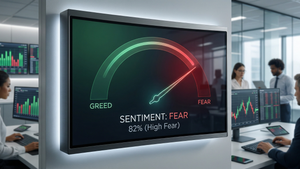
The analyst community remains "cautiously optimistic" but maintains a "Show-Me" stance. While price targets have been revised upward since the Whole Foods extension, many institutional investors are waiting for two consecutive quarters of FCF-driven debt reduction before increasing their weightings. Retail sentiment on platforms like PredictStreet is more bullish, focusing on the potential for a "tech-rerating" once the market stops viewing UNFI as a "boring" trucking company.
Regulatory, Policy, and Geopolitical Factors
- Labor Regulations: New overtime rules and rising minimum wages in key states (California, New York) continue to pressure warehouse labor costs.
- ESG Compliance: As a distributor, UNFI faces increasing pressure to electrify its fleet. The company has begun pilot programs with electric Class-8 trucks to meet 2030 emissions goals, which requires high upfront capital.
- Food Safety (FSMA 204): Upcoming FDA traceability requirements are forcing wholesalers to invest heavily in tracking technology, an area where UNFI’s recent SAP migration provides a competitive advantage.
Conclusion
United Natural Foods is currently a "two-story" stock. On one floor, it is a legacy wholesaler burdened by the debt of a massive acquisition and the scars of a recent cyber attack. On the other floor, it is a streamlined, tech-enabled logistics giant that has successfully defended its most important contract (Whole Foods) and is generating the cash flow necessary to fix its balance sheet.
For investors, the key to 2026 will be the execution of the $300M FCF target. If Sandy Douglas and his team can deliver on this promise, UNFI could see a significant valuation re-rating. However, in a low-margin industry where the competition is consolidating and technology is non-negotiable, there is no margin for error. Investors should watch the quarterly debt-to-EBITDA ratios as the ultimate barometer of success.
Disclaimer: This content is intended for informational purposes only and is not financial advice.