Over the past six months, BJ’s stock price fell to $89.74. Shareholders have lost 17.5% of their capital, which is disappointing considering the S&P 500 has climbed by 13.6%. This might have investors contemplating their next move.
Is there a buying opportunity in BJ's, or does it present a risk to your portfolio? Get the full stock story straight from our expert analysts, it’s free for active Edge members.
Why Is BJ's Not Exciting?
Even with the cheaper entry price, we're swiping left on BJ's for now. Here are three reasons why BJ doesn't excite us and a stock we'd rather own.
1. Same-Store Sales Falling Behind Peers
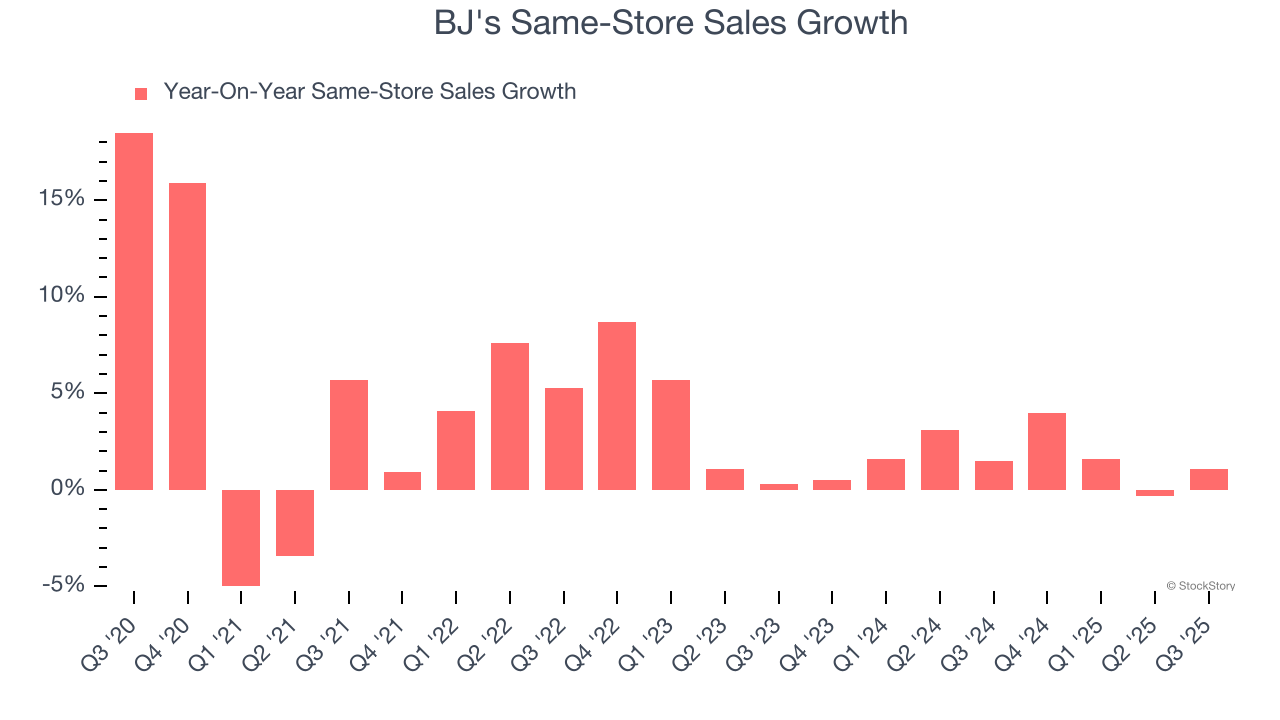
Same-store sales is a key performance indicator used to measure organic growth at brick-and-mortar shops for at least a year.
BJ’s demand within its existing locations has been relatively stable over the last two years but was below most retailers. On average, the company’s same-store sales have grown by 1.6% per year.
2. Low Gross Margin Reveals Weak Structural Profitability
Gross profit margins are an important measure of a retailer’s pricing power, product differentiation, and negotiating leverage.
BJ's has bad unit economics for a retailer, signaling it operates in a competitive market and lacks pricing power because its inventory is sold in many places. As you can see below, it averaged a 18.5% gross margin over the last two years. That means BJ's paid its suppliers a lot of money ($81.51 for every $100 in revenue) to run its business. 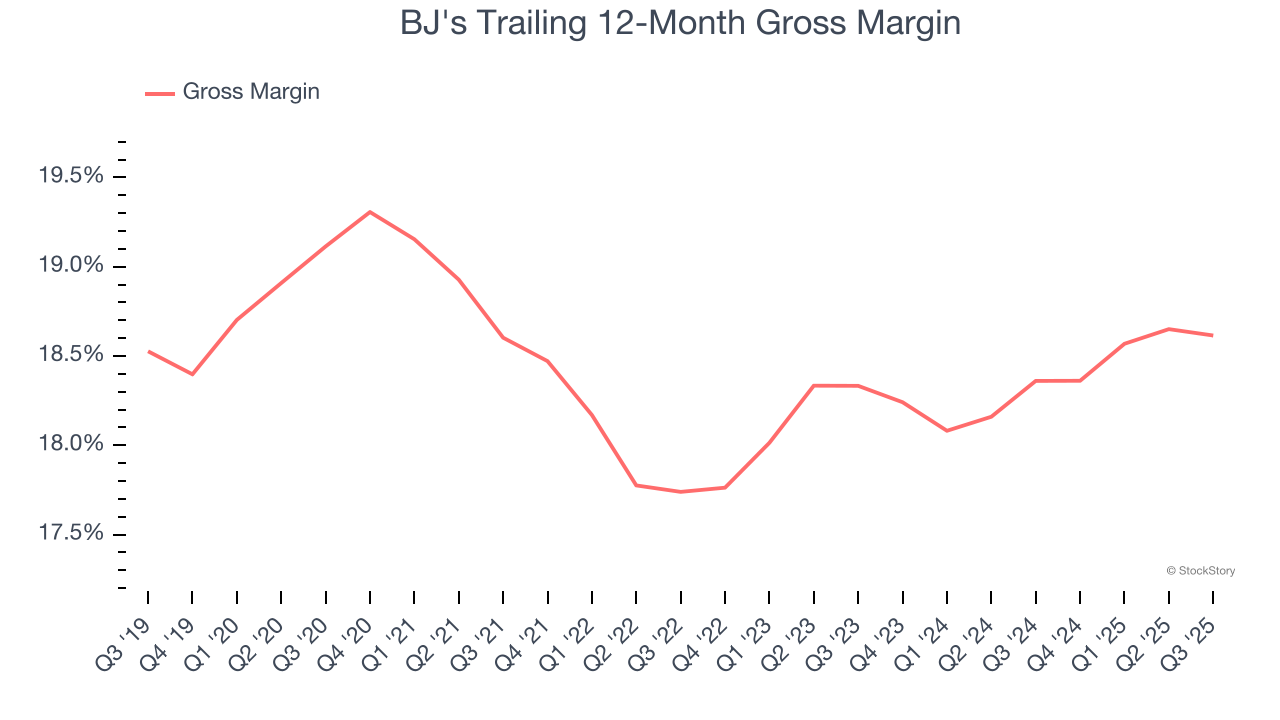
3. Weak Operating Margin Could Cause Trouble
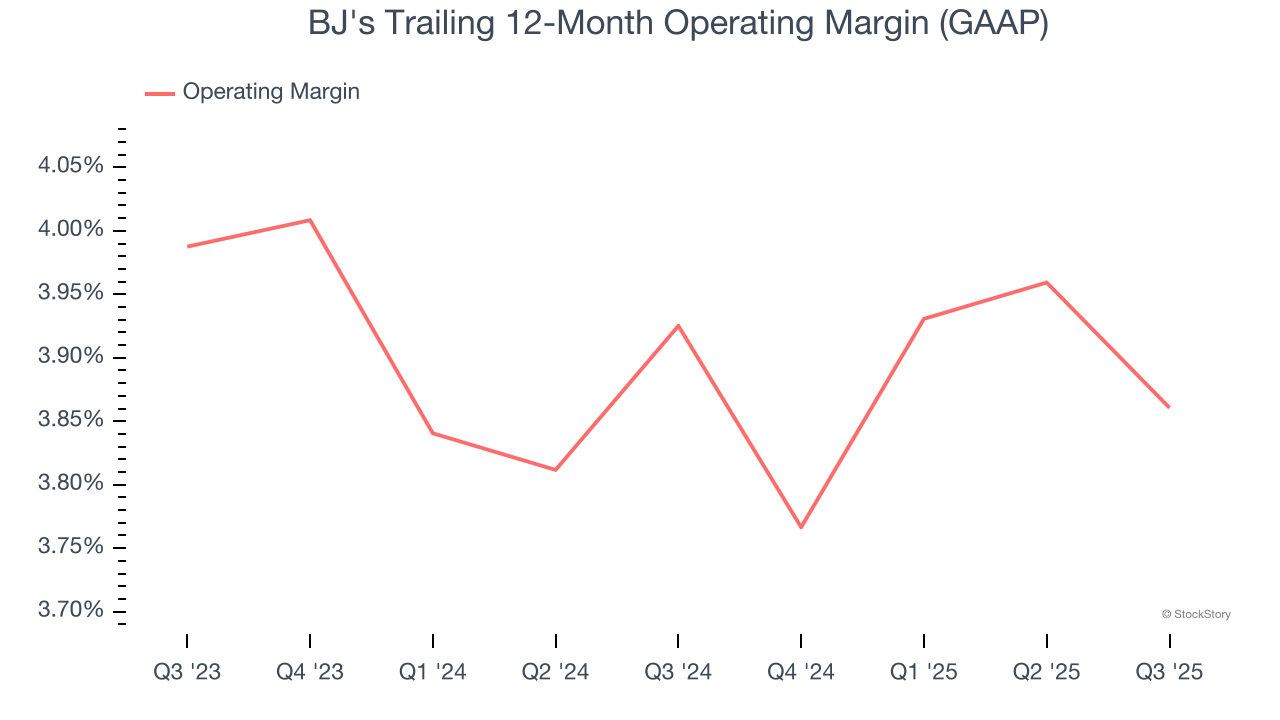
Operating margin is a key measure of profitability. Think of it as net income - the bottom line - excluding the impact of taxes and interest on debt, which are less connected to business fundamentals.
BJ’s operating margin might fluctuated slightly over the last 12 months but has remained more or less the same, averaging 3.9% over the last two years. This profitability was lousy for a consumer retail business and caused by its suboptimal cost structureand low gross margin.
Final Judgment
BJ's isn’t a terrible business, but it doesn’t pass our quality test. Following the recent decline, the stock trades at 19.7× forward P/E (or $89.74 per share). Investors with a higher risk tolerance might like the company, but we think the potential downside is too great. We're pretty confident there are more exciting stocks to buy at the moment. Let us point you toward our favorite semiconductor picks and shovels play.
High-Quality Stocks for All Market Conditions
The market’s up big this year - but there’s a catch. Just 4 stocks account for half the S&P 500’s entire gain. That kind of concentration makes investors nervous, and for good reason. While everyone piles into the same crowded names, smart investors are hunting quality where no one’s looking - and paying a fraction of the price. Check out the high-quality names we’ve flagged in our Top 6 Stocks for this week. This is a curated list of our High Quality stocks that have generated a market-beating return of 244% over the last five years (as of June 30, 2025).
Stocks that have made our list include now familiar names such as Nvidia (+1,326% between June 2020 and June 2025) as well as under-the-radar businesses like the once-micro-cap company Tecnoglass (+1,754% five-year return). Find your next big winner with StockStory today.
StockStory is growing and hiring equity analyst and marketing roles. Are you a 0 to 1 builder passionate about the markets and AI? See the open roles here.