In a move that underscores the staggering capital requirements of the generative AI era, xAI, the artificial intelligence venture founded by Elon Musk, officially closed a $20 billion Series E funding round on January 6, 2026. The funding, which was upsized from an initial target of $15 billion due to overwhelming investor demand, values the company at an estimated $230 billion. This massive capital injection is designed to propel xAI into the next phase of the "AI arms race," specifically focusing on the massive scaling of its Grok chatbot and the physical infrastructure required to sustain it.
The round arrived just as the industry enters a critical transition period, moving from the refinement of large language models (LLMs) to the construction of "gigascale" computing clusters. With this new capital, xAI aims to solidify its position as a primary challenger to OpenAI and Google, leveraging its unique integration with the X platform and Tesla, Inc. (NASDAQ: TSLA) to create a vertically integrated AI ecosystem. The announcement has sent ripples through Silicon Valley, signaling that the cost of entry for top-tier AI development has now climbed into the tens of billions of dollars.
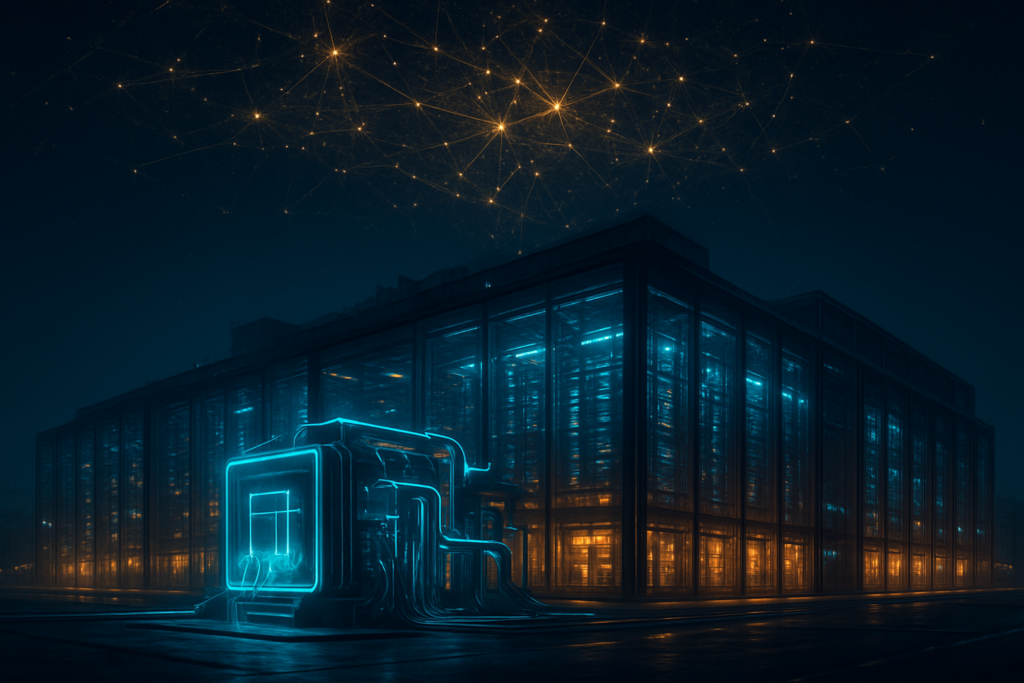
The technical centerpiece of this funding round is the rapid expansion of "Colossus," xAI’s flagship supercomputer located in Memphis, Tennessee. Originally launched in late 2024 with 100,000 NVIDIA (NASDAQ: NVDA) H100 GPUs, the cluster has reportedly grown to over one million GPU equivalents through 2025. The Series E funds are earmarked for the transition to "Colossus II," which will integrate NVIDIA’s next-generation "Rubin" architecture and Cisco Systems, Inc. (NASDAQ: CSCO) networking hardware to handle the unprecedented data throughput required for Grok 5.
Grok 5, the successor to the Grok 4 series released in mid-2025, is expected to be the first model trained on this million-node cluster. Unlike previous iterations that focused primarily on real-time information retrieval from the X platform, Grok 5 is designed with advanced multimodal reasoning capabilities, allowing it to process and generate high-fidelity video, complex codebases, and architectural blueprints simultaneously. Industry experts note that xAI’s approach differs from its competitors by prioritizing "raw compute density"—the ability to train on larger datasets with lower latency by owning the entire hardware stack, from the power substation to the silicon.
Initial reactions from the AI research community have been a mix of awe and skepticism. While many praise the sheer engineering ambition of building a 2-gigawatt data center, some researchers question the diminishing returns of scaling. However, the inclusion of strategic backers like NVIDIA (NASDAQ: NVDA) suggests that the hardware industry views xAI’s infrastructure-first strategy as a viable path toward achieving Artificial General Intelligence (AGI).
The $20 billion round has profound implications for the competitive landscape, effectively narrowing the field of "frontier" AI labs to a handful of hyper-funded entities. By securing such a massive war chest, xAI has forced competitors like OpenAI and Anthropic to accelerate their own fundraising cycles. OpenAI, backed heavily by Microsoft Corp (NASDAQ: MSFT), recently secured its own $40 billion commitment, but xAI’s lean organizational structure and rapid deployment of the Colossus cluster give it a perceived agility advantage in the eyes of some investors.
Strategic partners like NVIDIA (NASDAQ: NVDA) and Cisco Systems, Inc. (NASDAQ: CSCO) stand to benefit most directly, as xAI’s expansion represents one of the largest single-customer hardware orders in history. Conversely, traditional cloud providers like Alphabet Inc. (NASDAQ: GOOGL) and Amazon.com, Inc. (NASDAQ: AMZN) face a new kind of threat: a competitor that is building its own independent, sovereign infrastructure rather than renting space in their data centers. This move toward infrastructure independence could disrupt the traditional "AI-as-a-Service" model, as xAI begins offering "Grok Enterprise" tools directly to Fortune 500 companies, bypassing the major cloud marketplaces.
For startups, the sheer scale of xAI’s Series E creates a daunting barrier to entry. The "compute moat" is now so wide that smaller labs are increasingly forced to pivot toward specialized niche models or become "wrappers" for the frontier models produced by the Big Three (OpenAI, Google, and xAI).
The wider significance of this funding round lies in the shift of AI development from a software challenge to a physical infrastructure and energy challenge. To support the 2-gigawatt power requirement of the expanded Colossus cluster, xAI has announced plans to build dedicated, on-site power generation facilities, possibly involving small modular reactors (SMRs) or massive battery storage arrays. This marks a milestone where AI companies are effectively becoming energy utilities, a trend also seen with Microsoft Corp (NASDAQ: MSFT) and its recent nuclear energy deals.
Furthermore, the $20 billion round highlights the geopolitical importance of AI. With participation from the Qatar Investment Authority (QIA) and Abu Dhabi’s MGX, the funding reflects a global scramble for "AI sovereignty." Nations are no longer content to just use AI; they want a stake in the infrastructure that powers it. This has raised concerns among some ethicists regarding the concentration of power, as a single individual—Elon Musk—now controls a significant percentage of the world’s total AI compute capacity.
Comparatively, this milestone dwarfs previous breakthroughs. While the release of GPT-4 was a software milestone, the closing of the xAI Series E is an industrial milestone. It signals that the path to AGI is being paved with millions of chips and gigawatts of electricity, moving the conversation away from algorithmic efficiency and toward the sheer physics of computation.
Looking ahead, the next 12 to 18 months will be defined by how effectively xAI can translate this capital into tangible product leads. The most anticipated near-term development is the full integration of Grok Voice into Tesla, Inc. (NASDAQ: TSLA) vehicles, transforming the car’s operating system into a proactive AI assistant capable of managing navigation, entertainment, and vehicle diagnostics through natural conversation.
However, significant challenges remain. The environmental impact of a 2-gigawatt data center is substantial, and xAI will likely face increased regulatory scrutiny over its water and energy usage in Memphis. Additionally, as Grok 5 nears its training completion, the "data wall"—the limit of high-quality human-generated text available for training—will force xAI to rely more heavily on synthetic data and real-world video data from Tesla’s fleet. Experts predict that the success of this round will be measured not by the size of the supercomputer, but by whether Grok can finally surpass its rivals in complex, multi-step reasoning tasks.
The xAI Series E funding round is more than just a financial transaction; it is a declaration of intent. By raising $20 billion and valuing the company at over $200 billion in just under three years of existence, Elon Musk has demonstrated that the appetite for AI investment remains insatiable, provided it is backed by a credible plan for massive physical scaling. The key takeaways are clear: infrastructure is the new gold, energy is the new oil, and the barrier to the frontier of AI has never been higher.
In the history of AI, this moment may be remembered as the point where the industry "went industrial." As we move deeper into 2026, the focus will shift from the boardroom to the data center floor. All eyes will be on the Memphis facility to see if the million-GPU Colossus can deliver on its promise of a more "truth-seeking" and capable intelligence. In the coming weeks, watch for further announcements regarding Grok’s enterprise API pricing and potential hardware partnerships that could extend xAI’s reach into the robotics and humanoid sectors.
This content is intended for informational purposes only and represents analysis of current AI developments.
TokenRing AI delivers enterprise-grade solutions for multi-agent AI workflow orchestration, AI-powered development tools, and seamless remote collaboration platforms.
For more information, visit https://www.tokenring.ai/.