As the global financial markets ring in 2026, a stark divergence has emerged between the high-flying valuations of the broader indices and the grounded, cash-generating reality of the industrial sector. With the S&P 500 trading at a historically steep forward price-to-earnings (P/E) ratio of 23x, driven by a multi-year surge in technology and artificial intelligence, investors are increasingly scouring the market for "quality value"—companies with fortress balance sheets, dominant market positions, and valuations that have yet to catch up to their fundamental earnings power.
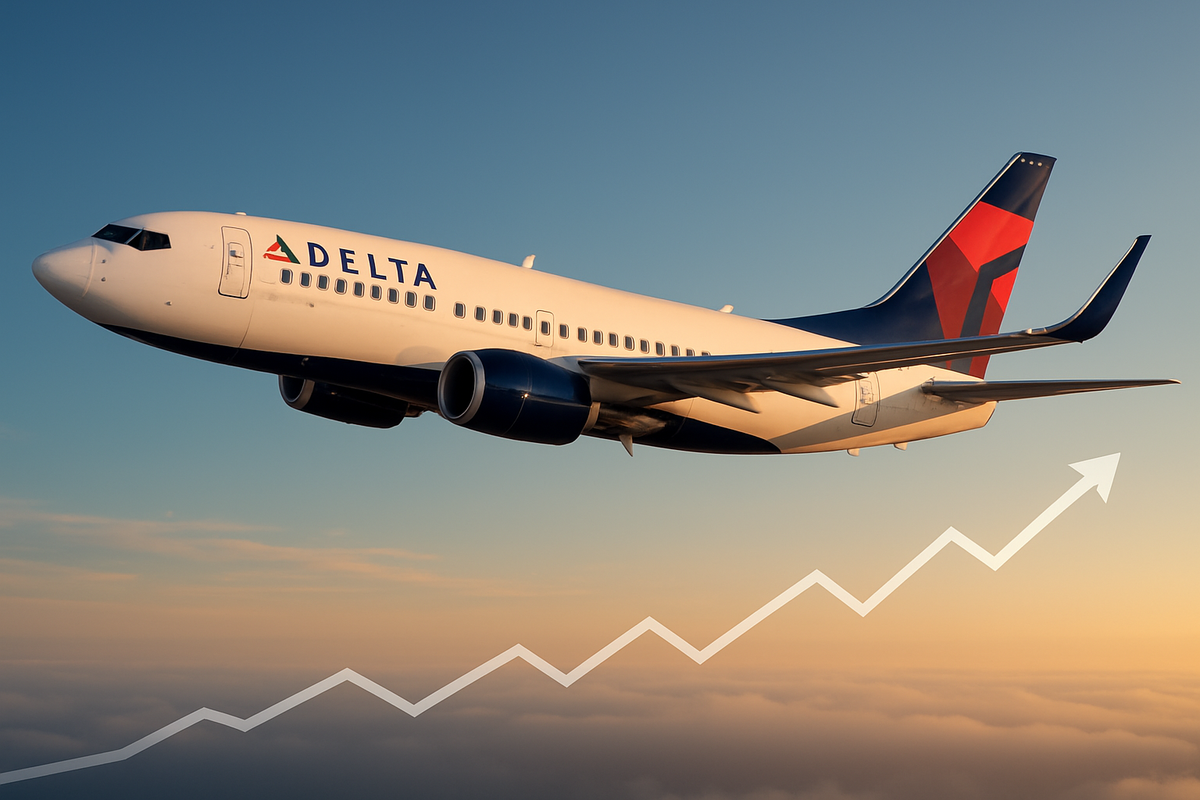
Delta Air Lines (NYSE: DAL) has emerged at the forefront of this search. While the broader market appears priced for perfection, Delta enters 2026 trading at a modest 9.5x forward earnings, despite coming off a fiscal 2025 that saw record-breaking revenue and a massive reduction in long-term debt. This valuation gap represents one of the most significant opportunities in the large-cap space, positioning the Atlanta-based carrier as a top pick for value-oriented portfolios in the coming year.
The Crusade Against Debt and the Premium Pivot
The story of Delta’s ascent to a top value pick for 2026 began in earnest during its "crusade against debt" throughout 2024 and 2025. Following the turbulence of the early 2020s, Delta’s management team, led by CEO Ed Bastian, executed a disciplined capital allocation strategy that prioritized balance sheet repair over aggressive capacity expansion. By the end of 2025, Delta successfully slashed its adjusted net debt from over $21 billion to approximately $15.3 billion, reclaiming its investment-grade status across all major credit agencies. This deleveraging has not only lowered interest expenses but has also cleared the runway for increased shareholder returns in 2026.
Central to this financial transformation has been Delta’s strategic pivot toward "premiumization." Throughout 2025, the airline saw a structural shift in consumer behavior, where high-income travelers increasingly opted for premium cabins, including Delta One and Premium Select. This shift was underscored by the record-breaking performance of Delta’s partnership with American Express (NYSE: AXP), which generated over $7 billion in high-margin remuneration in 2025 alone. By focusing on the high-end consumer, Delta has successfully insulated itself from the price wars that have traditionally plagued the lower-cost segments of the industry.
Winners and Losers in the New Aviation Landscape
In the competitive landscape of early 2026, Delta’s "premium-first" strategy has created a widening moat between it and its peers. United Airlines Holdings (NASDAQ: UAL) has remained a formidable competitor, also benefiting from international expansion and premium demand, but it continues to carry a heavier debt load than Delta. Meanwhile, American Airlines Group (NASDAQ: AAL) has struggled to achieve the same level of margin expansion, as it grapples with higher operational complexities and a slower path to deleveraging.
The real losers in this environment have been the traditional low-cost carriers. Southwest Airlines (NYSE: LUV), long the darling of the budget sector, spent much of 2025 undergoing a radical transformation—including the introduction of assigned seating and premium cabin options—in a desperate bid to capture the high-yield travelers that Delta has already secured. As fuel prices and labor costs remained elevated through 2025, the thin margins of the "no-frills" model became increasingly unsustainable, forcing a consolidation of the market that has ultimately benefited Delta’s pricing power.
Resilience Amidst Industry Constraints
The wider significance of Delta’s current position lies in its ability to thrive despite persistent industry-wide supply constraints. As of January 1, 2026, the aviation industry continues to be hamstrung by aircraft delivery delays from both Boeing (NYSE: BA) and Airbus (OTC:EADSY). While these delays have limited the industry’s ability to add new seats, they have inadvertently acted as a floor for ticket prices. Delta’s older but well-maintained fleet and its superior operational reliability have allowed it to maintain record load factors—projected at 84% for 2026—while competitors struggle with grounded planes and maintenance backlogs.
Furthermore, a significant tailwind for the airline sector in 2026 is the cooling of global energy prices. Brent crude is forecast to average $58 per barrel this year, down from $66 in 2025. For an airline of Delta’s scale, this reduction in its largest variable cost represents a massive boost to the bottom line. When combined with the "premiumization" trend, Delta is entering 2026 with a rare combination of falling costs and rising yields, a scenario that historically precedes significant stock price appreciation.
The Road Ahead: Buybacks and Dividends
Looking toward the remainder of 2026, the market is anticipating a strategic pivot in Delta’s capital allocation. With the debt-to-EBITDAR ratio now sitting comfortably at 2.0x, analysts expect the company to transition from debt repayment to aggressive shareholder returns. Short-term possibilities include a significant hike in the quarterly dividend and the potential announcement of a multi-billion dollar share buyback program, which would be the first major repurchase since the pre-pandemic era.
However, challenges remain. The industry must still navigate a complex regulatory environment and the ongoing pressure to invest in sustainable aviation fuel (SAF). Delta’s ability to integrate these environmental costs without eroding its 11.5% operating margin will be a key metric for investors to watch. Additionally, while the "K-shaped" economy has favored Delta’s premium focus, any broader slowdown in high-end consumer spending could test the resilience of its 2026 earnings guidance.
Final Assessment for the 2026 Investor
As we move into 2026, Delta Air Lines stands as a testament to the power of disciplined financial management and brand positioning. In a market where many stocks are trading at valuations that assume decades of uninterrupted growth, Delta offers a "margin of safety" that is increasingly rare. With a consensus analyst price target of $82—representing a nearly 20% upside from current levels—the stock is priced as a cyclical airline but is performing like a high-quality industrial powerhouse.
For investors, the key takeaways are clear: Delta has fixed its balance sheet, captured the most profitable segment of the travel market, and is now poised to benefit from lower fuel costs and restricted supply. While the tech sector may continue to capture headlines, the real value in 2026 is likely to be found in the blue skies of the aviation sector. Investors should keep a close eye on quarterly earnings reports for confirmation of the promised buybacks, which could serve as the final catalyst to close the valuation gap between Delta and the broader market.
This content is intended for informational purposes only and is not financial advice.