The year 2026 has arrived, and the American economy stands at a peculiar crossroads, defined by a "bracing but supportive" duality that has left analysts and investors cautiously optimistic. The year ahead is expected to be a high-stakes transition period, where the massive fiscal tailwinds of the One Big Beautiful Bill Act (OBBBA) collide with the "sticker shock" of the "Liberation Day" tariffs. While the Federal Reserve prepares for a historic leadership change in May, the markets are pricing in a year of sturdy growth anchored by a maturing Artificial Intelligence (AI) supercycle and a resilient, albeit polarized, consumer base.
The immediate implications of this outlook are already visible in the opening sessions of the new year. Real GDP growth is forecasted to hover between 2.0% and 2.6%, a "sturdy" pace that defies earlier recessionary fears. However, the "bracing" element comes from a projected spike in inflation—potentially hitting 3.5% mid-year—as the full weight of 60% tariffs on Chinese imports filters through the supply chain. Investors are currently navigating a market where earnings growth remains robust, but valuation multiples are stretched, leaving little room for error as the "policy engine" of the current administration shifts into high gear.
A Tale of Two Halves: The OBBBA and the Tariff Tug-of-War
The economic narrative of 2026 is dominated by the rollout of the One Big Beautiful Bill Act (OBBBA), a landmark piece of legislation that has injected a pro-cyclical stimulus into an already tight economy. The timeline leading to this moment began in late 2024 and 2025, as the administration moved to combine aggressive deregulation with massive tax incentives. Key players, including Treasury officials and congressional leaders, have framed the OBBBA as a "Manufacturing Renaissance" tool. Its immediate impact in early 2026 includes a $100 billion infusion of personal income tax refunds, which is expected to provide a significant "sugar high" for consumer spending in the first two quarters.
Simultaneously, the industrial sector is grappling with the "Liberation Day" tariffs, which have established a 16.8% average effective tariff rate across all imports. The market reaction has been split: domestic producers are cheering the protectionist moat, while multinational corporations are scrambling to reorganize supply chains. The Federal Reserve, still under the leadership of Jerome Powell until his term expires in May, has maintained a "luxury" rate-cutting stance—easing not to fight a recession, but to normalize rates toward a 3.25%–3.5% floor. This policy "tug-of-war" is expected to create a front-loaded growth surge in 2026, followed by a more tempered second half as the fiscal stimulus fades and the cost of goods settles at a higher plateau.
The Corporate Winners and Losers of the New Trade Order
In this "bracing" environment, the divide between corporate winners and losers is becoming a chasm. Nvidia (NASDAQ: NVDA) continues to stand as a "macro-independent" titan, benefiting from the OBBBA’s AI-focused deregulation and specific tariff exemptions for its high-end H200 and Blackwell chips. Analysts expect Nvidia to challenge a $5 trillion market cap this year as the AI investment cycle moves from speculation to execution. Similarly, Microsoft (NASDAQ: MSFT) and Arista Networks (NYSE: ANET) are positioned to win as they capitalize on the OBBBA’s subsidies for domestic AI data center infrastructure.
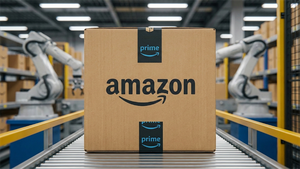
On the retail front, Walmart (NYSE: WMT) and Costco (NASDAQ: COST) are emerging as defensive champions. Walmart’s massive scale and 60% domestic or Latin American sourcing for grocery essentials shield it from the worst of the 60% China tariffs, allowing it to gain market share from smaller, import-dependent rivals. Conversely, Apple (NASDAQ: AAPL) faces a structural headwind, with estimated tariff-related costs of $900 million per quarter due to its lingering reliance on Chinese manufacturing. Amazon (NASDAQ: AMZN) also sits in the "at-risk" category, as its ecosystem of third-party sellers—70% of whom source from China—faces a margin squeeze that could dampen its high-margin advertising business.
In the industrial space, Nucor (NYSE: NUE) and United States Steel (NYSE: X) are clear beneficiaries of the 25% steel tariffs, which have allowed them to hike domestic prices. However, Caterpillar (NYSE: CAT) represents the "nuanced loser"; while demand for its energy equipment is at record highs, the company has forecasted a $1.8 billion hit from rising input costs for steel and aluminum, highlighting the friction between the OBBBA’s spending and the administration's trade policy.
Ripples of the Renaissance: Regulatory Shifts and Historical Precedents
The broader significance of the 2026 outlook lies in its departure from the "low-growth, low-inflation" regime of the previous decade. This era is increasingly being compared to the Reaganomics of the 1980s—a mix of tax cuts, deregulation, and heavy defense spending, which currently includes a $150 billion front-loaded boost for defense primes like Boeing (NYSE: BA) and Northrop Grumman (NYSE: NOC). However, the 2026 version is complicated by a more aggressive trade stance, drawing historical parallels to the Smoot-Hawley era, though with a modern focus on "onshoring" rather than simple protectionism.
The regulatory environment is also bracing for the May 2026 Federal Reserve transition. With candidates like Kevin Warsh or Kevin Hassett rumored as potential successors to Powell, the market is anticipating a more "dovish" or growth-oriented central bank. This has already triggered a surge in activity for JPMorgan Chase (NYSE: JPM) and Bank of America (NYSE: BAC), as corporate deal-making returns in anticipation of a steeper yield curve and further regulatory easing. The "ripple effect" of these policies is a K-shaped recovery: high-income households are buoyed by record equity prices, while low-income consumers are "bracing" for the sticker shock at the grocery store.
The Path Forward: Strategic Pivots in a "Low-Hire, Low-Fire" Market
Looking ahead, the short-term focus for 2026 will be the "May Pivot" at the Federal Reserve. A smooth transition could solidify the "supportive" half of the economic outlook, while a contentious nomination process could introduce volatility into the bond markets. Strategically, companies are moving away from "just-in-time" global supply chains toward "just-in-case" domestic hubs, a shift accelerated by the OBBBA’s 35% semiconductor manufacturing tax credit, which has already benefited Micron Technology (NASDAQ: MU) and TSMC (NYSE: TSM).
In the long term, the primary challenge will be the "2027 Cliff." As the one-time tax refunds of 2026 dry up and the inflationary impact of tariffs becomes permanent, the economy will need to rely on the productivity gains promised by the AI supercycle. If the "Agentic AI" tools currently being deployed by firms like Microsoft and Salesforce (NYSE: CRM) fail to deliver tangible efficiency gains by late 2026, the market may face a reckoning regarding the massive capital expenditures of the previous two years.
Summary: A Year of Sturdy Growth Amidst Policy Volatility
The 2026 U.S. economic outlook is a complex tapestry of fiscal stimulus and trade-induced friction. The "bracing" reality of higher prices and a shifting Federal Reserve is balanced by the "supportive" weight of the OBBBA and a robust corporate earnings environment. Key takeaways for the year include a projected GDP growth of 2.3%, a K-shaped consumer resilience driven by tax refunds, and a clear preference for companies with domestic supply chains and AI-driven productivity.
As we move through the first months of 2026, investors should keep a close eye on the Federal Reserve nomination process in May and the mid-year inflation readings. The market is currently moving forward on the strength of the "policy engine," but the lasting impact of this transition year will depend on whether the "Manufacturing Renaissance" can outpace the rising costs of a more insulated global economy. For now, the mantra remains "bracing but supportive"—a year where the shock is expected, but the safety net is firmly in place.
This content is intended for informational purposes only and is not financial advice