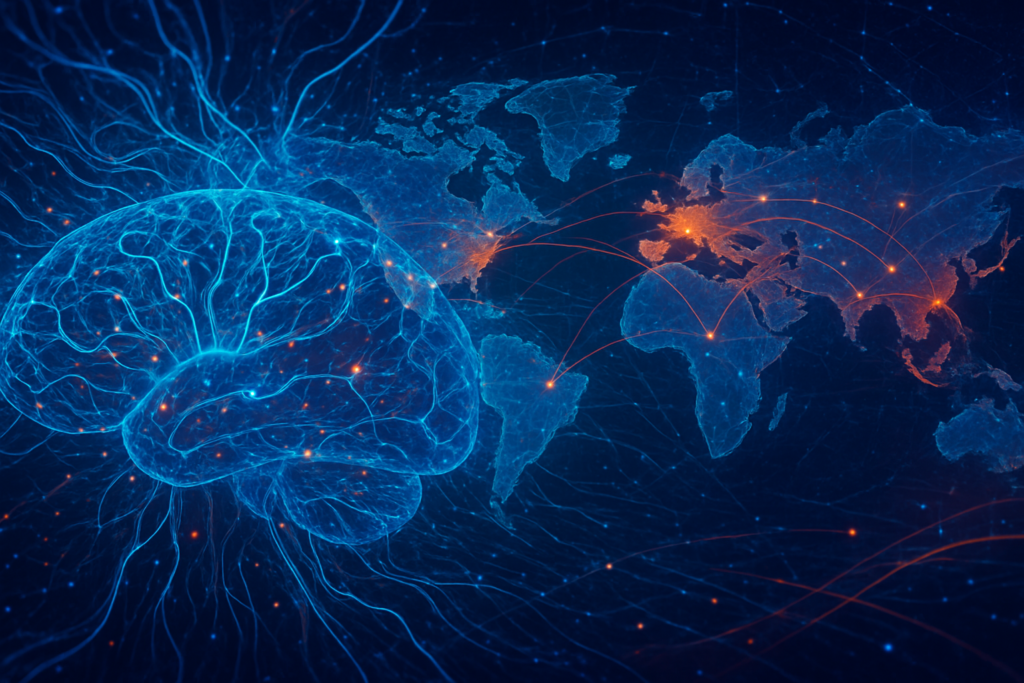
The global geopolitical landscape is undergoing a profound transformation, driven by an escalating, high-stakes competition for control over the Artificial Intelligence (AI) supply chain. This struggle extends far beyond algorithms and software, delving into the foundational physical resources, advanced hardware, and specialized manufacturing capabilities that underpin the AI revolution. What was once a pursuit of technological advancement has rapidly morphed into a strategic imperative, with nations and major corporations vying for dominance in what is increasingly being termed a "Tech Cold War." As of late 2025, the immediate significance of this scramble is undeniable: it dictates future economic growth, national security, and global power distribution, fundamentally reshaping international relations and accelerating the trajectory of technological development. The infrastructure choices and strategic alliances forged in this critical period are poised to lock in decades of AI power distribution, making control over the AI supply chain a defining feature of 21st-century geopolitics.
This intensifying rivalry, primarily between the United States and China, but also involving key players like the European Union, Japan, South Korea, Taiwan, and the Netherlands, is leading to a strategic decoupling in critical AI-underpinning technologies. Export controls and sanctions are being deployed as "strategic weapons" to limit adversaries' access to essential components, while targeted nations retaliate with restrictions on crucial raw materials. The concentration of advanced semiconductor manufacturing in specific regions, coupled with the immense energy demands of AI data centers, has exposed vulnerabilities and created new chokepoints in the global economy. This shift away from pure globalization towards techno-nationalism and selective decoupling is compelling countries to invest heavily in domestic capabilities, reshape alliances, and redefine the very nature of technological interdependence.
The Physical Foundations of AI: A Technical Deep Dive
The computational engines powering the AI future are deeply reliant on a complex global physical infrastructure, making the control of these resources a central pillar of geopolitical strategy. The competition is multifaceted, encompassing advanced semiconductors, rare earth minerals, energy infrastructure, and highly specialized manufacturing equipment.
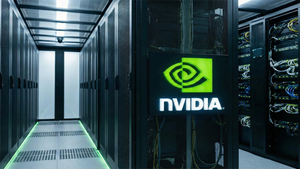
At the core of AI's physical demands are advanced semiconductors, particularly Graphics Processing Units (GPUs), Tensor Processing Units (TPUs), and other AI accelerators. These chips are indispensable for both training massive AI models and executing high-speed inference. Key technical specifications, such as nanometer scale (e.g., 7nm, 4nm, 3nm, and sub-2nm nodes), directly correlate with transistor density, processing power, and energy efficiency—all critical for cutting-edge AI. NVIDIA (NASDAQ: NVDA), with its A100 and H100 GPUs, stands as a dominant force, with the H100 utilizing advanced 4-nanometer transistors. Crucially, Taiwan Semiconductor Manufacturing Company (TSMC) (NYSE: TSM) holds a near-monopoly on the manufacturing of these leading-edge AI chips for virtually all major AI developers, making Taiwan a critical geopolitical flashpoint. The U.S. has strategically imposed export controls on these advanced chips and their manufacturing equipment to China, aiming to curb its technological ambitions and forcing both nations to pursue greater technological independence.
Beyond chips, rare earth minerals are vital for producing advanced electronics and magnets within AI hardware. Elements like gallium, germanium, indium, and tantalum are essential for high-performance chips and data center infrastructure. For instance, gallium's high thermal conductivity makes it ideal for specialized integrated circuits. China currently dominates the global supply chain for many rare earths and critical minerals, controlling approximately 70% of the world's rare earth supply and 98% of primary gallium production. This dominance provides China with significant geopolitical leverage, as evidenced by past export restrictions.
The energy infrastructure required to power AI data centers is another critical chokepoint. U.S. data centers consumed 176 terawatt-hours (TWh) in 2023, with projections reaching 325-580 TWh by 2028, potentially doubling their share of the national grid to nearly 9% by 2035. Globally, data centers could consume over 4% of worldwide electricity by 2035, alongside substantial water for cooling. This massive demand for constant, reliable, and increasingly low-carbon power makes energy security a strategic asset. Countries with abundant and cheap energy, or those investing heavily in advanced nuclear power (like China's plan for 150 new nuclear reactors by 2035, many supporting AI infrastructure), stand to gain a strategic advantage.
Finally, specialized manufacturing equipment is indispensable. Extreme Ultraviolet (EUV) lithography systems, crucial for producing chips at 7 nanometers and below, are a prime example. These machines, costing upwards of $200 million and taking years to build, are effectively monopolized by ASML (NASDAQ: ASML), a Dutch company. ASML's unique position makes it an irreplaceable chokepoint, allowing the U.S. and its allies to influence which countries can develop next-generation semiconductor capabilities through pressure on the Netherlands to restrict sales to China.
This competition differs from previous resource scrambles due to its heavy reliance on highly complex intellectual property and technological monopolies (e.g., ASML's EUV), the dual-use nature of AI technologies for both commercial and military applications, and the unprecedented speed of technological change. The extreme concentration of advanced semiconductor manufacturing (Taiwan alone holds 92% of the world's sub-10nm chip production) further exacerbates geopolitical risks. Initial reactions from the AI research community and industry experts highlight concerns about innovation slowdowns, supply chain disruptions, and the massive energy footprint of AI. There's a strong push for resilience, diversification, and the development of secure, localized supply chains, with initiatives like the "Pax Silica Initiative" aiming to build secure technology supply chains with allied nations.
Corporate Crossroads: Navigating the Geopolitical AI Maze
The intensifying global geopolitical competition for AI leadership is profoundly reshaping the landscape for AI companies, tech giants, and startups, presenting both formidable risks and unprecedented opportunities. Multinationals and tech giants, traditionally benefiting from globalized operations, now face the fragmentation of technology along geopolitical lines, transforming globalization into a strategic liability.
Tech giants like Alphabet (NASDAQ: GOOGL), Microsoft (NASDAQ: MSFT), Amazon (NASDAQ: AMZN), Meta Platforms (NASDAQ: META), and NVIDIA (NASDAQ: NVDA) are at the epicenter. While they remain central to global AI advancements, driving innovation in large models, software platforms, and advanced semiconductors, they must now navigate complex and often conflicting regulatory environments. Export controls on advanced chips directly influence their development trajectories, as seen with U.S. restrictions on advanced AI chips to China, which can limit revenue from high-growth markets. These companies are increasingly acting as geopolitical actors themselves, wielding significant resources and power to influence policy and secure access to critical components.
AI companies across the spectrum are exposed to substantial supply chain disruptions, sudden regulatory shocks, and operational risks. The immense capital required for building and operating data centers, especially for training large AI models, poses a significant financial challenge, with some firms projecting substantial deficits as costs outpace profits. To mitigate these risks, companies are compelled to anticipate regulatory changes and proactively implement self-regulatory measures. Meanwhile, startups in restricted regions, such as China, are forced to innovate with available resources, leading to breakthroughs in efficiency and alternative hardware solutions to circumvent export restrictions. This can spur domestic innovation, as seen with the rapid growth of Chinese AI startups.
Several entities stand to benefit significantly from this evolving landscape. Semiconductor manufacturers, particularly NVIDIA (NASDAQ: NVDA) and high-bandwidth memory (HBM) chip makers like Micron Technology (NASDAQ: MU), Samsung Electronics (KRX: 005930), and SK Hynix (KRX: 000660), are experiencing soaring demand and rising prices. However, they also face the challenge of developing region-specific, downgraded chips to comply with export regulations. Cloud service providers and data center operators are also major beneficiaries, as nations prioritize digital resilience and data sovereignty, leading to a global race to build regionalized compute infrastructure. Companies with diversified and resilient supply chains, as well as domestic AI ecosystems (supported by government initiatives like the U.S. CHIPS and Science Act), are gaining strategic advantages. Early adopters and integrators of AI across traditional industries are also seeing competitive gains.
The competitive implications for major AI labs and tech companies include the emergence of divergent AI ecosystems, with the U.S. focusing on massive models and superintelligence, while China emphasizes embedding AI into all facets of its economy, supported by robust energy infrastructure and cost-effective hardware. This rivalry fuels an intense talent war for top AI researchers and exacerbates issues around data sovereignty, as increasingly strict laws fragment the once-borderless cloud. The rising cost of compute due to reliance on high-end GPUs could also disrupt existing business models.
Potential disruptions to existing products and services include de-globalization and localization pressures, forcing companies to revise products and turn to local AI providers. A proliferation of diverse and complex regulations increases costs and legal uncertainty. The high concentration of critical AI supply chain components exposes businesses to significant supply chain vulnerabilities from sanctions, conflicts, or cyberattacks. An acute global shortage of memory chips, particularly HBM, is leading to soaring prices and could slow AI-based productivity gains across industries.
In terms of market positioning, the U.S. maintains a strong lead in foundational AI models, breakthrough research, and significant private-sector investment ($109.1 billion in 2024), possessing 74% of global AI computing power as of mid-2025. China leverages its aggressive AI integration, robust energy infrastructure, cost-effective hardware, and vast data markets. Its "open-source" approach to AI models may facilitate widespread global adoption. Strategic agility, diversification, and investment in domestic resilience are becoming paramount for all players.
The Broader Canvas: AI's Geopolitical Footprint
The geopolitical competition for AI's supply chain is not merely a technological or economic skirmish; it is a fundamental reordering of global power dynamics, with profound implications for international relations, national security, and economic development. This struggle has elevated AI to the status of a defining technology of the 21st century, akin to oil or nuclear power in previous eras.
This competition fits into the broader AI landscape by driving trends toward vertical integration and localized supply chains, as nations and companies seek to control more aspects of the AI hardware ecosystem to mitigate external risks. It has ignited an AI infrastructure arms race, with unprecedented demand for specialized data centers and their underlying physical components. This rivalry is also accelerating R&D and innovation, as countries compete fiercely to secure AI leadership. The U.S.-China rivalry, often described as a "digital Cold War," leads to heightened tensions and the formation of new alliances, compelling countries to choose sides and potentially leading to the politicization of data and technology.
The overall impacts are far-reaching. In international relations, AI has become a central axis of geopolitical competition, leading to increased tensions and the formation of new alliances. The struggle for global governance of AI is ongoing, with efforts to establish common baselines for safety and transparency hampered by geopolitical divisions. Data itself has become a strategic asset, with data sovereignty laws fragmenting the once-borderless cloud. For national security, AI offers enhanced military capabilities through autonomous warfare, intelligent cyber defense, and advanced surveillance, but also increases the risk of miscalculation and information warfare. Economically, nations adept at capitalizing on AI will gain significant advantages, potentially leading to shifts in global economic dominance and uneven development patterns. The competition also fuels a resurgence of industrial policies, with governments actively intervening to bolster domestic technological development.
However, this fierce competition comes with significant potential concerns. The immense computational requirements of AI lead to high resource scarcity, particularly for energy, water, and critical components like AI chips. This fuels trade wars, with export restrictions on advanced AI technologies disrupting supply chains and driving up costs. There's a growing risk of digital colonialism, where developing nations become dependent on AI platforms and technologies designed and hosted in other countries, exposing them to foreign leverage and limiting their digital sovereignty.
Comparing this to previous milestones, the current AI infrastructure build-out is akin to the dot-com boom or the expansion of cloud infrastructure, but on an unprecedented scale and intensity. The competition over AI chips and resources is analogous to historical scrambles for oil, minerals, and water, which have long dictated international relations. The U.S.-China AI rivalry is frequently compared to the nuclear arms race of the Cold War, highlighting the strategic imperative for technological supremacy and the potential for increased global instability. As Nvidia CEO Jensen Huang noted, the nation that applies a transformative technology faster and more broadly often wins the "industrial revolution" it brings, much like the U.S. leveraged electricity despite its invention elsewhere.
The Horizon: Anticipating AI's Future Trajectory
The global geopolitical competition for AI is not a static event but a rapidly evolving phenomenon, with profound near-term and long-term implications that will continue to reshape technology, society, and international dynamics. Experts widely agree that AI will solidify its position as a central axis of geopolitical competition, influencing national security, economic performance, and global governance for decades to come.
In the near-term (next 1-3 years), we can expect accelerated geopolitical fragmentation, leading to the hardening of "techno-blocs." Export controls on critical AI components, particularly advanced semiconductors, will likely intensify, alongside restrictions on cross-border data flows. This will force companies to prioritize supply chain resilience over mere efficiency, leading to further diversification of suppliers and regionalization of manufacturing. Nations will continue to aggressively invest in sovereign AI capabilities, domestic semiconductor manufacturing, and localized data center infrastructure, fueled by robust national AI strategies and government intervention. The global talent competition for AI researchers and skilled professionals will also escalate significantly.
Looking further into the long-term (beyond 3 years), AI will cement its position as a new form of national power, as critical to sovereignty and global influence as traditional resources. We will see deepening digital sovereignty, with nations further restricting cross-border data flows, leading to more fragmented global data ecosystems. This will necessitate a structural redesign of global supply networks, pushing companies towards permanent regionalization and greater self-sufficiency in critical AI components. AI will profoundly shape diplomacy and warfare, becoming an actor itself, not just a factor, requiring new ethical and legal frameworks for autonomous systems. Unfortunately, this could also lead to a widening global AI divide, with advanced economies accelerating adoption while developing nations risk digital colonialism.
Potential applications and use cases on the horizon are primarily focused on enhancing resilience, forecasting, and strategic decision-making within supply chains and geopolitical contexts. AI models will offer real-time geopolitical risk analysis, predicting supply chain disruptions before they materialize. They will enable predictive supplier diversification, identifying and assessing alternative suppliers based on political stability and trade relations. AI-powered systems will facilitate scenario-based contingency planning, simulating multiple geopolitical and economic scenarios to recommend optimal sourcing and logistics strategies. Furthermore, AI will provide unprecedented visibility across multi-tier supply chains, extending beyond immediate suppliers, and will serve as a strategic engine for automated logistics and forecasting. In diplomacy and military intelligence, AI will enhance data analysis, predictive modeling of conflicts, and threat detection.
However, several significant challenges must be addressed. Data quality and governance remain paramount; disparate data sources in global supply chains risk inaccurate forecasts. The "black-box" nature of many advanced AI models erodes trust and complicates accountability, particularly in critical geopolitical or military applications. Organizational resistance and skills gaps will hinder AI integration, requiring massive investment in training. The complexity of integrating AI with legacy IT systems, along with new security and privacy risks from AI-driven cyberattacks, presents formidable hurdles. Ethical and transparency concerns, including algorithmic bias and accountability, are critical. The rapidly evolving landscape of export controls and fragmented national AI regulations creates significant geopolitical and regulatory uncertainty. Finally, the resource intensiveness of AI, particularly its electricity and water demands, along with the clustered extraction of critical minerals in geopolitically risky jurisdictions, will continue to be major challenges.
Experts predict that 2025 is a pivotal year where AI ceased to be purely a technological race and became the central axis of geopolitical competition, with compute power treated as a critical lever of national influence. Geopolitical priorities are expected to increasingly drive economic decision-making in major capitals. We are in a narrow "inter-AI years" window where decisions will shape the AI-enabled future, with views and strategies hardening rapidly. Resilience over efficiency will prevail, and while AI offers immense capabilities, human oversight and expertise will remain crucial to contextualize AI predictions. New "innovation blocs" and "swing states" like the UK, UAE, Israel, Japan, the Netherlands, South Korea, Taiwan, and India will play meaningful roles. Robust ethical frameworks are imperative to address the military race for technological supremacy and the rise of quasi-autonomous weapons systems. Some even predict that AI itself could evolve to have autonomous motives and objectives, adding another layer of complexity to future geopolitics.
The AI Age: A Defining Global Struggle
The global geopolitical competition for Artificial Intelligence's supply chain represents a defining struggle of the 21st century, fundamentally reshaping international relations, national security, and economic development. It signifies a pivotal shift from decades of increasing globalization towards an era of "techno-nationalism" and selective decoupling, where nations prioritize technological sovereignty and strategic advantage in the race for AI dominance.
The key takeaways are clear: advanced semiconductors, data, talent, critical minerals, and cloud ecosystems are the battlegrounds. The competition is characterized by weaponized interdependence, economic statecraft, the formation of innovation blocs, and a heightened focus on national security imperatives. This is not merely an economic or technological race; it is a fundamental struggle for global power and influence.
Its significance in AI history is profound. AI has emerged as the defining technology of our time, perceived as a new form of national power rather than just a tool. This "AI arms race" marks a significant departure from previous globalization trends, politicizing technology and embedding it deeply within geopolitical power struggles. The outcome will determine not only who leads in AI development but also how safely, equitably, and openly AI is integrated into the world.
The long-term impact on technology and society will be vast. We can anticipate technological fragmentation and the potential for "digital iron curtains" to emerge, hindering global interoperability. While rivalry spurs innovation, it also introduces risks and increased costs. Global supply chains will undergo a structural redesign, favoring regionalization and diversification, with AI itself being leveraged for resilience. Economically, AI will reshape global markets, contributing trillions to GDP, and impacting everything from smart manufacturing to healthcare. Societally, decisions made now will embed norms and ethical standards within the technology, influencing human culture and potentially challenging democratic principles. Challenges to global cooperation on AI governance will persist amidst rising mistrust.
In the coming weeks and months, watch for further export controls and policy measures from major powers, particularly in semiconductors and critical minerals. Observe the deployment of government subsidies and private sector investments in domestic AI R&D and advanced manufacturing. Pay close attention to the strengthening or formation of new international alliances and "innovation blocs" focused on securing AI supply chains. Track talent flow and immigration policies, as well as the progress and challenges in establishing international norms for AI safety, ethics, and digital trade. Finally, any escalation of existing geopolitical tensions, especially around regions critical for semiconductor production like Taiwan, could dramatically impact the AI supply chain.
The stakes are immense, and the world is on the cusp of an AI-driven future shaped by this defining global struggle.
This content is intended for informational purposes only and represents analysis of current AI developments.
TokenRing AI delivers enterprise-grade solutions for multi-agent AI workflow orchestration, AI-powered development tools, and seamless remote collaboration platforms.
For more information, visit https://www.tokenring.ai/.