Rising return volumes, real-time tracking demands, and automated disposition decision-making accelerate adoption of cloud-based reverse logistics platforms
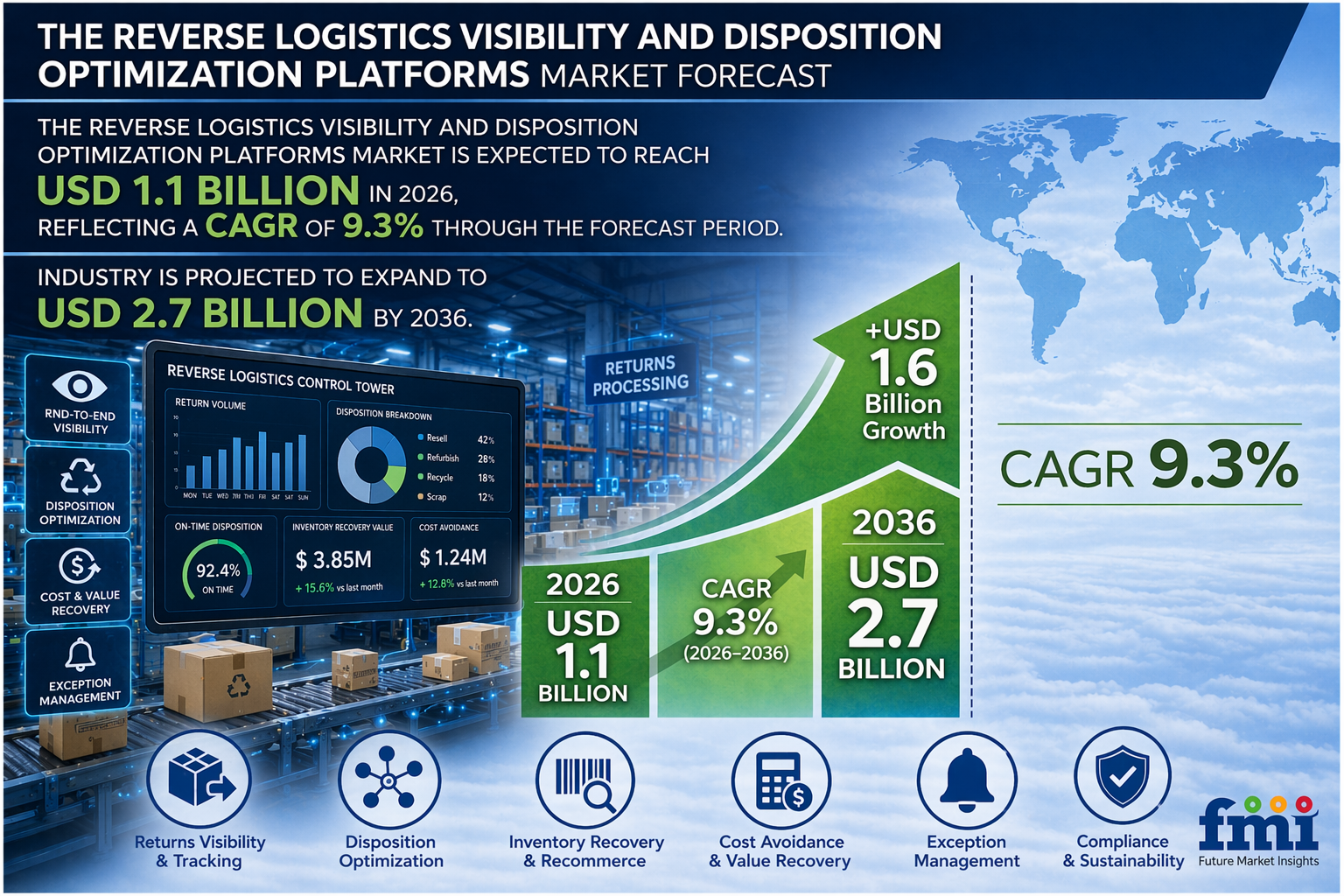
NEWARK, DE / April 13, 2026 / According to the latest analysis by Future Market Insights, the global reverse logistics visibility and disposition optimization platforms market is entering a rapid transformation phase as enterprises modernize return management and recovery workflows. Valued at USD 1.0 billion in 2025, the market is projected to reach USD 1.1 billion in 2026 and expand significantly to USD 2.7 billion by 2036, registering a CAGR of 9.3% during the forecast period.
This growth reflects a structural shift in supply chain operations, where reverse logistics is evolving from fragmented, manual processes into integrated, intelligence-driven systems. Rising return volumes, increasing pressure on margin recovery, and stricter regulatory frameworks are compelling organizations to deploy platforms that provide real-time visibility, automated decision-making, and optimized disposition strategies across the entire returns lifecycle.
Get detailed market forecasts, competitive benchmarking, and pricing trends:
https://www.futuremarketinsights.com/reports/sample/rep-gb-32595
Market Value Analysis: Real-Time Decision Intelligence Becomes Critical
Between 2026 and 2030, adoption of reverse logistics visibility and disposition optimization platforms is expected to accelerate as retailers and manufacturers face mounting pressure to manage high return volumes efficiently. The ability to assign accurate recovery paths before physical inspection is emerging as a key differentiator.
Organizations are increasingly prioritizing:
Real-time tracking of returned items across distributed logistics networks
AI-driven disposition engines for repair, resale, recycle, or scrap decisions
Integration with ERP, OMS, and WMS systems for unified workflows
Early-stage routing logic to reduce unnecessary transportation costs
Alignment between reverse and forward supply chains for inventory recovery
Failure to implement intelligent dispositioning systems results in margin erosion, excess inventory holding, and increased fraud exposure-particularly when refund decisions are triggered without condition validation.
From 2030 to 2036, growth will be driven by deeper AI integration, expansion of circular economy mandates, and increasing enterprise focus on recovery value optimization rather than cost minimization alone.
Technology Evolution: AI and Cloud Platforms Redefine Returns Management
The evolution of reverse logistics platforms is being shaped by advancements in artificial intelligence, cloud computing, and real-time analytics. As return networks become more complex, organizations are shifting from static workflows to dynamic, data-driven orchestration systems.
Key innovations include:
AI-enabled decision engines for automated dispositioning
Cloud-based SaaS platforms enabling network-wide visibility
Predictive analytics for resale timing and recovery optimization
API-driven integration with carriers, warehouses, and resale channels
Automated compliance tracking for recycling and regulatory reporting
A key challenge lies in ensuring data accuracy across systems. Poor master data quality can lead to incorrect routing decisions, resulting in lost recovery value and operational inefficiencies.
An industry analyst notes:
"Reverse logistics is no longer a cost center-it is a value recovery engine. The ability to make real-time, data-driven disposition decisions is now central to supply chain profitability."
Platforms Become Core to Recovery Value and Operational Efficiency
As return volumes surge across industries such as retail e-commerce, electronics, and industrial equipment, reverse logistics platforms are becoming essential to maintaining operational efficiency and profitability.
Core capabilities include:
End-to-end visibility of returned inventory across networks
Automated routing based on condition, value, and demand signals
Fraud reduction through condition-linked refund validation
Faster inventory reintegration into resale or repair channels
Compliance with environmental and circular economy regulations
This transformation is positioning reverse logistics platforms as foundational systems within modern supply chains, directly influencing financial performance and sustainability outcomes.
Speak to Analyst: Customize insights for your business strategy:
https://www.futuremarketinsights.com/customization-available/rep-gb-32595
Segment Spotlight
Software Leads Component Segment (72.0%)
Value concentration remains in orchestration engines, analytics, and rule-based decision frameworks.
Cloud SaaS Dominates Deployment (69.0%)
Enterprises prioritize scalability, faster deployment, and network-wide accessibility.
Dispositioning Leads Workflow (31.0%)
Critical decision point determining recovery value and cost efficiency.
Retail E-commerce Leads End Use (36.0%)
High return volumes and customer experience demands drive adoption.
Parcel Returns Dominate Channel (34.0%)
Consumer-driven returns require strong carrier integration and tracking capabilities.
Regional Insights: Digital Adoption and Policy Pressure Drive Growth
The reverse logistics visibility and disposition optimization platforms market is expanding across regions with strong digital infrastructure, high return volumes, and increasing regulatory focus on recovery and reuse.
Country |
CAGR (2026-2036) |
Key Growth Drivers |
|---|---|---|
India |
11.6% |
Rapid digital adoption and manufacturing-linked recovery tracking |
China |
10.5% |
E-waste regulation and structured refurbishment ecosystems |
United States |
9.4% |
Retail return consolidation and enterprise software investment |
Germany |
8.8% |
Strict recycling compliance and circular economy mandates |
United Kingdom |
8.6% |
API-driven service networks and system interoperability |
France |
8.4% |
Repairability regulations and recovery transparency requirements |
Japan |
7.9% |
Optimization of legacy recovery workflows and industrial efficiency |
Regional growth is driven by differences in regulatory intensity, infrastructure maturity, and enterprise readiness for digital transformation.
Opportunities: Intelligent Recovery Networks Unlock New Value
Key opportunities shaping the market include:
Deployment of AI-driven predictive routing for demand-based resale
Development of hyperlocal return aggregation and sorting nodes
Integration with secondary marketplaces and recommerce platforms
Expansion of automated compliance and recycling certification systems
Adoption of digital twins for reverse supply chain optimization
These opportunities are enabling organizations to transition from reactive return handling to proactive recovery value management.
Competitive Landscape: Integration Depth and Workflow Precision Define Leadership
The market remains moderately fragmented, with competition spanning enterprise software providers, supply chain platforms, and specialized reverse logistics vendors.
Leading companies include:
Oracle
SAP
Blue Yonder
Manhattan Associates
ReverseLogix
Infor
ServiceNow
Competitive differentiation is driven by:
Real-time visibility and decision automation capabilities
Integration with enterprise systems and logistics networks
Specialized workflows for high-variability return categories
Scalability across distributed recovery ecosystems
Ability to convert data into actionable recovery decisions
Future Outlook: Reverse Logistics Becomes a Strategic Value Engine
Looking ahead to 2036, reverse logistics visibility and disposition optimization platforms will become central to supply chain strategy as organizations prioritize recovery value, sustainability, and operational efficiency.
Key trends include:
Expansion of AI-driven decision intelligence across return workflows
Increasing integration of reverse and forward supply chains
Growth of circular economy initiatives driving reuse and recycling
Adoption of cloud-native platforms for global visibility
Shift from cost-centric to value-centric return management models
As return volumes continue to rise, reverse logistics platforms will evolve from operational tools into strategic systems-enabling faster decisions, higher recovery value, and long-term competitiveness in a rapidly changing global supply chain landscape.
Unlock 360° insights for strategic decision making and investment planning:
https://www.futuremarketinsights.com/checkout/32595
Browse More Technology Industry Reports:
Space Radar Market - https://www.futuremarketinsights.com/reports/space-radar-market
Semiconductor Foundry Market - https://www.futuremarketinsights.com/reports/semiconductor-foundry-market
Horticulture Quantum Sensors Market - https://www.futuremarketinsights.com/reports/horticulture-quantum-sensors-market
3D Printed Drones Market - https://www.futuremarketinsights.com/reports/3d-printed-drones-market
Internet of Everything (IoE) Market - https://www.futuremarketinsights.com/reports/global-internet-of-everything-market
About Future Market Insights (FMI)
Future Market Insights (FMI) is a leading provider of market intelligence and consulting services, serving clients in over 150 countries. Headquartered in Delaware, USA, with a global delivery center in India and offices in the UK and UAE, FMI delivers actionable insights to businesses across industries including automotive, technology, consumer products, manufacturing, energy, and chemicals.
An ESOMAR-certified research organization, FMI provides custom and syndicated market reports and consulting services, supporting both Fortune 1,000 companies and SMEs. Its team of 300+ experienced analysts ensures credible, data-driven insights to help clients navigate global markets and identify growth opportunities.
For Press & Corporate Inquiries
Rahul Singh
AVP - Marketing and Growth Strategy
Future Market Insights, Inc.
+91 8600020075
For Sales - sales@futuremarketinsights.com
For Media - Rahul.singh@futuremarketinsights.com
For web - https://www.futuremarketinsights.com/
SOURCE: Future Market Insights, Inc.
View the original press release on ACCESS Newswire