Reusable mesh bags are becoming essential in grocery retail, driven by plastic bans, operational efficiency needs, and rising consumer demand for durable, sustainable shopping solutions.
NEWARK, DE / ACCESS Newswire / April 17, 2026 / According to the latest market analysis by Future Market Insights, the global reusable produce mesh bag market is entering a steady growth phase as single-use plastic bans transition from policy to mandatory retail compliance. The market, valued at USD 116.8 million in 2025, is expected to reach USD 125.4 million in 2026 and is projected to grow to USD 256.1 million by 2036, expanding at a CAGR of 7.4% during the forecast period.
As sustainability shifts from consumer preference to regulatory necessity, reusable produce mesh bags are becoming a standard component of modern grocery retail operations. Retailers are moving beyond cost-driven decisions toward compliance, usability, and operational efficiency, positioning reusable mesh bags as a critical tool in reducing plastic dependency.
Quick Stats: Reusable Produce Mesh Bag Market
Market Size (2025): USD 116.8 Million
Market Size (2026): USD 125.4 Million
Market Size (2036): USD 256.1 Million
Growth Rate: 7.4% CAGR (2026-2036)
Top Growth Countries: India (9.1%), Australia (8.8%), Canada (8.1%)
Leading Material: Organic Cotton (41.0% share in 2026)
Top Product Type: Drawstring Bags (48.0% share in 2026)
Top End-Use: Household (57.0% share in 2026)
Leading Channel: Online Retail (44.0% share in 2026)
Get detailed market forecasts, competitive benchmarking, and pricing trends:
https://www.futuremarketinsights.com/reports/sample/rep-gb-32689
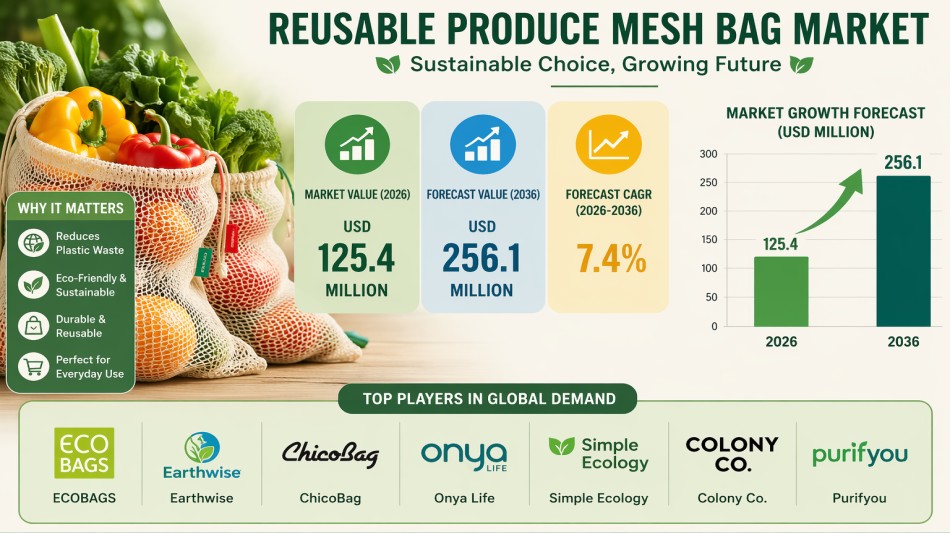
Retail Transformation and Plastic Ban Impact
Grocery retailers worldwide are under increasing pressure to eliminate single-use plastic bags from produce sections. This shift is not limited to product replacement but extends to operational changes such as checkout processes, weighing systems, and in-store merchandising.
Reusable mesh bags are influencing:
Checkout efficiency and scanning accuracy
Store layout and product placement
Inventory and replenishment systems
Retailers integrating reusable options near produce sections are seeing higher adoption, as convenience at the point of selection plays a critical role in purchase decisions.
Pricing Trends and Consumer Behavior
Consumer purchasing decisions are evolving beyond price sensitivity. Buyers now prioritize:
Durability and washability
Ease of use during shopping and storage
Long-term cost savings through reuse
Reusable mesh bags offer clear economic and environmental value by reducing repeated purchases of disposable alternatives, supporting both cost efficiency and sustainability goals.
Adoption Trends and Operational Integration
Adoption of reusable produce bags is increasing as retailers and suppliers standardize systems for smoother operations. Key enablers include:
Standard tare weight labeling for faster checkout
Improved product placement near produce aisles
Enhanced product education through digital channels
Repeat usage is strongly influenced by convenience in both store handling and home storage, making usability a critical success factor.
Material and Product Innovation Driving Demand
Product innovation continues to shape market growth:
Organic cotton dominates due to biodegradability and consumer trust
Drawstring designs lead adoption for secure handling and ease of use
Lightweight, breathable materials improve produce freshness
Consumers increasingly prefer natural, certified materials that align with zero-waste lifestyles and sustainable disposal practices.
Distribution Channel Expansion
Online retail is emerging as the dominant distribution channel, supported by:
Detailed product education (tare weight, sizing, reuse benefits)
Broader assortment availability
Strong eco-conscious branding
Digital platforms enable smaller brands to compete effectively by communicating product value beyond what limited in-store shelf space allows.
Regional Growth Outlook
Regional adoption varies based on regulatory intensity and consumer habits:
India: Leading growth at 9.1% CAGR, driven by strict municipal plastic bans
Australia: Strong adoption at 8.8% CAGR due to established zero-waste practices
Canada: Growth at 8.1% CAGR supported by national plastic reduction policies
Europe: Compliance-driven demand under strict environmental regulations
Markets with enforced plastic bans are witnessing faster adoption compared to regions relying on voluntary consumer behavior.
Speak to Analyst: Customize insights for your business strategy:
https://www.futuremarketinsights.com/customization-available/rep-gb-32689
Buyer Trends and Procurement Strategies
Key buyers include:
Grocery retailers
Supermarket chains
Eco-focused brands
Online marketplaces
Buyers are prioritizing:
Certified and traceable materials
Reliable supply and consistent quality
Private-label opportunities
Multi-supplier strategies to reduce risk
After-Sales Use and Consumer Retention
Long-term adoption depends on product usability:
Easy storage and portability
Durability across repeated wash cycles
Mixed-size packs for varied produce needs
Products that integrate seamlessly into routine shopping behavior are more likely to achieve sustained repeat usage.
Regulations and Sustainability Compliance
Global regulatory frameworks are accelerating market growth:
Municipal and national plastic bans
Retail compliance requirements
Environmental and waste reduction mandates
Reusable mesh bags are transitioning from optional eco-products to mandatory retail solutions, reshaping procurement strategies across grocery chains.
Competitive Landscape
The market features a mix of specialized eco-brands and large-scale textile manufacturers. Key players include:
ECOBAGS, Earthwise, ChicoBag, Onya Life, Simple Ecology, Colony Co., and Purifyou.
Competition is centered on:
Material certification and traceability
Product durability and usability
Retail compliance readiness
Strong online brand presence
Market consolidation and private-label partnerships are expected to increase as retailers seek scalable, compliant solutions.
Unlock 360° insights for strategic decision making and investment planning-
https://www.futuremarketinsights.com/checkout/32689
Outlook
The reusable produce mesh bag market is set to become a foundational component of sustainable retail infrastructure. As regulatory pressure intensifies and consumer habits evolve, the category is expected to shift from niche adoption to mainstream necessity across global grocery ecosystems.
Explore More Research Reports by FMI
Mesh Bag Market: https://www.futuremarketinsights.com/reports/mesh-bags-market
Reusable Wine Bags Market: https://www.futuremarketinsights.com/reports/reusable-wine-bags-market
Reusable Packaging Return Systems Market: https://www.futuremarketinsights.com/reports/reusable-packaging-return-systems-market
Reusable Water Bottle Market: https://www.futuremarketinsights.com/reports/reusable-water-bottles-market
Bag Closure Clips Market: https://www.futuremarketinsights.com/reports/bag-closure-clips-market
About Future Market Insights (FMI)
Future Market Insights (FMI) is a leading provider of market intelligence and consulting services, serving clients in over 150 countries. Headquartered in Delaware, USA, with a global delivery center in India and offices in the UK and UAE, FMI delivers actionable insights to businesses across industries including automotive, technology, consumer products, manufacturing, energy, and chemicals.
An ESOMAR-certified research organization, FMI provides custom and syndicated market reports and consulting services, supporting both Fortune 1,000 companies and SMEs. Its team of 300+ experienced analysts ensures credible, data-driven insights to help clients navigate global markets and identify growth opportunities.
For Press & Corporate Inquiries
Rahul Singh
AVP - Marketing and Growth Strategy
Future Market Insights, Inc.
+91 8600020075
For Sales - sales@futuremarketinsights.com
For Media - Rahul.singh@futuremarketinsights.com
For web - https://www.futuremarketinsights.com/
SOURCE: Future Market Insights, Inc.
View the original press release on ACCESS Newswire