Amazon’s acquisition of Fauna Robotics has brought renewed attention to humanoid robotics—but not just because of AI. What stood out to engineers was a teardown image showing a robot built around roughly 30 joint actuators.That detail matters.
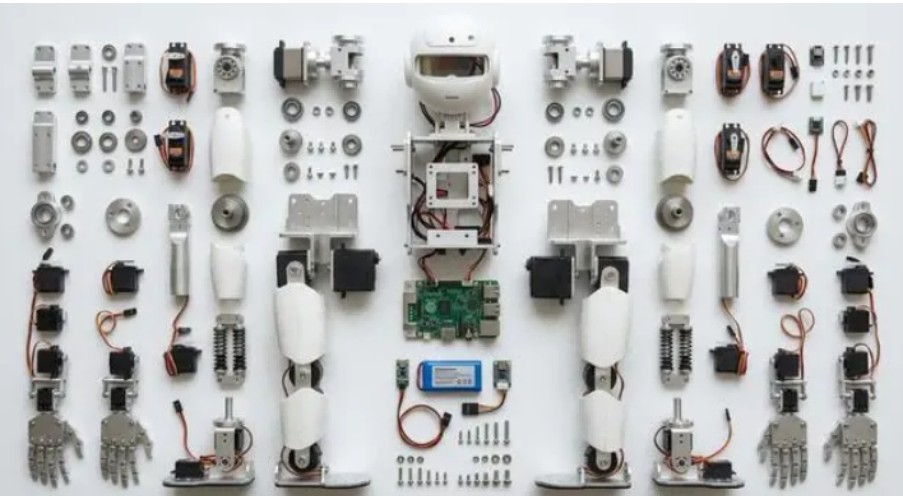
At this scale, the challenge is no longer making a robot move, but making it move well. Every action—turning its head, lifting an arm, maintaining balance—is the result of multiple joints working together in real time. When even one joint is slightly off, the entire motion starts to feel unnatural.

This is why servo-based joint systems are becoming the default choice. A servo combines actuation, reduction, and control into a single unit that can be directly positioned. As the joint count increases, this modular approach makes complex systems more manageable. Each joint becomes a controllable node rather than a standalone mechanical part.
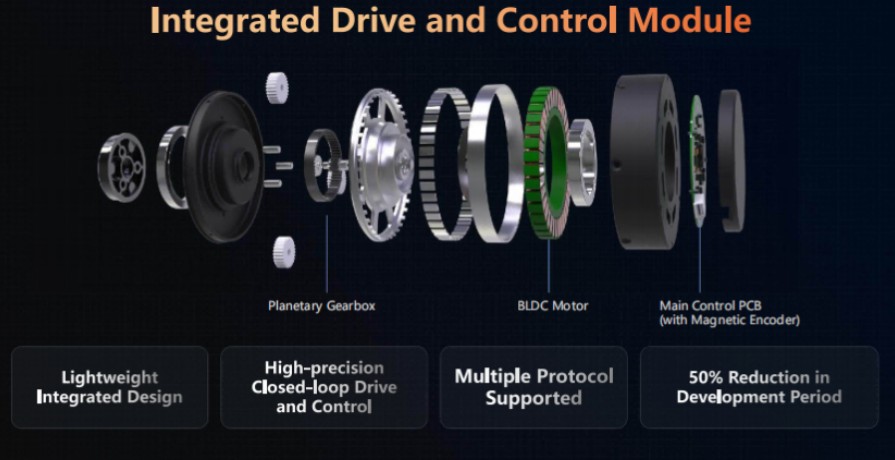
But the real difficulty isn’t in a single servo—it’s in coordination.
In multi-joint robots, performance is defined by consistency across the system. Synchronization, repeatability, and long-term stability matter more than peak specs. Small deviations accumulate quickly, especially in dynamic movements like walking or interacting.

From Kpower’s perspective, this is where humanoid robot design is evolving. The focus is shifting from component performance to system behavior. Integrated drive-control solutions and bus-based communication are becoming essential to keep multiple joints aligned under a unified timing framework.
As robots move into real-world environments, motion quality becomes a user experience factor. People don’t measure torque or speed—they notice smoothness, stability, and noise.
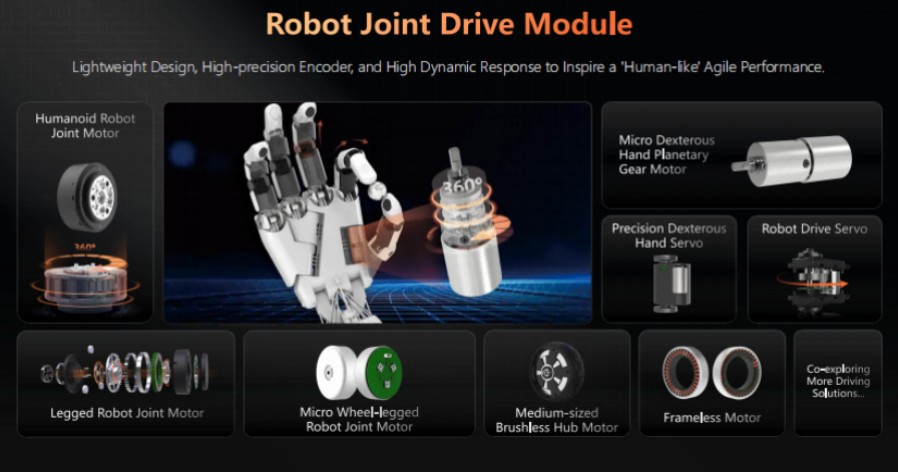
The 30-joint architecture seen in Fauna Robotics is not excessive. It reflects a broader shift toward higher degrees of freedom and more expressive movement.
And in that shift, joint design is no longer a detail. It is the foundation of how robots are perceived and how they perform.
Media Contact
Company Name: Kpower Servo
Contact Person: Garson
Email: Send Email
Address:No.8, Changhong 4th Road, Hengli Town
City: Dongguan
State: Guangdong
Country: China
Website: https://www.kpower.com/