The semiconductor sector is witnessing a surge of activity today, January 13, 2026, as Nvidia (NASDAQ: NVDA) moves to stabilize investor sentiment following weeks of speculation regarding its business operations in China. The AI giant issued a formal clarification regarding the payment structures for its H200 chips destined for the Chinese market, effectively debunking rumors of predatory "upfront-only" terms. This news, combined with the palpable tension ahead of the upcoming quarterly report from Taiwan Semiconductor Manufacturing Co. (NYSE: TSM), has sent ripples through the NASDAQ, with Nvidia's stock reacting to a mix of regulatory relief and high-stakes anticipation.
As the industry prepares for what analysts expect to be a historic earnings season, the focus remains squarely on the sustainability of the AI infrastructure boom. Today’s clarification from Nvidia has provided a necessary cushion for the stock, which had faced downward pressure from fears that geopolitical tensions were making Chinese contracts increasingly precarious. Meanwhile, the broader semiconductor index is buoyed by reports of a potential U.S.-Taiwan trade breakthrough, setting a bullish tone for the week despite the volatility often associated with mid-January financial disclosures.
Nvidia Sets the Record Straight on H200 China Contracts
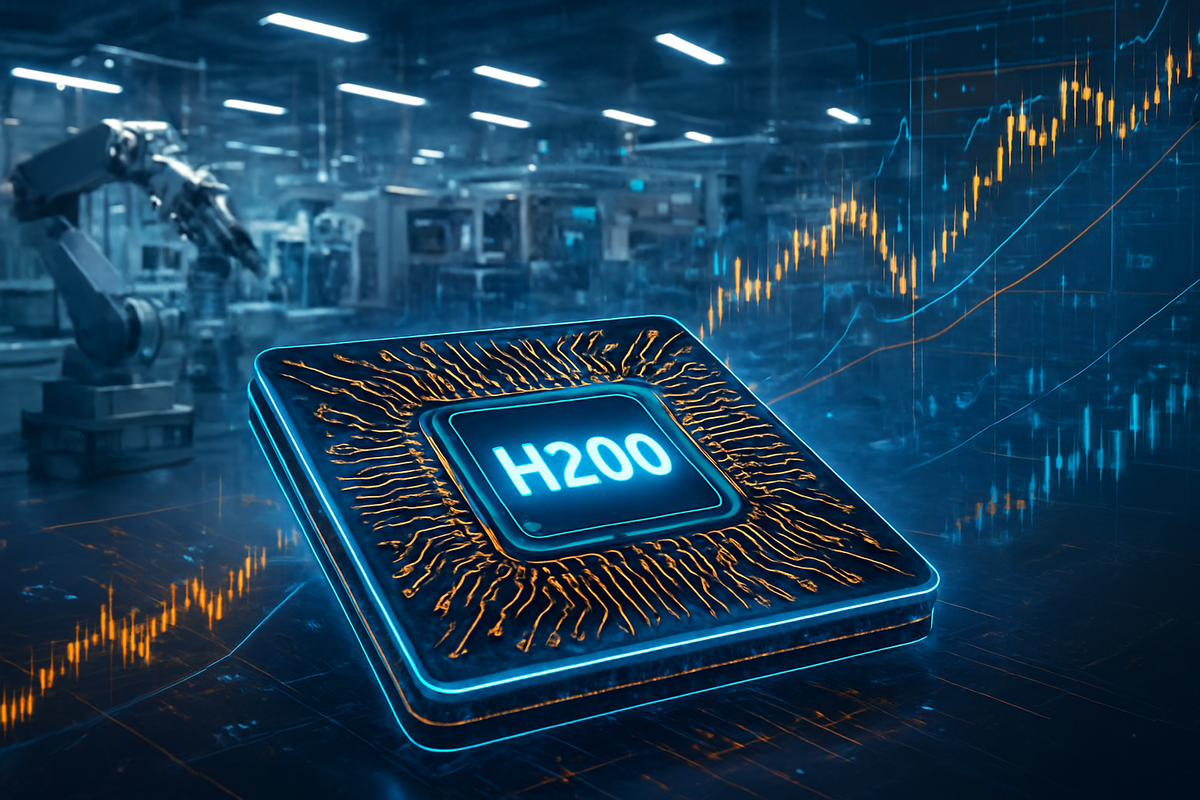
The primary catalyst for Nvidia’s movement today was the company's official response to rumors that it had begun demanding 100% upfront, non-refundable payments from Chinese clients for its H200 accelerators. In a statement released early this morning, Nvidia clarified that while it does utilize standard deposit structures for high-demand hardware, it has not implemented a "prepayment-only" policy. The company emphasized that it does not shift the entirety of regulatory risk onto its buyers, refuting claims that it was forcing customers to pay for products that could potentially be blocked by future export restrictions.
This clarification is particularly significant given the current regulatory landscape. Under the current administration's "revenue-sharing" framework, Nvidia is permitted to export H200 chips to China provided it pays a 25% export levy—often referred to in market circles as the "Trump Fee"—directly to the U.S. government. The rumor of 100% upfront payments had suggested that Nvidia was bracing for a total shutdown of this trade route, a move that would have signaled a lack of confidence in the longevity of the current export licenses. By denying these rumors, Nvidia has signaled that its trade relationship with Chinese hyperscalers remains on stable, if expensive, ground.
The demand for these chips remains unprecedented despite the high levies. Major Chinese tech entities, including Alibaba Group (NYSE: BABA) and the privately-held ByteDance, have reportedly secured orders for over 2 million H200 units for the 2026 fiscal year. ByteDance alone is estimated to be committing upwards of $14 billion to Nvidia’s ecosystem this year, a figure that underscores the critical nature of the H200 to the global AI arms race. Today’s clarification ensures that these massive capital commitments are not viewed by the market as high-risk gambles, but rather as structured, manageable investments.
Winners and Losers in the Evolving Chip Landscape
Nvidia stands as the immediate beneficiary of today’s news, with its stock recovering from a pre-market dip as institutional investors found clarity in the H200 payment terms. By maintaining a standard payment schedule, Nvidia preserves its reputation with its most lucrative international clients while satisfying U.S. regulators through the 25% revenue-sharing model. This balance is crucial for maintaining the company's dominant market share in the face of growing domestic competition within China from firms like Huawei.
Taiwan Semiconductor Manufacturing Co. is also positioned as a major winner today, seeing a 2.5% pop in its U.S.-listed shares. As the sole manufacturer of Nvidia’s high-end AI chips, TSMC’s fortunes are inextricably linked to Nvidia’s order book. Furthermore, reports of a looming U.S.-Taiwan trade deal—which could see tariffs on Taiwanese goods reduced from 20% to 15%—have added a layer of optimism. In exchange for these favorable terms, TSMC has reportedly committed to expanding its Arizona footprint with five additional fabrication facilities, a move that secures its role as the backbone of the U.S. domestic chip supply chain.
On the other end of the spectrum, traditional competitors like Intel Corp (NASDAQ: INTC) and Advanced Micro Devices (NASDAQ: AMD) are facing a more complex environment. While AMD continues to gain traction with its Instinct line of accelerators, the sheer scale of Nvidia’s H200 deployment in China creates a high barrier to entry. Intel, meanwhile, is under pressure to prove that its foundry services can compete with TSMC’s 2nm and 3nm process nodes. As TSMC prepares to announce record-breaking capital expenditures, the gap between the "AI winners" and the legacy chipmakers appears to be widening, leaving little room for error for those trailing the leaders.
The Global Significance of the AI Infrastructure Boom
The events of January 13, 2026, reflect a broader shift in the global economy where AI semiconductors now account for nearly one-third of all global chip sales. The "insatiable" demand for AI infrastructure is no longer a speculative trend but a structural reality of the technology sector. With global AI infrastructure spending forecast to surpass $1.3 trillion later this year, the movements of Nvidia and TSMC are now viewed as primary economic indicators, rivaling traditional metrics like manufacturing output or consumer spending.
This era is also defined by the fusion of trade policy and technological dominance. The 25% revenue-sharing fee on Chinese exports represents a new model of "regulated trade," where the U.S. government allows high-tech commerce to continue while directly capturing a portion of the profits to fund domestic initiatives. This policy has created a precedent that other nations are watching closely, as it attempts to balance national security concerns with the massive economic benefits of the AI revolution.
Furthermore, the anticipation surrounding TSMC’s earnings highlights the market's reliance on a single point of failure in the global supply chain. As TSMC moves toward 2nm production and advanced CoWoS (Chip on Wafer on Substrate) packaging for Nvidia’s upcoming Blackwell and Rubin architectures, the concentration of manufacturing power in Taiwan remains a central theme for risk managers. The reported trade deal and the expansion of Arizona-based manufacturing are direct responses to this "concentration risk," signaling a long-term strategy to diversify the geographical footprint of the world's most advanced technology.
Looking Ahead: The TSMC Bellwether and 2026 Outlook
The immediate future of the semiconductor sector hinges on the TSMC earnings report scheduled for Thursday, January 15. Analysts are bracing for a record quarterly net profit of approximately T$475 billion ($15 billion), a nearly 30% jump year-over-year. However, the most critical data point will be TSMC’s Capital Expenditure (CapEx) guidance for 2026. If the company confirms a CapEx range of $45 billion to $50 billion, it will serve as a definitive signal that the AI cycle is nowhere near its peak, providing a green light for continued investment in the sector.
In the short term, Nvidia will need to navigate the successful delivery of its H200 units while managing the logistical complexities of the U.S. export levy. Any further "clarifications" or regulatory tweaks from the Trump administration could introduce fresh volatility. Investors will also be watching for the first formal performance benchmarks of the Rubin architecture, which is expected to begin sampling later this year. The transition from H200 to these next-generation chips will be the next major test for Nvidia’s supply chain and its ability to maintain its massive margins.
Closing Thoughts for the Modern Investor
As of mid-January 2026, the semiconductor market remains the undisputed engine of the global stock market. Nvidia’s ability to clarify its payment terms today has successfully averted a narrative of "geopolitical panic," allowing the focus to shift back to the robust fundamentals of the AI sector. The synergy between Nvidia’s design prowess and TSMC’s manufacturing dominance continues to create a formidable moat that competitors are struggling to breach.
For investors, the coming months will require a close eye on two fronts: the technical execution of 2nm chip production and the evolving trade relationship between Washington, Taipei, and Beijing. While the growth story remains intact, the "Trump Fee" and the shifting tariff landscape remind us that the semiconductor industry is now as much about diplomacy as it is about silicon. Watching TSMC's CapEx guidance on Thursday will be the final piece of the puzzle for determining the market's trajectory through the first half of 2026.
This content is intended for informational purposes only and is not financial advice.