As the first quarter of 2026 begins, the narrative surrounding the United States economy has shifted from one of cautious stabilization to a more robust "expansion mode." Despite the geopolitical noise and trade-related volatility that defined much of late 2025, JP Morgan’s latest economic insights suggest a remarkably resilient path forward. The financial giant now places the probability of the U.S. avoiding a recession and maintaining its growth trajectory throughout 2026 at a confident 80%, buoyed by a unique combination of fiscal stimulus and a broadening technology boom.
This optimistic outlook is anchored in what analysts describe as a "pro-growth" environment, where traditional economic indicators are being bolstered by a shift toward an asset-based economy. For investors and the public alike, this means that while certain inflationary pressures persist, the underlying machinery of the U.S. market—driven by corporate investment and a stabilized labor market—remains exceptionally strong. The immediate implication is a market that is looking past short-term interest rate fluctuations to focus on long-term capital deployment and productivity gains.
The Three Pillars of the 2026 Economic Surge
The resilience of the 2026 economy rests on three distinct signs of strength identified by JP Morgan. First is the stabilization of the labor market. Following a period of cooling in late 2025, the job market has found a steady equilibrium. Corporate margins remain near historic highs, which has discouraged mass layoffs, while small-business hiring has begun to accelerate. Economists note that the labor market no longer needs to be "red-hot" to support growth; it simply needs to remain stable as real incomes begin to rise in tandem with moderating inflation.
The second sign is the broadening of the Capital Expenditure (Capex) cycle. While the "AI Supercycle" dominated headlines over the past two years, 2026 marks the year where this investment is moving beyond just the "Magnificent Seven." Companies across various sectors are now aggressively investing in data center infrastructure, networking, and power generation. This broadening of investment ensures that the economic cycle is not dependent on a single industry, but is instead supported by a wide-scale modernization of the American industrial and digital backbone.
Finally, the most significant driver for 2026 is the fiscal tailwind provided by the "One Big Beautiful Bill Act" (OBBBA). This major legislative package is expected to inject approximately $160 billion in tax cuts and stimulus into the economy this year. By front-loading these benefits through retroactive tax credits and rebates, the OBBBA is providing a direct boost to disposable income, particularly for middle- and high-income households. This fiscal cushion is acting as a powerful counterweight to the "policy noise" of 2025, effectively underwriting a consumer spending floor for the next twelve months.
Winners and Losers in the K-Shaped Expansion
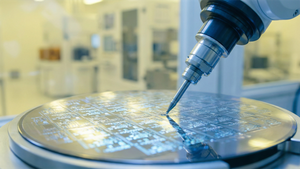
JP Morgan’s outlook highlights a "K-shaped" recovery where specific "share gainers" are positioned to outperform significantly. In the technology and AI infrastructure space, companies like Broadcom (NASDAQ: AVGO), Marvell Technology (NASDAQ: MRVL), Analog Devices (NASDAQ: ADI), and Micron Technology (NASDAQ: MU) are identified as primary winners. These firms are at the heart of the $500 billion data center capex surge, providing the essential semiconductors and networking hardware required for the next phase of the AI buildout.
In the consumer sector, a clear divide is emerging. High-end demand remains resilient, benefiting luxury and travel-related stocks. United Airlines (NASDAQ: UAL) and Delta Air Lines (NYSE: DAL) are expected to see continued strength in premium cabin bookings, while Ralph Lauren (NYSE: RL) and Viking Holdings (NYSE: VIK) capitalize on the "wealth effect" generated by rising asset prices. Conversely, companies catering to lower-income consumers may struggle as the "K-shape" widens, though market share leaders like Starbucks (NASDAQ: SBUX), Celsius Holdings (NASDAQ: CELH), and e.l.f. Beauty (NYSE: ELF) are expected to remain resilient due to strong brand loyalty and pricing power.
The financial sector is also poised for a revival. As the Federal Reserve moves toward a "neutral" interest rate policy, JP Morgan anticipates a surge in mergers and acquisitions (M&A) and transaction activity. This environment favors large institutional banks and specialized players like DraftKings (NASDAQ: DKNG), which continues to benefit from increased discretionary spending in the digital entertainment space. Meanwhile, consumer-facing brands that have successfully navigated the inflationary environment, such as Estée Lauder (NYSE: EL) and SharkNinja (NYSE: SN), are highlighted as "quality" picks that can sustain growth even as broader economic conditions fluctuate.
The Significance of an Asset-Based Economy
The broader significance of the 2026 outlook lies in the transition toward an "asset-based economy." JP Morgan analysts argue that economic health is increasingly being driven by asset prices, liquidity, and financial conditions rather than purely by wage growth. With double-digit gains in both the stock market and housing prices over the last year, the "wealth effect" has become a primary driver of consumption. This shift suggests that as long as financial conditions remain accommodative, the U.S. economy can sustain growth even if traditional manufacturing or labor metrics appear modest.
This trend fits into a larger global context where deregulation and "pro-growth" policies are becoming the standard for developed economies seeking to compete in the AI era. The easing of regulatory hurdles is expected to spark a new wave of corporate risk-taking, which could lead to a more efficient allocation of capital. However, this also carries the risk of increased polarization, as those with exposure to financial assets pull further away from those who rely solely on labor income. This "K-shaped" reality is likely to remain a central theme for policymakers and investors throughout the decade.
Historically, this period draws comparisons to the mid-1990s, where a combination of technological breakthroughs and favorable fiscal policy led to a prolonged period of non-inflationary growth. The 2026 scenario, however, is complicated by the modern realities of global trade tariffs and a more fragmented geopolitical landscape. The ability of the U.S. to maintain its "exceptionalism" will depend on whether the productivity gains from AI can truly offset the higher costs associated with supply chain domesticity and energy transition.
Looking Ahead: The Path to 2027
In the short term, investors should prepare for a "front-loaded" 2026. JP Morgan projects that Real GDP will expand at a pace of roughly 1.8% in the first half of the year, before moderating toward 1.0%–1.5% in the second half. The Federal Reserve is expected to continue its "neutral" shift, with the federal funds rate likely settling between 3.00% and 3.25% by mid-year. This easing bias, combined with the OBBBA stimulus, creates a favorable window for equity markets, with JP Morgan setting a base-case year-end target for the S&P 500 at 7,300.
Long-term, the challenge will be managing the "burn off" of temporary fiscal and trade effects. While headline CPI may spike toward 3.5% mid-year due to tariff pass-throughs, the expectation is that inflation will ease back toward 2.0% by the end of 2026. Companies will need to pivot from a strategy of "survival and pricing power" to one of "innovation and efficiency." Those that fail to integrate AI into their core operations or that remain over-leveraged in a "higher-for-longer" neutral rate environment may find the latter half of 2026 much more challenging than the first.
Final Assessment and Market Outlook
The key takeaway from JP Morgan’s 2026 insights is that the U.S. economy has built a significant "buffer of resilience." Between the fiscal stimulus of the OBBBA, a stabilized labor market, and a massive broadening of corporate investment, the foundations for growth are surprisingly firm. While the "K-shaped" nature of the expansion means that not every sector will participate equally, the overall trajectory for the S&P 500 remains constructive. The "pro-growth" outlook is not just a hope but a reflection of tangible capital flows and legislative support.
As we move through the coming months, investors should keep a close eye on two critical factors: the pace of the Fed’s move to neutral and the real-world impact of the OBBBA tax credits on consumer behavior. If inflation moderates as expected and the fiscal stimulus successfully bridges the gap for the middle class, 2026 could be remembered as the year the U.S. economy successfully transitioned into a high-productivity, AI-driven era. For now, the "expansion mode" is the dominant theme, and the market appears ready to reward those positioned at the intersection of technology and high-end consumer demand.
This content is intended for informational purposes only and is not financial advice.