In a historic move that signals a definitive end to the uncertainty surrounding the future of New York’s office market, American Express (NYSE: AXP) officially announced today, February 25, 2026, that it will build its new global headquarters at 2 World Trade Center. The financial services giant, which has been a fixture of the downtown skyline for decades, has reached a landmark agreement to become the sole owner and occupant of the final commercial skyscraper at the 16-acre World Trade Center site. The decision to construct a custom-built, 55-story "supertall" tower at 200 Greenwich Street is the largest single-tenant office commitment in Manhattan in years and serves as a massive vote of confidence in the enduring value of the physical workplace.
The deal, unveiled by New York Governor Kathy Hochul alongside executives from American Express and Silverstein Properties, marks the culmination of more than twenty years of redevelopment efforts following the events of September 11, 2001. By opting to own the building through a ground lease transfer rather than simply renting space, American Express is securing its footprint in Lower Manhattan through at least the year 2100. This $5.9 billion project is expected to reshape the city’s skyline once again, providing a high-tech, sustainable hub for up to 10,000 employees while reinforcing the Financial District’s status as a global epicenter for the FinTech and payments industries.
A Custom-Built Future: The Path to 2 World Trade Center
The road to today’s announcement has been paved with years of speculation and multiple design iterations for the 2 World Trade Center site. Previously, the project had seen various potential anchor tenants come and go, including a highly publicized but eventually aborted deal with News Corp (NASDAQ: NWSA) in 2015. However, American Express has now provided the stability the project required. Under the terms of the agreement, Silverstein Properties will serve as the developer, but American Express will take over the long-term ground lease from the Port Authority of New York & New Jersey. This unique ownership structure allows the company to control its environment completely, a move that is becoming increasingly attractive to blue-chip corporations with strong balance sheets.
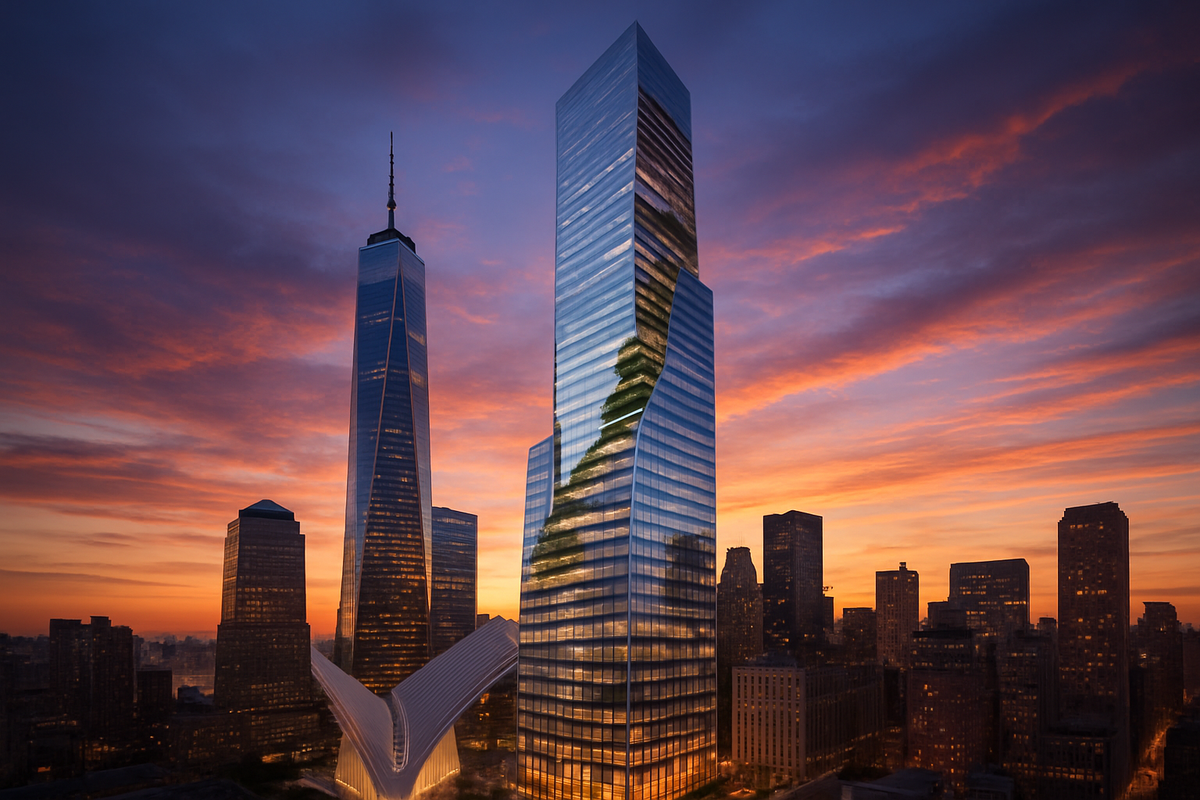
The tower itself will be a masterpiece of modern architecture, designed by the world-renowned firm Foster + Partners, led by Lord Norman Foster. Standing approximately 1,226 feet tall, the 1.95-million-square-foot skyscraper will become the second-tallest building in Lower Manhattan, trailing only 1 World Trade Center. The design focuses heavily on "post-pandemic" wellness and environmental responsibility, featuring over an acre of outdoor green space distributed across several landscaped terraces. Construction is slated to begin in the spring of 2026, with an estimated completion date in 2031, allowing for a phased transition of the company's workforce.
Key stakeholders, including the Port Authority and the Downtown Alliance, have hailed the move as the "final piece of the puzzle" for the World Trade Center campus. For Larry Silverstein, the 94-year-old chairman of Silverstein Properties, the deal represents the fulfillment of a commitment made shortly after the original towers fell. By securing a homegrown New York institution like American Express, the redevelopment project achieves its goal of creating a vibrant, mixed-use commercial center that blends high-finance heritage with modern amenities.
Initial market reactions have been overwhelmingly positive, with real estate analysts noting that American Express's decision to build rather than lease suggests a long-term bullish outlook on New York City. While the multi-billion dollar price tag is significant, American Express has clarified that the capital expenditure will be spread over several years and is not expected to materially impact its short-term earnings or capital return programs. The news has already sparked a flurry of activity among retail and hospitality businesses in the surrounding area, which are bracing for a surge in foot traffic once the 10,000-person campus opens.
Winners and Losers in the Real Estate Shuffle
The primary beneficiary of this announcement, aside from American Express itself, is undoubtedly Silverstein Properties. For years, the developer struggled to find a tenant large enough to anchor the financing for 2 World Trade Center. This deal not only validates Silverstein’s persistence but also completes the "Silverstein Portfolio" at the site, which includes 3, 4, and 7 World Trade Center. Furthermore, the construction industry in New York City is set for a significant windfall, with the project expected to create over 3,000 jobs, including 2,000 unionized construction roles, providing a steady pipeline of work through the turn of the decade.
However, the move creates a significant vacancy risk for Brookfield Corporation (NYSE: BN), the current landlord of American Express at 200 Vesey Street. American Express has occupied a massive portion of Brookfield Place since 1986, and its departure in 2031 will leave a nearly 2-million-square-foot hole in that complex’s roster. While five years is a long lead time to find new tenants, the sheer volume of space hitting the market simultaneously could put downward pressure on rents in the Battery Park City submarket. Brookfield will likely need to embark on its own significant renovations to compete with the state-of-the-art facilities being built just across the street.
The broader "Class B" and "Class C" office market in Lower Manhattan also stands to lose. As American Express moves into a "trophy" asset, it reinforces a "flight to quality" trend that leaves older, less efficient buildings struggling to find occupants. Small and mid-sized landlords who lack the capital to modernize their facilities may find it increasingly difficult to compete for tenants as the market bifurcates between ultra-luxury, sustainable towers and obsolete office stock. This could accelerate the trend of converting older office buildings into residential units to keep the district’s vacancy rates manageable.
On the other hand, neighboring public companies like Goldman Sachs (NYSE: GS), which maintains its global headquarters nearby at 200 West Street, may see indirect benefits. A fully completed World Trade Center site improves the overall neighborhood infrastructure, transit access, and safety, making it easier for all nearby firms to recruit and retain talent. The increased density of high-income professionals will also benefit local service providers and publicly traded REITs with retail exposure in the area, such as Simon Property Group (NYSE: SPG), which operates the retail spaces within the World Trade Center "Oculus" transport hub.
A New Blueprint for the Global Financial District
The American Express move is a textbook example of the "flight to quality" that has defined the post-2020 commercial real estate landscape. In an era where hybrid work is the norm, corporations are no longer looking for just "office space"; they are looking for "destinations" that provide an experience employees cannot get at home. By incorporating vast outdoor gardens, advanced air filtration, and LEED-certified sustainable infrastructure, 2 World Trade Center is being positioned as a recruitment tool as much as a place of business. This shifts the focus of corporate real estate from a cost-center to a strategic asset for human capital management.
Furthermore, this event mirrors other major corporate movements in the city, most notably JPMorgan Chase (NYSE: JPM) and its decision to build a massive new headquarters at 270 Park Avenue. Both firms have concluded that owning their "mother ship" is more advantageous than leasing, providing long-term hedge against rising real estate costs and greater flexibility in building design. This trend suggests that the largest financial institutions are doubling down on New York City, even as some smaller firms or back-office operations migrate to lower-cost states like Florida or Texas.
From a regulatory and policy perspective, the American Express headquarters move is a win for the City and State of New York. It ensures that a major taxpayer and employer remains committed to the city for the next 75 years. This stability is crucial for municipal planning, especially regarding the long-term funding of the Metropolitan Transportation Authority (MTA) and the maintenance of the Port Authority’s infrastructure. The project also sets a high bar for future developments in terms of carbon footprint, aligning with New York’s aggressive climate goals and Local Law 97 requirements.
Historically, the completion of the World Trade Center site has been viewed as a barometer for the city’s resilience. In the 1970s, the original towers were seen as a sign of the city's ability to overcome a fiscal crisis; today, the rise of 2 World Trade Center symbolizes a recovery from the pandemic-induced "urban doom loop" narrative. By choosing this site, American Express is not just moving a few blocks; it is participating in a historical continuum that defines New York’s identity as the financial capital of the world.
The Horizon: Construction and Strategy Through 2031
In the short term, the focus will shift to the logistical and engineering challenges of about building a supertall tower in one of the most densely populated and scrutinized locations on earth. The "Spring 2026" ground-breaking date means that American Express will likely start finalizing its design refinements and securing the necessary permits immediately. For investors, the next few years will involve monitoring the company’s capital expenditure (CapEx) reports to ensure the project remains on budget. Any delays in construction could have ripple effects on the company's lease exit strategy at its current location.
Strategically, American Express will need to navigate a decade of workforce evolution during the construction phase. The company has already hinted at using the new headquarters as a "living lab" for hybrid work technologies. Between now and 2031, we can expect the company to pilot new office configurations at its current 200 Vesey Street location, which will then be refined and implemented at scale in the new tower. The move also provides American Express with an opportunity to modernize its technological backbone, integrating AI and smart-building systems directly into the fabric of its new home.
Potential challenges include the possibility of a shifting economic climate that could make a multi-billion dollar construction project look more expensive in retrospect. However, given that American Express is financing the project itself and holds a massive cash position, it is better shielded from interest rate volatility than a typical developer reliant on high-leverage bank loans. The long-term outcome is likely a more efficient, brand-aligned headquarters that lowers operational costs over the 75-year life of the ground lease compared to the escalating costs of traditional renting.
Conclusion: A Landmark Commitment to the City
The announcement of American Express's move to 2 World Trade Center is more than a simple real estate transaction; it is a definitive statement about the future of global finance and the city that hosts it. By committing to build a 2-million-square-foot tower from the ground up, American Express is rejecting the idea that the office is dead and instead proposing that the office must simply be better. The project completes the architectural vision for the World Trade Center site and provides a powerful economic engine for the region for the remainder of the century.
Moving forward, the market will be watching closely to see if other major corporations follow suit. The success of this "build-to-own" model could trigger similar moves by other Dow Jones Industrial Average components. For American Express, the move solidifies its legacy in the Financial District and provides its 10,000 employees with a world-class environment designed for the next generation of financial services.
For investors, the key takeaways are the company's long-term stability and its ability to execute massive strategic investments without compromising its financial health. As the skyline begins to change once again in the spring of 2026, the progress of 2 World Trade Center will be a visible reminder of American Express's dominance in the market and its enduring ties to the heart of New York City.
This content is intended for informational purposes only and is not financial advice.