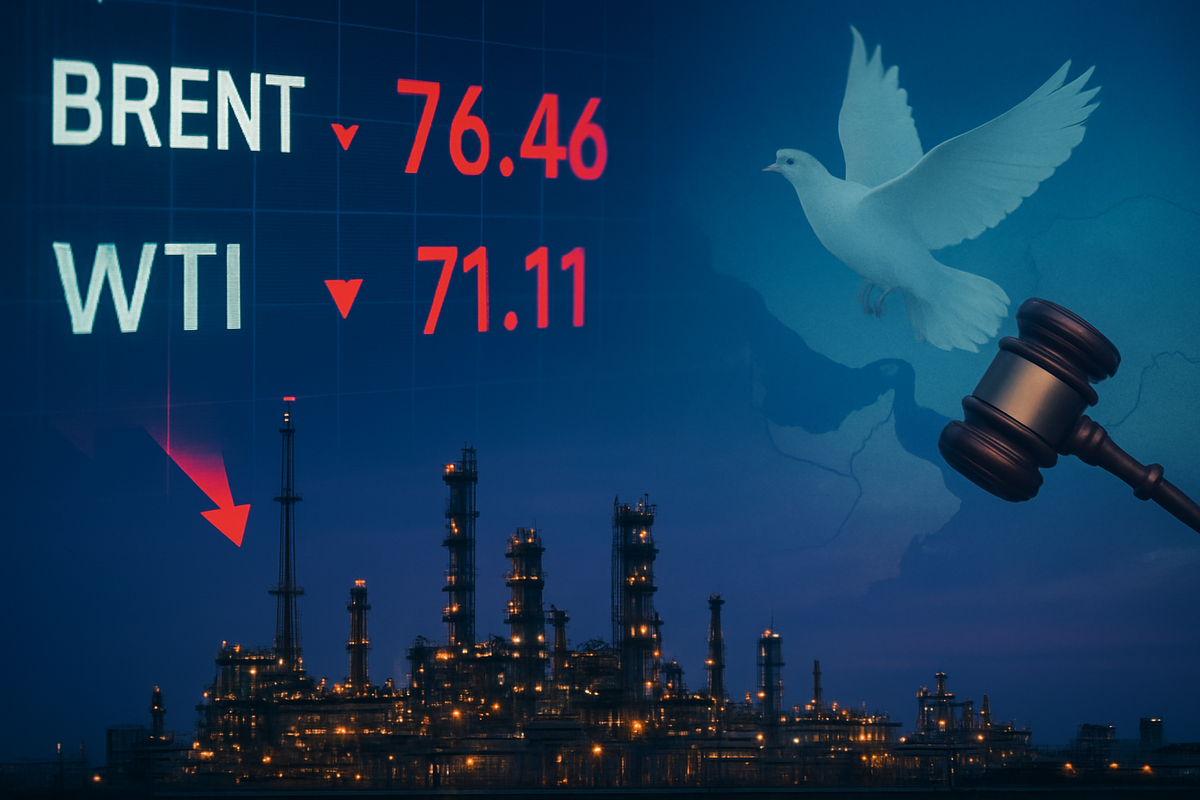
NEW YORK — Global energy markets experienced a seismic shift this week as crude oil prices plummeted from their recent geopolitical highs, providing a much-needed reprieve for a global economy that had been teetering on the edge of an energy-induced recession. Brent crude, the international benchmark, fell sharply below the psychologically significant $100-per-barrel mark, while West Texas Intermediate (WTI) followed suit, sliding under $90. The sudden reversal follows a series of high-profile statements from President Donald Trump, who suggested that a diplomatic "grand bargain" to end the ongoing hostilities with Iran is not only possible but imminent. This rhetoric has effectively drained the "war premium" that had pushed energy prices to multi-year highs earlier this February.
The market’s reaction was near-instantaneous, reflecting a growing belief among traders that the specter of a prolonged conflict in the Middle East—and the potential closure of the Strait of Hormuz—is receding. For months, the "February Crisis" of 2026 had kept energy markets in a state of high volatility following a series of kinetic exchanges between U.S.-led forces and Iranian assets. However, the President’s weekend address, in which he claimed to be in "very advanced discussions" to secure a lasting peace and restore regional stability, has rewritten the market narrative from one of scarcity and risk to one of surplus and "the peace dividend."
The Pivot to Diplomacy: A Timeline of the Energy Retreat
The decline in energy prices marks a stark reversal from the first two months of 2026. Following the escalation of the "shadow war" into direct military engagement in January, Brent crude had surged to a peak of nearly $122 per barrel, as maritime insurance rates for tankers in the Persian Gulf skyrocketed. The conflict, which saw targeted strikes on Iranian energy infrastructure and subsequent retaliatory threats against regional shipping lanes, forced many analysts to project $150 oil by the summer. However, the trajectory shifted on March 6, when the White House signaled a pivot toward a "diplomatic surge."
Key stakeholders, including OPEC+ leaders and major Asian energy importers, had been bracing for a long-term disruption. Instead, they were met with a flurry of diplomatic activity. The timeline of this week’s collapse began on Monday morning when President Trump, speaking at a manufacturing summit, stated that "the era of endless Middle Eastern wars is coming to a close" and that Iran was "ready to talk." By the time the New York floor opened, WTI had already shed 6%, as algorithms and human traders alike scrambled to price in a more stable supply chain. Initial market reactions saw massive liquidations of "long" positions in oil futures, a trend that accelerated through Wednesday as the President’s optimistic tone was echoed by key officials in his cabinet.
Winners and Losers: Transport Soars While Big Oil Braces
The sharp drop in input costs has triggered a massive rotation within the equity markets. The primary beneficiaries have been the transportation and logistics giants, which have struggled under the weight of surging fuel surcharges for much of the past year. Shares of FedEx Corporation (NYSE: FDX) and United Parcel Service, Inc. (NYSE: UPS) saw their best single-day gains since 2023, as investors bet on widening margins and increased shipping volumes fueled by cheaper diesel. Similarly, the airline sector, led by Delta Air Lines, Inc. (NYSE: DAL), experienced a relief rally, with jet fuel futures tracking the decline in Brent crude, promising lower operating costs just as the peak summer travel season approaches.
Manufacturing stocks also found a tailwind in the falling energy prices. Deere & Company (NYSE: DE), which has been pressured by high production costs and a cooling agricultural sector, saw a significant bounce as the prospect of lower fuel and fertilizer costs for farmers boosted demand outlooks. Conversely, the "Big Oil" players that had been reaping record profits from the price spike faced a harsh reality check. Exxon Mobil Corporation (NYSE: XOM) and Chevron Corporation (NYSE: CVX) both saw their stock prices dip as the prospect of sub-$100 oil forced analysts to revise downward their earnings-per-share estimates for the second and third quarters. Caterpillar Inc. (NYSE: CAT), while benefiting from lower manufacturing costs, faced mixed sentiment as its energy and transportation segment may see a slowdown in demand for oil-field equipment.
A Broader Shift in the Global Macro Landscape
The decline in energy prices fits into a larger industry trend of "re-globalization" and the easing of supply-chain bottlenecks that have plagued the 2020s. For the past two years, energy security has been the primary driver of central bank policy and corporate strategy. If the Iran war rhetoric indeed leads to a cessation of hostilities, it would represent a historical precedent similar to the "peace dividends" seen in the late 20th century. The ripple effect on competitors and partners is profound; European markets, which are more sensitive to energy imports than the U.S., saw the Euro strengthen against the Dollar as the threat of an energy-led depression in the Eurozone faded.
Furthermore, this event has significant regulatory and policy implications. The Trump administration has consistently advocated for domestic energy independence, and the sudden decline in prices may take the political pressure off the "Drill, Baby, Drill 2.0" initiatives, allowing for a more measured approach to domestic permitting. Historically, periods of rapidly falling oil prices have preceded significant boosts in consumer spending, acting as a "stealth tax cut" for the middle class. However, the volatility also serves as a reminder to the market of how tethered global equity prices remain to the geopolitics of the Persian Gulf.
What Lies Ahead: Market Volatility and Strategic Pivots
Looking forward, the short-term focus for investors will be on the sustainability of the President’s diplomatic overtures. While the market has reacted with optimism, the "geopolitical risk premium" could easily return if negotiations with Tehran stall or if a new "black swan" event occurs in the region. Strategic pivots will be required for companies that had hedged their fuel costs at higher levels; those that locked in $110 oil may find themselves at a competitive disadvantage if prices remain in the $80–$90 range.
In the long term, the primary challenge will be for OPEC+ to manage the potential return of Iranian crude to the global market. If sanctions are eased as part of a peace deal, an additional 1.5 to 2 million barrels per day could eventually flood the market, potentially pushing prices even lower and challenging the price floor that the Saudi-led cartel has worked hard to maintain. This scenario would create a "buyer's market" for manufacturing and transport, but could lead to a significant slowdown in capital expenditure within the U.S. shale patch.
Closing Thoughts: A Turning Point for the 2026 Economy
The events of this week mark a potential turning point for the 2026 economic outlook. The sharp decline in Brent and WTI crude below the $100 and $90 thresholds, respectively, suggests that the "war-time economy" may be giving way to a period of relative stability. For the transportation and manufacturing sectors, the relief is immediate and substantial, potentially staving off the "industrial winter" that many economists had predicted.
Investors should watch closely for the formalization of any diplomatic agreements and for any shifts in OPEC+ production quotas in the coming months. While the current sentiment is overwhelmingly positive, the history of Middle Eastern diplomacy is littered with false dawns. Moving forward, the market will remain hyper-sensitive to the President’s social media updates and official communiqués from the State Department. For now, however, the "Peace Dividend" is very much in play, and the global economy appears to have dodged a significant energy bullet.
This content is intended for informational purposes only and is not financial advice