MENLO PARK, CA & SANTA CLARA, CA — In a move that fundamentally redraws the competitive map of the semiconductor industry, Meta Platforms (NASDAQ: META) has finalized a landmark multi-year agreement with Advanced Micro Devices (NASDAQ: AMD) to deploy a staggering six gigawatts of AI computing power. The deal, valued at an estimated $60 billion to $100 billion over the next five years, represents the largest single procurement of non-Nvidia hardware in the history of the artificial intelligence era. Industry analysts are calling it the "Gigawatt Pivot," signaling the definitive end of the single-vendor era and the birth of a dual-vendor duopoly in high-end AI infrastructure.
The agreement is not merely a purchase order but a deep strategic integration that aligns the two tech giants’ futures. By committing to 6GW of capacity—enough power to run millions of households—Meta is securing its position in the race toward "Personal Superintelligence" while simultaneously providing AMD with the scale and capital necessary to challenge the long-standing dominance of Nvidia (NASDAQ: NVDA). As of March 3, 2026, the market is already reacting to this shift, with AMD shares surging on the news of equity-linked performance warrants that could see Meta become one of the chipmaker’s largest shareholders.
The Architecture of a New Era
The details of the agreement, which began leaking in late February and were solidified in early March 2026 analyst calls, reveal a massive technological undertaking. At the heart of the deal is the custom-engineered AMD Instinct MI450 GPU, a silicon marvel built on the 2nm-class node from Taiwan Semiconductor Manufacturing Company (NYSE: TSM). These chips are tailored specifically for Meta’s Llama-class large language models, featuring next-generation HBM4 memory with a record-breaking 19.6 TB/s of bandwidth. The deployment will also utilize AMD’s 6th Generation EPYC CPUs, known internally as "Venice" and "Verano," which will provide the high-throughput orchestration required for clusters of this unprecedented scale.
This partnership marks the culmination of an eighteen-month secret collaboration between the two companies. Following the initial success of AMD’s MI300 series in 2024, Meta engineers worked alongside AMD’s designers to develop the "Helios" rack-scale architecture. Developed through the Open Compute Project (OCP), Helios allows Meta to deploy AMD-based hardware as a "plug-and-play" alternative to Nvidia’s Blackwell and Rubin systems. The first gigawatt of this capacity is scheduled to go online in the second half of 2026, with the full 6GW rollout expected to be completed by 2030.
To ensure long-term alignment, the deal includes a unique financial structure: AMD has issued Meta performance-based warrants to purchase up to 160 million shares—roughly 10% of the company—at a nominal price. These warrants vest as Meta reaches specific deployment milestones and as AMD’s stock price hits certain performance tiers, with the final tranche unlocking when AMD reaches $600 per share. This "skin-in-the-game" approach effectively turns Meta from a customer into a strategic partner with a vested interest in AMD’s technological roadmap and financial success.
Winners, Losers, and the Shifting Balance of Power
The clear winner in this transaction is Advanced Micro Devices. For years, the company lived in the shadow of Nvidia’s massive software moat and first-mover advantage. With this 6GW commitment, AMD has secured a "guaranteed" revenue stream estimated at $20 billion to $25 billion annually starting in late 2026. This deal, combined with its 2025 contract with OpenAI, propels AMD’s AI accelerator market share from a respectable 9% last year toward a projected 18% by the end of 2026. Furthermore, Meta’s commitment to porting its primary AI workloads to AMD’s ROCm software stack provides the crucial industry validation that AMD’s software ecosystem is finally ready for prime time.
For Nvidia, the news is a sobering reminder that even the most formidable moats can be bridged. While Nvidia remains the undisputed leader in sheer volume and absolute performance, the Meta deal represents the first structural threat to its pricing power. Just last week, Meta signed a separate multi-year deal for Nvidia’s upcoming Rubin architecture, but the AMD deal serves as a "credible second source" that Meta can use to negotiate better terms and mitigate supply chain risks. Nvidia may find itself forced to adjust its aggressive pricing strategies to prevent other hyperscalers like Microsoft (NASDAQ: MSFT) and Alphabet (NASDAQ: GOOGL) from following Meta's lead and diversifying their own massive data center footprints.
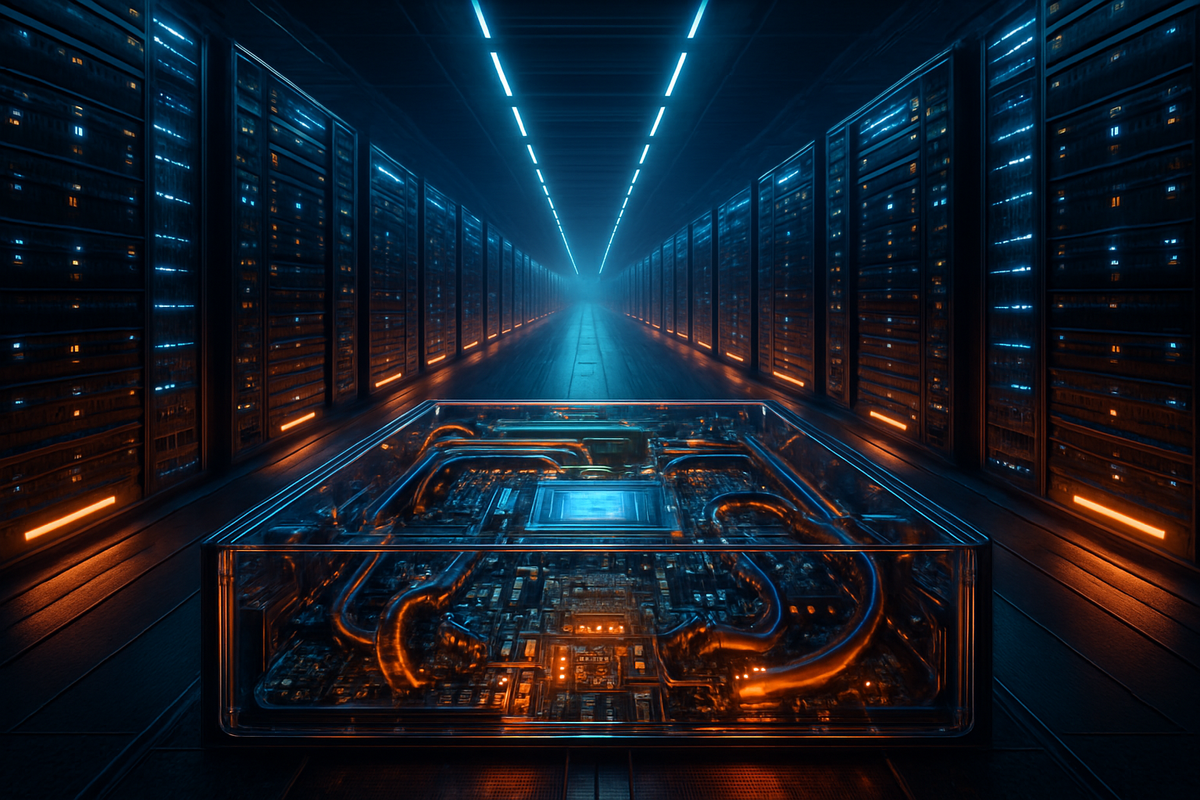
Other winners include the infrastructure and energy sectors. Companies specializing in liquid cooling and high-density power delivery are poised to benefit from the Helios architecture's requirements. Conversely, smaller chip designers who were hoping to capture the "third spot" in the AI market may find the door closing as the industry solidifies into an AMD-Nvidia duopoly. The sheer scale of the 6GW deployment sets a "barrier to entry" so high that only the most well-capitalized firms can hope to compete in the high-end GPU space.
A Broader Shift in the Global AI Landscape
The AMD-Meta deal fits into a broader industry trend toward "sovereign-scale" computing. In 2024 and 2025, the industry talked about data centers in terms of thousands of GPUs; in 2026, the conversation has shifted to gigawatts of power. This transition reflects a change in how AI compute is procured—it is no longer just about buying chips, but about securing long-term power capacity blocks and treating compute as a standardized utility. By locking in 6GW of AMD hardware, Meta is essentially pre-buying the electricity and silicon needed to stay at the forefront of the AI arms race for the next decade.
This event also signals the crumbling of Nvidia's CUDA moat. For years, the proprietary CUDA software was the "glue" that kept developers tied to Nvidia hardware. Meta’s massive investment in the open-source ROCm stack and its own PyTorch framework has created a viable alternative path. If the world’s most advanced AI models can run seamlessly on AMD silicon at 6GW scale, the technical argument for Nvidia-only infrastructure disappears. This shift toward software portability is likely to trigger a wave of migration across the enterprise sector, as businesses seek to avoid vendor lock-in and optimize their total cost of ownership.
Historically, this transition mirrors the early days of the server market, which saw a similar shift from proprietary Unix systems to a duopoly of x86 providers (Intel and AMD). The AI market is now maturing in much the same way, moving from an "exploratory" phase dominated by one innovator to a "commoditized" phase where two giants compete on price, efficiency, and supply chain reliability. This maturation is a healthy sign for the broader economy, as competition typically leads to faster innovation and lower costs for the end-users of AI services.
The Path Forward: What Comes Next?
In the short term, all eyes will be on the execution of the "Phase One" 1GW deployment. If AMD can deliver the MI450 silicon on time and meet the performance benchmarks set by Meta, it will likely trigger a "copycat" effect among other major cloud providers. Microsoft and Alphabet are already rumored to be in talks with AMD for similar gigawatt-scale "strategic alignment" deals. We should expect a period of intense capital expenditure as these firms race to build out the physical facilities required to house 6GW of high-density hardware, involving a massive expansion of liquid-cooled data centers globally.
Longer term, the strategic pivot for both companies will be toward vertical optimization. We may see AMD and Meta co-develop even more specialized silicon—perhaps integrating Meta’s internal MTIA (Meta Training and Inference Accelerator) designs directly into the AMD chiplets. This "hybrid silicon" model could allow for even greater efficiency gains, further distancing the duo from competitors who rely on off-the-shelf components. For investors, the focus will shift from "who has the fastest chip" to "who can deliver the most compute per watt per dollar" at the scale of a small city’s power grid.
A New Market Paradigm
The AMD-Meta 6GW agreement is more than a business deal; it is a structural realignment of the technology sector. It validates AMD as a peer-level competitor to Nvidia and demonstrates that the world’s largest AI players are willing to spend tens of billions of dollars to ensure a competitive hardware market. The transition to a dual-vendor duopoly provides the stability and pricing competition that the AI industry desperately needs to move into its next phase of growth.
As we look toward the remainder of 2026 and into 2027, investors should closely monitor AMD’s shipment milestones and the progress of the ROCm software ecosystem. The real test will be the first "gigawatt-scale" training run on the Helios clusters. If successful, it will mark the moment the AI hardware monopoly was officially broken. For the market, this means a more resilient supply chain and a more balanced competitive landscape, where innovation is driven not just by one company’s roadmap, but by the collaborative engineering of the world's most powerful technology partners.
This content is intended for informational purposes only and is not financial advice.