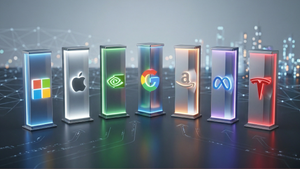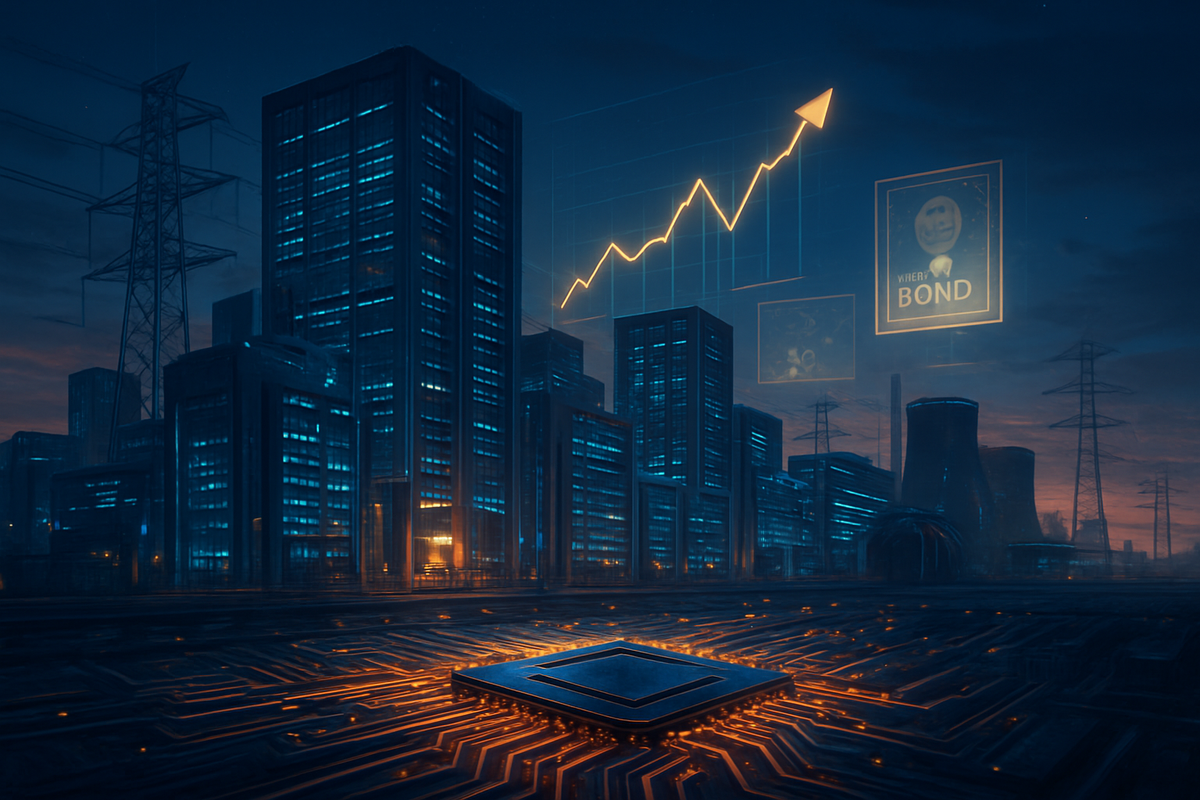
As of March 3, 2026, the era of "cash is king" for Silicon Valley’s elite has officially given way to a new regime: the era of the AI-backed bond. In a historic shift that is reshaping global credit markets, the "Magnificent Seven" tech giants, alongside aggressive movers like Oracle Corp. (NYSE: ORCL), have projected a staggering $630 billion in combined capital expenditure for 2026. Unlike the software-driven growth cycles of the previous decade, this "AI Industrial Revolution" requires massive physical infrastructure—data centers, subsea cables, and custom silicon—forcing even the most cash-rich companies to tap the debt markets at record levels.
The implications for the broader market are profound. By transitioning from depleting their own cash reserves to issuing long-term corporate debt, these tech behemoths are effectively becoming the dominant force in the investment-grade bond market. This pivot signifies a collective bet that the returns on artificial intelligence will not only cover the interest on tens of billions in new debt but will also sustain the next half-century of digital dominance. However, with massive leverage comes heightened scrutiny, as investors begin to weigh the potential for a "valuation cliff" if these multi-billion dollar investments fail to yield immediate, scalable revenue.
The Great Infrastructure Pivot: Breaking Down the $630 Billion Spend
The sheer scale of the 2026 capital expenditure (capex) projections has left many market veterans stunned. Leading the charge is Amazon.com, Inc. (NASDAQ: AMZN), with a projected $200 billion earmarked for its AWS division to bolster global data center capacity and proprietary chip production. Not far behind, Alphabet Inc. (NASDAQ: GOOGL) has guided for upwards of $185 billion, nearly doubling its spending from just two years ago. To fund these ambitions, Alphabet recently executed a landmark $32 billion bond sale, which included a rare 100-year bond specifically designated for long-term power and cooling infrastructure projects.
This timeline of aggressive spending trace back to late 2024, when the initial "AI hype" transitioned into a desperate "arms race" for compute capacity. By mid-2025, it became clear that operating cash flow alone would not suffice if companies wanted to maintain both their AI growth and their aggressive share buyback programs. Consequently, Meta Platforms, Inc. (NASDAQ: META) launched its largest-ever bond offering of $30 billion in late 2025, signaling to the market that even the most profitable social media empires must now behave like capital-intensive utilities to survive the AI age.
Oracle Corp. (NYSE: ORCL) has emerged as perhaps the most aggressive player in this debt-fueled landscape. In February 2026, Oracle announced a massive $50 billion capital raise to address a contract backlog that has ballooned to over $520 billion. By issuing $25 billion in investment-grade bonds, Oracle is betting its entire balance sheet on its ability to build "AI Superclusters" for the likes of OpenAI and xAI. This move has fundamentally changed Oracle’s profile from a legacy software provider to a high-leverage infrastructure backbone for the AI industry.
Winners and Losers in the Age of Leverage
The primary beneficiary of this $630 billion spending spree remains NVIDIA Corp. (NASDAQ: NVDA). As the sole provider of the high-end H-series and newer "Rubin" architecture chips, Nvidia sits at the center of this capital vortex. Every dollar of debt raised by Microsoft Corp. (NASDAQ: MSFT) or Meta essentially flows directly into Nvidia’s coffers, cementing its position as the ultimate "arms dealer" of the 2020s. While the hyperscalers grapple with debt service and margin compression, Nvidia continues to enjoy record margins, though its destiny is now inextricably linked to the debt sustainability of its largest customers.
Conversely, the "losers" in this environment may be the very companies doing the spending—at least in the short term. Microsoft and Amazon have seen their share prices experience significant volatility in early 2026 as "capex anxiety" takes hold of Wall Street. Investors are increasingly concerned that the "payback period" for these massive data centers is lengthening. Furthermore, smaller cloud competitors who lack the AAA or AA credit ratings of the Magnificent Seven are being "crowded out" of the bond market, as lenders prefer the safety of Big Tech over more speculative, smaller-scale AI firms.
Oracle also faces a unique set of risks. Unlike Apple Inc. (NASDAQ: AAPL), which maintains a more conservative debt profile focused on consumer hardware cycles, Oracle’s massive leverage has put its credit rating under a microscope. If the AI startups that make up Oracle’s backlog fail to secure their own funding or experience a slowdown, Oracle could find itself holding billions in specialized infrastructure with no one to pay the rent.
A Structural Shift in the Global Economy
This event fits into a broader industry trend where "Big Tech" is effectively replacing "Big Oil" and "Big Banking" as the primary drivers of the physical economy. In 2026, AI-related debt is expected to comprise nearly 15% of the entire U.S. investment-grade bond market. This shift mirrors the historical fiber-optic boom of the late 1990s, but with a key difference: the current build-out is backed by trillion-dollar balance sheets and documented demand from enterprise customers rather than speculative retail interest.
The ripple effects are felt most acutely in the energy sector. A significant portion of the $630 billion capex is being diverted into "Sovereign AI" projects and private power grids. As the Magnificent Seven secure their own energy sources through small modular reactors (SMRs) and massive solar arrays, they are effectively decoupling from public utilities. This has triggered regulatory debates globally, as governments wonder how to tax and manage these private, tech-owned infrastructure empires that rival the power of nation-states.
Historically, this transition is most comparable to the build-out of the U.S. railroad system in the 19th century. Just as the railroads required massive debt to lay tracks that eventually enabled the industrial revolution, today’s tech giants are laying the "digital tracks" for an autonomous economy. The danger, as seen in the railroad panics of the 1870s and 1890s, is that over-leveraged growth can lead to systemic shocks if the underlying economic productivity doesn't materialize as quickly as the debt matures.
The Road Ahead: 2027 and Beyond
In the short term, the market will be laser-focused on the Return on Invested Capital (ROIC) reports expected in late 2026. If the software applications powered by these $630 billion investments—such as autonomous agents and generative enterprise tools—don't start showing massive revenue gains, we may see a sharp strategic pivot. This could involve a "de-leveraging" event where tech giants are forced to slash buybacks or sell off non-core assets to satisfy bondholders.
Long-term, the most likely scenario is a consolidation of the AI market. The high cost of entry, now measured in the hundreds of billions of dollars, creates an almost insurmountable moat. This may lead to a permanent two-tier market: the "Infrastructure Sovereigns" (the Magnificent Seven and Oracle) and everyone else. Potential market opportunities may emerge for specialized "AI-Debt" funds and insurance products designed to hedge against the obsolescence of current-generation hardware.
Market Outlook and Investor Takeaways
The pivot to debt-funded AI spending marks a maturation of the technology sector, moving it from a high-margin software business to a capital-intensive infrastructure powerhouse. For investors, the key takeaways are clear: the Magnificent Seven are no longer just growth stocks; they are becoming the world's most vital utilities. The success of this $630 billion gamble will define the market for the next decade.
Moving forward, investors should watch for the "spread" between AI spending and AI revenue. If the revenue gap remains wide by 2027, the bond market—not the stock market—will likely be the first to signal distress. For now, the "AI Industrial Revolution" remains in full swing, fueled by the deepest pockets and the most aggressive credit utilization in history.
This content is intended for informational purposes only and is not financial advice.