The global energy landscape has been thrust into a state of high-octane volatility as the US energy sector undergoes a massive breakout, driven by a dramatic geopolitical crisis in the Middle East. As of March 30, 2026, the closure of the Strait of Hormuz—a vital maritime artery for the world’s oil supply—has sent Brent crude prices screaming toward the $114-per-barrel mark. This supply shock has catalyzed a historic rally in American energy equities, with industry titans seeing their valuations soar as investors scramble for "safe barrels" geographically insulated from the conflict.
The immediate implications are profound: a radical decoupling of energy stocks from the broader, struggling S&P 500. While the threat of stagflation looms over energy-dependent nations in Europe and Asia, US-based integrated majors and refiners are reporting record-breaking margins. The market's "energy realism" has replaced the cautious optimism of early 2026, shifting the focus from a gradual energy transition back to the urgent necessity of national energy security and immediate physical delivery.
The "Epic Fury" Catalyst: A Timeline of the Great Supply Shock
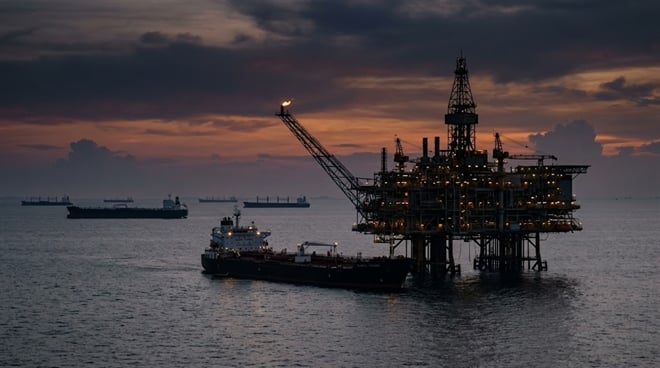
The current market frenzy traces its roots back to late February 2026, with the commencement of "Operation Epic Fury," a joint military campaign targeted at degrading strategic infrastructure in the Persian Gulf. In a swift and retaliatory move on March 20, 2026, the Islamic Revolutionary Guard Corps (IRGC) initiated what naval experts call an "effective closure" of the Strait of Hormuz. This 21-mile-wide passage typically handles nearly 20% of the world’s daily oil consumption and 25% of its Liquefied Natural Gas (LNG). With maritime traffic currently at a standstill, over 10 million barrels per day (bpd) of crude have been effectively "shut in," creating the most severe supply disruption since the 1970s.
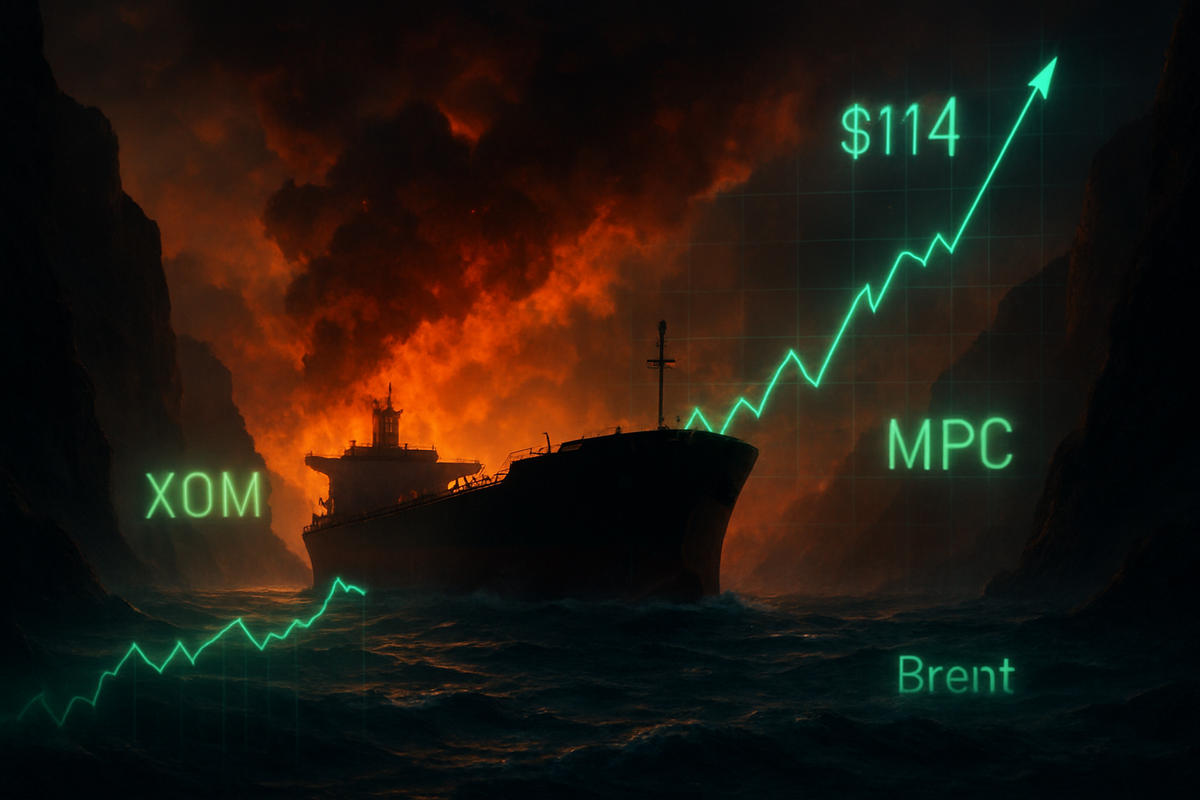
The timeline of escalation moved with terrifying speed. Following the blockade, precision strikes on the South Pars gas field and Qatar’s Ras Laffan industrial complex forced major exporters like QatarEnergy to declare force majeure on multiple LNG shipments. This sudden removal of Middle Eastern capacity triggered a violent repricing of global benchmarks. Brent crude, which began the year trading near $70, shattered through resistance levels to hit $114, with intraday spikes reaching as high as $126 during the peak of the infrastructure attacks.
Market reaction was instantaneous. Wall Street analysts quickly embedded a "war premium" of $30 to $40 into their pricing models. Unlike previous minor disruptions, the 2026 Hormuz crisis is being viewed as a structural shift rather than a temporary spike. Defense contractors and domestic energy producers saw immediate inflows of "flight-to-quality" capital, while global logistics and airline stocks plummeted under the weight of surging fuel costs.
Winners and Losers: Exxon Mobil and Marathon Petroleum Lead the Charge
Exxon Mobil (NYSE: XOM) has emerged as the undisputed leader of this energy breakout, with its stock rallying a staggering 35% year-to-date. The company’s success is a direct result of its strategic pivot toward "advantaged barrels" in the Permian Basin and Guyana. By focusing on production zones outside the reach of Persian Gulf instability, Exxon has positioned itself as the primary beneficiary of $114 oil. Furthermore, the full integration of its Pioneer Natural Resources acquisition has unlocked billions in operational synergies, allowing the company to maintain a massive $20 billion annual share repurchase program that provides a sturdy floor for its valuation.
In the downstream sector, Marathon Petroleum (NYSE: MPC) has captivated investors by breaking back above the critical $200 technical level, trading in the $215–$250 range by late March. As the largest refiner in the United States, Marathon is uniquely equipped to handle "complex" crude slates, such as heavy Canadian oil, which is currently trading at a significant discount to the Brent benchmark. This widening "crack spread"—the profit margin between the cost of crude and the price of refined products like gasoline and diesel—has allowed Marathon to report record-breaking earnings. The company has also aggressively reduced its share count, a move that has effectively "cannibalized" its own equity to drive share prices higher in a volatile market.
While US producers and refiners like Chevron (NYSE: CVX), Occidental Petroleum (NYSE: OXY), and Valero Energy (NYSE: VLO) are seeing windfall profits, the "losers" list is growing. European majors such as BP and Shell, which maintain heavy joint-venture exposure in Iraq and Qatar, have been forced to evacuate personnel and halt operations. More broadly, energy-dependent Asian economies, including India, Japan, and South Korea, are facing the grim reality of energy rationing and manufacturing slowdowns as they struggle to replace the 80% of their energy needs that typically transit through the now-closed Strait.
Wider Significance: Energy Security Replaces the Transition Narrative
This event marks a pivot point in global energy policy, echoing the historical precedents of the 1973 oil embargo and the 2019 tanker attacks. For the past several years, the market focus has been heavily weighted toward the green energy transition; however, the 2026 Hormuz closure has forced a return to "energy realism." National security is now the primary driver of energy investment, and the US's role as a net exporter has become its greatest strategic asset. This shift is likely to result in a relaxation of regulatory hurdles for domestic drilling and pipeline infrastructure as the government prioritizes supply stability over environmental mandates.
The ripple effects extend far beyond the oil patch. Defense contractors like Lockheed Martin (NYSE: LMT) and RTX Corporation (NYSE: RTX) are seeing increased demand as regional tensions necessitate heightened naval protection and missile defense systems in the Gulf. Conversely, the high cost of energy is acting as a regressive tax on the global consumer. Companies reliant on cheap transport, such as Delta Air Lines (NYSE: DAL) and FedEx (NYSE: FDX), are seeing their margins evaporated by a fuel surcharge environment that shows no signs of abating.
Historically, periods of extreme price volatility in the energy sector lead to long-term structural changes in how nations manage their reserves. We are already seeing calls for a massive replenishment and expansion of the Strategic Petroleum Reserve (SPR), as well as renewed interest in nuclear power and domestic manufacturing. The 2026 breakout isn't just a stock market event; it is a fundamental realignment of global economic priorities that will likely suppress discretionary spending in other sectors for the foreseeable future.
What Comes Next: Strategic Pivots and Long-Term Uncertainty
In the short term, the market remains on a knife-edge. If the blockade of the Strait of Hormuz persists through the summer of 2026, analysts warn that Brent could test the $150 mark, a level that would almost certainly trigger a global recession. The US government and its allies may be forced to provide naval escorts for tankers, a move that could either stabilize the market or lead to further military escalation. Investors should watch for any signals of a diplomatic de-escalation, though the current rhetoric from the IRGC suggests a long-term standoff.
Strategic pivots are already underway. For companies like Exxon Mobil and Marathon Petroleum, the challenge will be managing the immense cash flows generated by this crisis. While share buybacks are the current preference, there is growing pressure to reinvest in rapid production expansion in "safe" jurisdictions like the North Sea, Brazil, and the US Gulf Coast. For the broader market, the "higher-for-longer" energy price environment will require a total recalibration of inflation expectations and interest rate paths by the Federal Reserve.
Final Assessment: A Lasting Impact on the 2026 Market
The breakout in the US energy sector is a stark reminder of the geopolitical fragility of global supply chains. Exxon Mobil and Marathon Petroleum have proven to be the ultimate defensive hedges in a world on fire, thriving on a combination of high commodity prices and superior geographic positioning. As we move into the second quarter of 2026, the energy sector remains the only true "green shoot" in a global economy overshadowed by conflict and inflation.
For investors, the key takeaways are clear: energy security is the new gold standard. Moving forward, the focus will remain on "advantaged barrels," refining complexity, and the ability to maintain shareholder returns amidst chaos. The market's performance in the coming months will hinge on whether the Strait of Hormuz remains a graveyard for global trade or if a new equilibrium can be found. Until then, the US energy sector stands as a fortress of profitability in an increasingly uncertain world.
This content is intended for informational purposes only and is not financial advice.