On the morning of March 30, 2026, global financial markets were thrust into a state of extreme volatility following a series of social media posts from President Donald Trump regarding the intensifying conflict with Iran. The statements presented two radically different futures for the Middle East: one centered on a "new regime" that would immediately cease military operations, and another threatening to "obliterate" Iranian power plants if the Strait of Hormuz is not immediately reopened to international shipping.
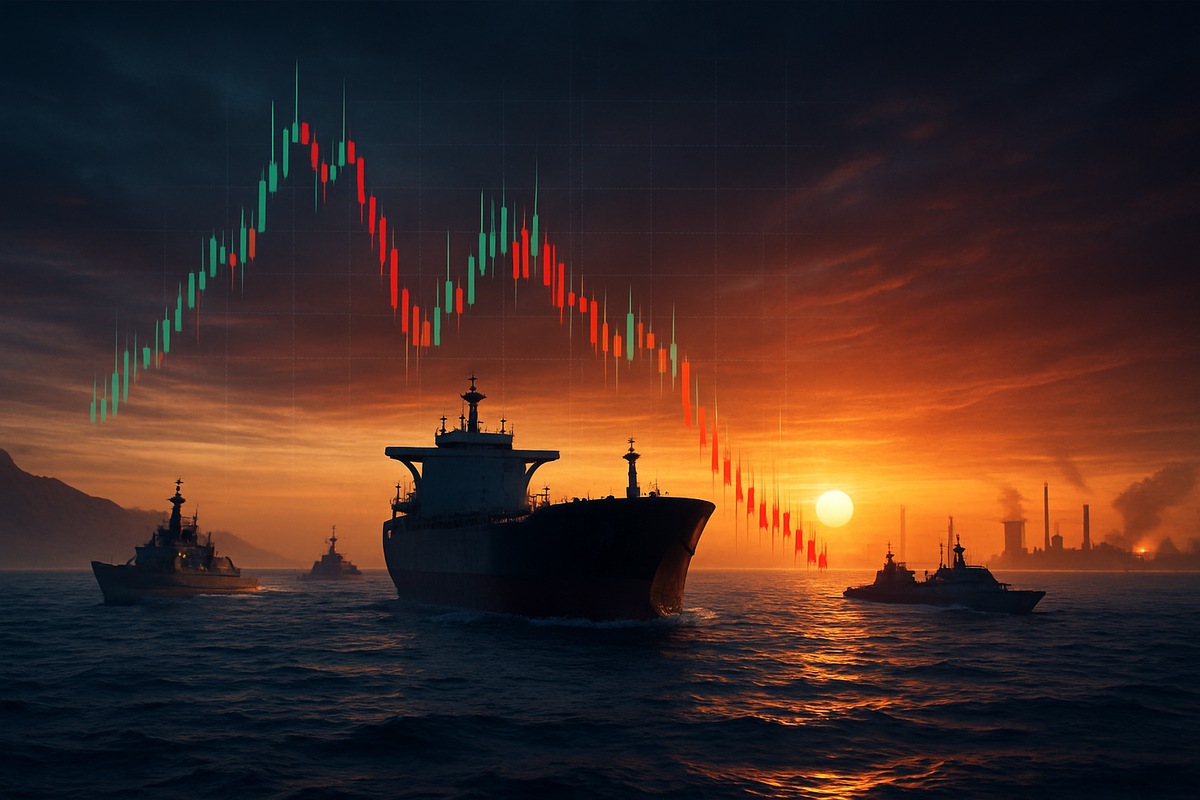
The immediate reaction was a "whiplash" effect across commodities and equities. Brent Crude, which had been hovering near $118 a barrel, spiked to $134 within minutes of the "obliteration" threat before retreating toward $112 as traders weighed the possibility of a diplomatic "new regime" breakthrough. This erratic signaling has left investors, geopolitical analysts, and world leaders scrambling to discern the administration's true trajectory in a region that accounts for nearly 20% of the world’s daily oil and liquefied natural gas (LNG) supply.
A Day of Tactical Contradictions
The volatility began at approximately 6:30 AM EST, when President Trump posted a message suggesting that a "New Regime" in Tehran—whether through internal collapse or diplomatic transition—would be the only path to ending the current military operations known as "Operation Epic Fury." This operation, which began in early 2026, has seen the U.S. and its allies attempting to degrade Iranian maritime capabilities after months of "soft blockades" and "safe passage fees" imposed by the Islamic Revolutionary Guard Corps (IRGC). The mention of a "new regime" initially signaled to the markets that the administration might be pivoting toward a long-term political solution, momentarily cooling the "war premium" on oil prices.
However, less than two hours later, the narrative shifted toward maximum escalation. In a subsequent post, the President issued a direct ultimatum: "If the Strait of Hormuz is not opened IMMEDIATELY and the mines removed, we will have no choice but to OBLITERATE their power plants and entire energy grid. No power, no oil, no nothing!" This threat to target civilian and dual-use infrastructure marked a significant escalation from previous precision strikes on military assets. The timeline leading up to this moment has been a year-long slide into chaos, following the collapse of the 2025 "Nuclear Peace Agreement" mediated by Oman and the subsequent deployment of Maham-series limpet mines by Iran in the shipping lanes.
Key players, including the Secretary of Defense and the National Security Advisor, have remained silent throughout the day, leaving the market to interpret the President's social media feed as the primary source of foreign policy. Initial market reactions saw the CBOE Volatility Index (CBOE: VIX) surge by 22%, its highest single-day jump since the "Twelve-Day War" in June 2025. The ambiguity between an "olive branch" for a new government and a "sledgehammer" for the current one has created a vacuum of certainty that algorithmic trading bots have filled with frantic buying and selling.
Winners and Losers in a High-Stakes Gambit
The energy sector has felt the most immediate impact. ExxonMobil (NYSE: XOM) and Chevron (NYSE: CVX) saw their share prices fluctuate wildly as the "obliteration" threat suggests a total cessation of Middle Eastern exports, which could lead to a global supply crunch. While higher oil prices generally benefit these giants' bottom lines, the risk of retaliatory strikes on regional infrastructure—including Saudi Aramco facilities—creates an environment of "high-risk, high-reward" that many institutional investors find untenable.
Defense contractors, on the other hand, saw a sustained rally throughout the trading day. Lockheed Martin (NYSE: LMT) and RTX Corp (NYSE: RTX) jumped 4% and 5.2%, respectively, as the prospect of an expanded air campaign against Iranian infrastructure suggests a massive increase in the procurement of precision-guided munitions and missile defense systems like the Patriot and THAAD. Conversely, the shipping and logistics industry faced a grim outlook. A.P. Møller - Mærsk A/S (OTC: AMKBY) saw its stock dip as the threat of a closed Strait and the subsequent need to reroute ships around the Cape of Good Hope adds weeks to transit times and millions in fuel costs. Shipping magnates like Frontline plc (NYSE: FRO) are seeing "War Risk" insurance premiums skyrocket, making even the most lucrative "spot" freight rates look risky.
The Broader Significance of Geopolitical Brinkmanship
This event fits into a broader trend of "Social Media Diplomacy," where high-stakes geopolitical maneuvers are telegraphed directly to the public and the markets before official diplomatic channels are engaged. The historical precedent for this can be traced back to the "Maximum Pressure" campaigns of 2018-2020, but the 2026 version is significantly more combustible due to the "Operation Epic Fury" military context. The threat to "obliterate" power plants moves the conflict out of the realm of maritime skirmishes and into the territory of total economic warfare.
The ripple effects extend far beyond the Middle East. Competitors in the energy space, such as those operating in the Permian Basin or the North Sea, may see a permanent structural increase in their valuation as the Middle East is viewed as an increasingly unreliable supplier. Furthermore, the regulatory and policy implications are profound; if the Strait of Hormuz remains contested, the U.S. and its allies may be forced to implement emergency energy rationing or release massive quantities from the Strategic Petroleum Reserve (SPR) to stabilize the global economy.
Navigating the Uncertainty: What Comes Next
In the short term, the market is bracing for a "Friday Flash" or a "Monday Morning Gap," depending on Iran's response to the ultimatum. If Tehran doubles down on the blockade, the "obliteration" scenario becomes the base case for energy analysts, likely pushing Brent Crude past the $150 threshold. However, if the "new regime" comments were a signal to internal Iranian dissidents or moderate factions, we could see a strategic pivot toward a managed de-escalation that would see a rapid "correction" in defense and energy stocks.
The long-term challenge for investors is the "normalization of crisis." As 2026 progresses, the market's sensitivity to these comments may dull, but the underlying physical reality—that 20% of the world’s oil is trapped behind a wall of mines and missiles—remains. Strategic adaptations will likely include a massive shift toward domestic energy production and a potential acceleration of the transition to alternative energy sources as a matter of national security, a move that could eventually benefit companies in the renewable space despite current fuel-price-driven volatility.
Summary and Investor Outlook
The events of March 30, 2026, serve as a stark reminder of the fragile balance between global commerce and regional conflict. The key takeaways for investors are the extreme sensitivity of the energy and defense sectors to executive rhetoric and the undeniable importance of the Strait of Hormuz as a global economic artery. Moving forward, the market will likely remain in a "sideways-volatile" pattern until there is a clear resolution to the naval blockade or a definitive shift in the Iranian political landscape.
Investors should watch for the "Weekly Petroleum Status Report" and any official statements from the Department of Defense regarding the status of the "obliteration" threat. The lasting impact of this day will be measured by whether the President's comments lead to a breakthrough or a breakdown. For now, the safest bet in this "Hormuz or Hellfire" environment is to expect the unexpected and prepare for a year where geopolitical risk is not just a factor, but the primary driver of market value.
This content is intended for informational purposes only and is not financial advice