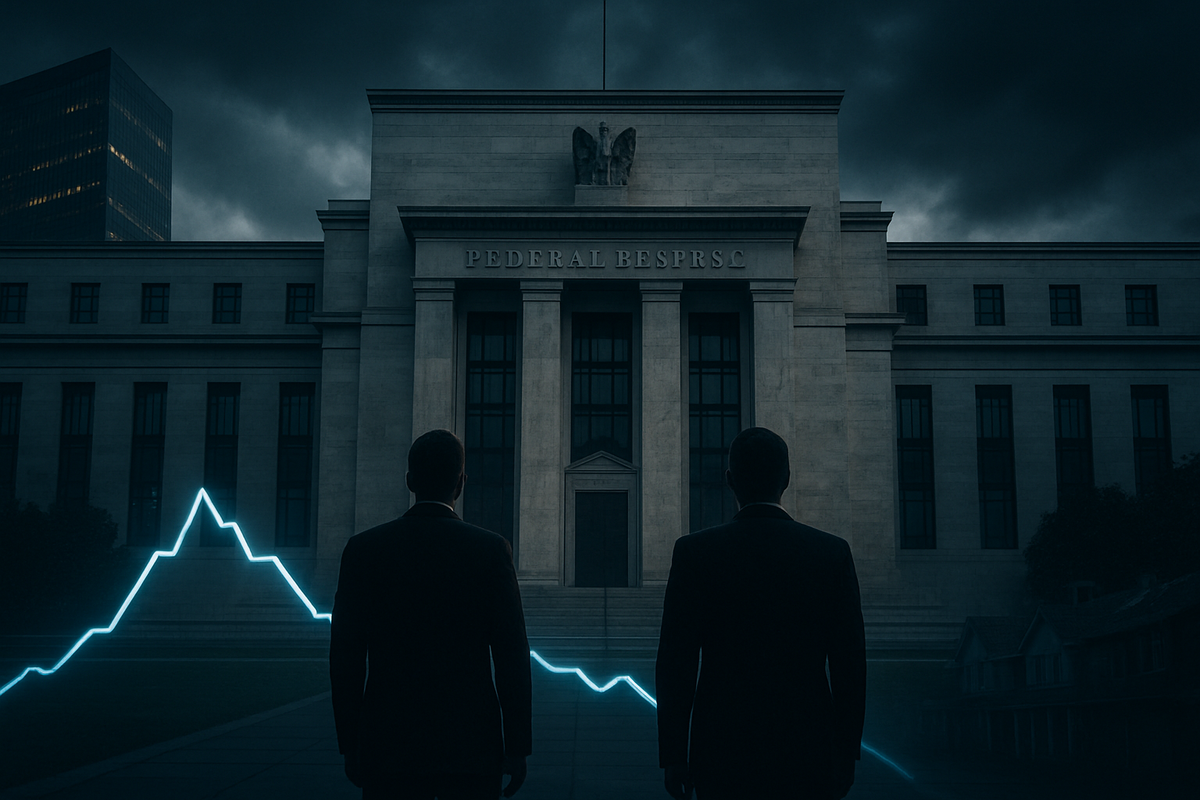
WASHINGTON, D.C. — As of March 4, 2026, the global financial landscape is bracing for one of the most significant architectural shifts in the history of American central banking. With Jerome Powell’s term as Chair of the Federal Reserve set to expire in May, President Donald Trump has moved decisively to reshape the institution, nominating former Fed Governor and Morgan Stanley executive Kevin Warsh to lead the world’s most powerful monetary body. The transition, occurring amid a backdrop of intense political friction and a "regime change" in economic philosophy, marks the end of the "gradualist" era and the dawn of what analysts are calling the "Sound Money" doctrine.
The market’s focus has shifted from the data-dependent nuances of the "Powell Fed" to the aggressive, productivity-focused mandate of the "Warsh Fed." This transition is not merely a change in personnel but a fundamental pivot in how the United States manages its currency and credit. While the Trump administration pushes for dramatically lower interest rates to stimulate domestic growth, the nomination of Warsh—a known advocate for a leaner Fed footprint—has introduced a "cautious volatility" into the bond and equity markets, as investors attempt to decode a future defined by simultaneous rate cuts and aggressive balance sheet tightening.
A Timeline of Friction and the Rise of the "Sound Money" Nominee
The path to this transition has been anything but conventional. Throughout 2025 and into early 2026, President Trump maintained a relentless public campaign against Jerome Powell, frequently labeling the sitting Chair a "stubborn mule" and "Mr. Too Late." The tension reached a fever pitch in late 2025 when a Department of Justice probe was launched into a $2.5 billion renovation project at the Federal Reserve’s headquarters, a move many viewed as a political maneuver to accelerate Powell’s departure. On January 30, 2026, Trump officially named Kevin Warsh as the successor, bypassing other high-profile candidates like Kevin Hassett and Federal Reserve Governor Christopher Waller.
The nomination of Warsh was a calculated move intended to bridge the gap between Trump’s desire for lower rates and Wall Street’s need for institutional stability. Warsh, who served on the Fed Board during the 2008 financial crisis, has long criticized the "Powell Fed" for a perceived "credibility crisis" regarding inflation management. His arrival is expected to usher in a policy of "QT-for-cuts," where the Fed aggressively sells off its massive $7 trillion balance sheet—particularly Mortgage-Backed Securities—while lowering the federal funds rate to stimulate the "front end" of the economy.
Initial market reactions to the "Warsh Shock" were swift. While equity markets initially rallied on the prospect of lower short-term borrowing costs, the bond market saw a "bear steepening" of the yield curve. The 10-year Treasury yield surged toward 4.26% as investors priced in the return of a "term premium," signaling that while the Fed might cut rates to 3.0% or lower, the days of the central bank suppressing long-term borrowing costs through massive bond-buying programs are likely over.
Sector Impact: Winners in Finance, Losers in Housing
The shift in leadership has created a clear divide between market winners and losers. Large-cap financial institutions have emerged as the primary beneficiaries of the proposed Warsh doctrine. JPMorgan Chase & Co. (NYSE: JPM) and Morgan Stanley (NYSE: MS) saw immediate outperformance, as a steeper yield curve typically widens Net Interest Margins (NIM), directly boosting bank profitability. Analysts at major brokerages noted that Warsh’s history as a "lighter touch" regulator could also signal a move toward lower capital requirements, potentially unlocking billions in bank buybacks and dividends.
Conversely, the real estate sector has faced significant headwinds. Homebuilders like D.R. Horton (NYSE: DHI) and Lennar Corporation (NYSE: LEN) have seen their stocks pressured by the prospect of the Fed’s aggressive offloading of Mortgage-Backed Securities. This strategy is expected to keep 30-year fixed mortgage rates elevated—currently hovering near 6%—even as the Fed cuts the headline federal funds rate. This "decoupling" of mortgage rates from the Fed's short-term target creates a challenging environment for new home sales and construction.
In the technology sector, the impact is nuanced. High-valuation growth companies that rely on low long-term discount rates have faced selling pressure. However, "fortress" tech giants like Apple (NASDAQ: AAPL) and Nvidia (NASDAQ: NVDA) are being viewed as defensive havens. Warsh has publicly theorized that AI-driven productivity is inherently deflationary, a stance that suggests he may be more tolerant of high valuations in companies that drive structural efficiency, even as he tightens the broader money supply.
Redefining Central Bank Independence and Global Strategy
The significance of the 2026 transition extends far beyond domestic interest rates; it represents a challenge to the traditional "norms" of Federal Reserve independence. President Trump has frequently asserted that his "instincts" for the market should have a seat at the table, suggesting a more collaborative relationship between the White House and the central bank. This shift fits into a broader global trend of "politicized" monetary policy, drawing comparisons to the high-pressure environments of the 1970s, though Warsh’s personal reputation as a "Sound Money" advocate provides a counterbalance to fears of runaway inflation.
Furthermore, the "Warsh Fed" appears poised to prioritize the US Dollar as a pillar of global economic dominance. Despite the Trump administration’s past rhetoric favoring a weaker dollar to boost exports, the nomination has sent the US Dollar Index (DXY) to multi-year highs. By moving away from the "Fed Put"—the market’s long-held belief that the central bank would always intervene to prevent a sell-off—Warsh is signaling a return to "Valuation over Liquidity," where markets must stand on their own merits rather than central bank support.
Historically, this transition is being compared to the appointment of Paul Volcker in 1979. Like Volcker, Warsh is expected to break the existing policy consensus in favor of a structural regime change. However, unlike the Volcker era, which was defined by crushing inflation, the 2026 transition is focused on navigating a "sticky" inflationary environment while managing a labor market that is showing signs of fragility, particularly among younger workers where unemployment has recently spiked to 15.7%.
The Road Ahead: Scenarios for 2026 and Beyond
In the short term, the market will remain laser-focused on the Senate confirmation hearings for Kevin Warsh. Investors are looking for clarity on the pace of the "QT-for-cuts" strategy. If Warsh moves too quickly to offload assets, there is a risk of a liquidity crunch in the shadow banking system. Conversely, if he yields too easily to White House pressure for deep rate cuts, the "sticky" inflation currently seen in the Consumer Price Index could roar back, forcing a painful policy reversal later in the year.
Longer-term, the strategic pivot required by corporations will be significant. Companies that have relied on cheap debt to fuel expansion will need to adapt to a "Sound Money" environment where the cost of capital remains structurally higher than it was during the 2010s. Market opportunities may emerge in "productive" sectors—manufacturing, AI infrastructure, and energy—which align with the new Fed Chair’s focus on supply-side growth as a counter to inflationary pressures.
Wrap-Up: A Market in Transition
The impending transition at the Federal Reserve marks a watershed moment for the American economy. The move from Jerome Powell’s cautious gradualism to Kevin Warsh’s "Sound Money" doctrine represents a calculated gamble by the Trump administration to reignite growth while restructuring the Fed’s balance sheet. Key takeaways for the months ahead include a likely divergence between short-term rates and long-term borrowing costs, a strengthened US Dollar, and a regulatory environment that favors large-scale financial institutions.
As we move toward the official handover in May 2026, investors should watch for the "Warsh Volatility" to manifest in commodities and speculative tech, while keeping a close eye on the 10-year Treasury yield. The "Powell Put" is officially dead; in its place is a new, more rigorous framework that values currency stability and productivity above market "pampering." Whether this shift results in a more resilient economy or a period of prolonged market friction remains the defining question of the year.
This content is intended for informational purposes only and is not financial advice.