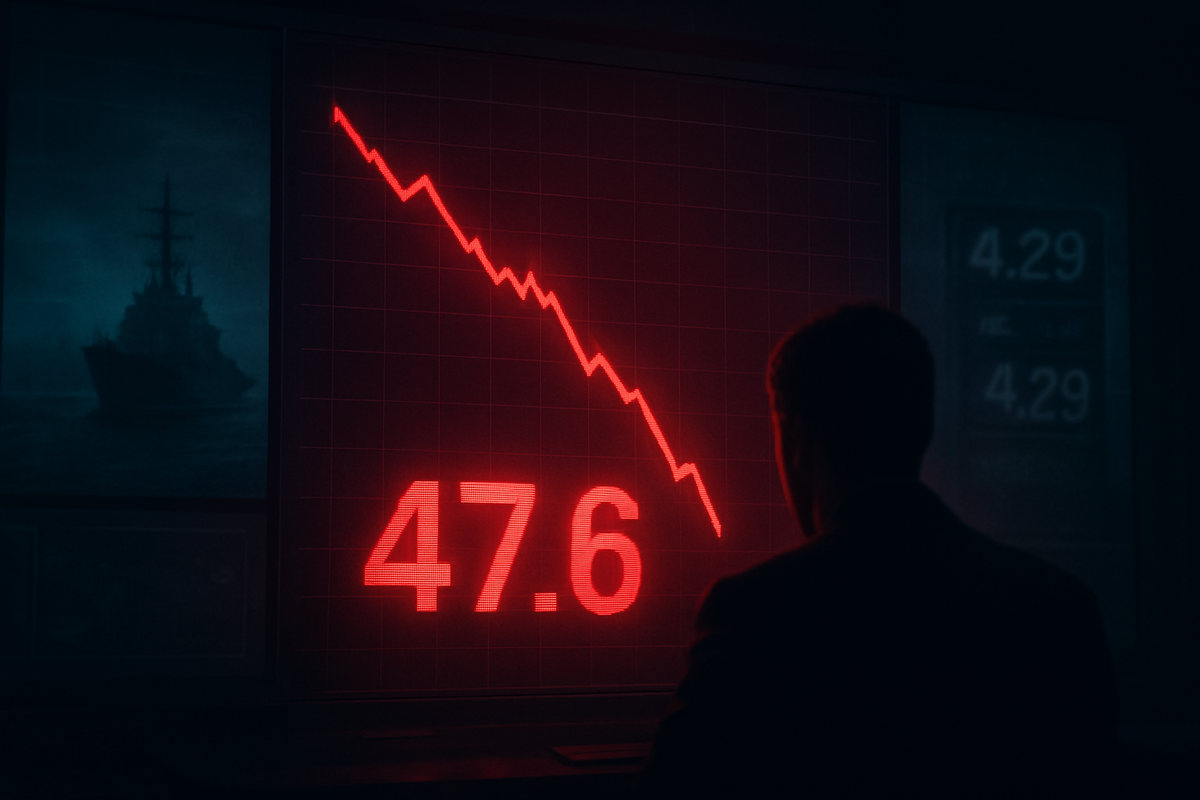
ANN ARBOR, MI — In a staggering blow to the American economic outlook, the University of Michigan’s Consumer Sentiment Index plummeted to a preliminary record low of 47.6 in April 2026. This historic reading, released today, April 10, marks the first time the index has dipped below the 50-point threshold since the peak of the post-pandemic inflation crisis in June 2022, and it is significantly lower than the previous all-time low of 51.7 recorded during the 1980 energy crisis.
The collapse in confidence signals an abrupt end to the "soft landing" optimism that characterized much of 2024 and 2025. Immediate implications are severe: economists warn of a sharp pullback in discretionary spending as households grapple with a "twin shock" of escalating geopolitical conflict and resurgent energy costs. The 47.6 figure represents a unique psychological floor, reflecting a broad-based retreat from the market by both middle- and high-income consumers who now view the economic future with unprecedented pessimism.
A Perfect Storm: War, Tariffs, and the Return of Stagflation
The descent to this historic low was precipitated by a series of cascading events that began in early 2026. The primary catalyst was the outbreak of the U.S.-Iran military conflict on February 28, 2026, which led to a strategic blockade of the Strait of Hormuz. With 20% of the world’s oil supply suddenly bottlenecked, domestic gasoline prices surged nearly 40% in just six weeks, crossing the $4.16 per gallon mark nationwide. This energy shock hit a consumer base already fatigued by the lagging effects of the 2025 "Liberation Day" tariffs, which had kept core inflation stubbornly high even as the Federal Reserve attempted to pivot toward rate cuts.
According to the University of Michigan's survey data, year-ahead inflation expectations spiked to 4.8% in April, up from 3.8% just one month prior. This represents the largest one-month jump in inflation expectations in the survey’s history. The timeline of this collapse is stark; as recently as late 2024, the index hovered at a relatively healthy 72.5. However, the combination of asset price volatility—with the S&P 500 down 8% since the conflict began—and the sudden spike in "pocketbook" costs has created a climate of fear. Households are now reporting a significant decline in their personal financial assessments, with 90% of respondents citing global instability as a primary concern for their long-term security.
Markets in Retreat: Sector Winners and Losers
The record-low sentiment has created a stark bifurcation across the equity markets. Companies heavily reliant on discretionary spending and high-growth valuations are bearing the brunt of the sell-off. Amazon.com, Inc. (AMZN:NASDAQ) and Tesla, Inc. (TSLA:NASDAQ) have seen their shares come under intense pressure as investors anticipate a dramatic cooling in consumer demand for electronics and electric vehicles. Similarly, the travel and leisure sector is reeling; Carnival Corporation & plc (CCL:NYSE) has reported a slowdown in bookings as consumers reallocate their budgets toward essential goods and rising utility bills.
Conversely, defensive sectors and energy giants are emerging as relative havens. Exxon Mobil Corporation (XOM:NYSE) has seen a surge in valuation as crude prices skyrocket due to the Hormuz blockade. The consumer staples sector, anchored by giants like The Procter & Gamble Company (PG:NYSE), is outperforming the broader market as demand for household necessities remains inelastic. Additionally, the escalation of global tensions has bolstered defense contractors such as Lockheed Martin Corporation (LMT:NYSE) and Northrop Grumman Corporation (NOC:NYSE), which are seeing renewed interest as the U.S. government ramps up military readiness and replenishment.
The Macroeconomic Ripple: From Retail to Rates
The 47.6 reading is not just a number; it represents a fundamental shift in the American economic narrative that mirrors the stagflation era of the 1970s. The current environment has forced the Federal Reserve into a precarious "policy trap." While slowing growth and record-low sentiment would typically prompt aggressive rate cuts, the energy-driven inflation spike has forced the central bank to pause its easing cycle. This has left the housing market in a state of paralysis, with mortgage rates hovering near 6.2%, further eroding the wealth effect for homeowners.
Historically, when the University of Michigan Index drops below 60, a recession follows within 6 to 12 months in nearly 85% of cases. The current plunge to 47.6 suggests that the ripple effects will be felt far beyond the retail sector. Supply chain partners of major U.S. corporations are already bracing for a slowdown in orders, while regulatory discussions in Washington have shifted toward potential emergency energy subsidies and price controls—measures not seen on a large scale in decades. This event fits into a broader trend of "deglobalization" and geopolitical volatility that is fundamentally reshaping how public companies manage risk and inventory.
The Road Ahead: Pivot or Plunge?
In the short term, the primary focus for the market will be the resolution of the Strait of Hormuz blockade. Should diplomatic efforts fail and the conflict prolong, a technical recession in the third or fourth quarter of 2026 appears almost inevitable. Retailers like Walmart Inc. (WMT:NYSE) are already signaling a strategic pivot, shifting their inventory mix toward value-tier private labels and basic essentials to accommodate a more budget-conscious consumer.
Looking further ahead, the "market opportunities" that emerge from this crisis will likely be found in energy independence and domestic manufacturing. The current shock may accelerate the transition to localized supply chains and alternative energy sources, though these transitions require years of capital investment that are difficult to sustain in a high-interest-rate environment. Strategic adaptations will be required for any company with high exposure to international shipping lanes or global consumer sentiment. The most likely scenario is a period of "economic hibernation," where consumer spending remains at a subsistence level until geopolitical tensions de-escalate.
Navigating the New Economic Floor
The collapse of the Michigan Consumer Sentiment Index to 47.6 is a watershed moment for the 2026 economy. It highlights the extreme vulnerability of the American household to global geopolitical shocks and the persistent threat of energy-driven inflation. The key takeaway for investors is that the "soft landing" narrative has been fundamentally broken, replaced by a "hard reality" of high costs and low confidence. The market moving forward will likely be characterized by high volatility and a flight to quality.
As we move into the summer months, investors should closely watch the May sentiment figures and gas price stability for any signs of a bottoming out. However, until the conflict in the Middle East shows signs of de-escalation, the 47.6 record low will serve as a grim benchmark for the state of the American psyche. The lasting impact of this slump will likely be a permanent recalibration of risk premiums in the equity markets and a more cautious, defensive approach to consumer-facing business models for years to come.
This content is intended for informational purposes only and is not financial advice.