As of April 10, 2026, the global energy landscape is grappling with a profound transformation. A geopolitical flashpoint in the Strait of Hormuz has sent shockwaves through financial markets, pushing Brent crude and West Texas Intermediate (WTI) to levels not seen in years. What began as a military escalation has morphed into a sophisticated economic siege, with Iran imposing controversial "transit tolls" on tankers passing through the world’s most critical maritime chokehold.
The immediate implications are stark: the International Energy Agency (IEA) has labeled this the largest supply disruption in history, affecting nearly 20 million barrels per day. For the average consumer, the crisis has manifested at the pump, with U.S. gasoline prices leaping to a national average of $4.15 per gallon. For investors, the event has triggered a volatile "energy shock" that is rewriting the rules of inflation and central bank policy for the mid-2020s.
Operation Epic Fury and the Birth of the Toll Booth
The current crisis traces its origins to February 28, 2026, when a direct kinetic conflict—dubbed "Operation Epic Fury" by Western intelligence—erupted between Iran and a coalition led by the United States and Israel. Following targeted strikes on Iranian military and nuclear infrastructure, the Islamic Revolutionary Guard Corps (IRGC) retaliated not just with missiles, but with a strategic blockade of the Strait of Hormuz. By early March, the waterway was effectively closed, but the strategy soon shifted from total denial to a predatory "rent-seeking" model.
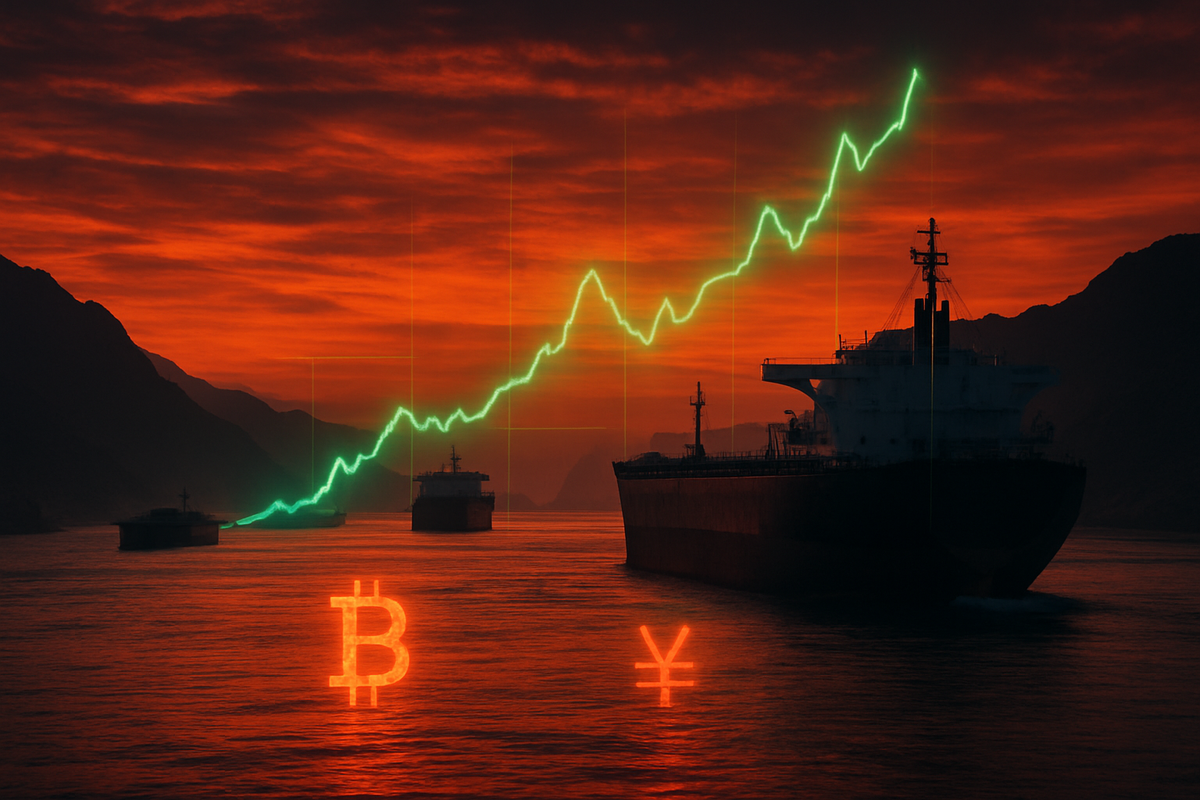
Under this "Tehran Toll Booth" policy, Iran began demanding a transit fee of $1 per barrel of oil, or approximately $2 million per supertanker, for what it terms "guaranteed safe passage." In a move designed to circumvent the SWIFT financial system and Western sanctions, Tehran has mandated that these tolls be paid exclusively in Bitcoin or Chinese Yuan (CNY). While the United States has condemned these fees as a flagrant violation of the UN Convention on the Law of the Sea (UNCLOS), the reality on the water remains precarious, as a fragile ceasefire announced on April 7 has yet to dismantle the tolling regime.
Initial market reactions were explosive. Brent Crude, which traded at approximately $73 per barrel before the conflict, spiked to a peak of $120 in mid-March. WTI followed suit, surging to $115 per barrel. Though the April 7 ceasefire has provided some relief, prices remain stubbornly high, with Brent currently fluctuating between $96 and $111 as traders weigh the persistence of the "Tehran Toll."
Winners and Losers in a Bifurcated Energy Market
The impact on public energy giants has been a tale of two realities: soaring commodity prices versus physically disrupted supply chains. ExxonMobil (NYSE: XOM) has seen its stock valuation reach multi-year highs, touching $123.75, as investors prize its "safe barrel" assets in the Permian Basin and Guyana. However, this valuation masks a 6% hit to its global production volumes due to the temporary shutdown of joint-venture assets in Qatar and the UAE.
Similarly, Chevron (NYSE: CVX) has emerged as a relative winner due to its limited direct exposure to the Persian Gulf compared to its European counterparts. While Chevron also faced a production dip, its diversified portfolio in the Americas has made it a preferred hedge for institutional investors fearing a prolonged Middle Eastern outage.
On the losing side of the ledger, Shell (NYSE: SHEL) has faced significant headwinds. The company was forced to shut in its Pearl GTL facility—the world’s largest gas-to-liquids plant—following Iranian missile strikes on industrial hubs in Qatar. This led to a 5% reduction in Shell’s global gas output, weighing on its stock as it contends with both physical damage to infrastructure and the logistical nightmare of the Hormuz tolls. Furthermore, shipping companies and independent tanker operators are facing insurance premiums that have skyrocketed by over 400%, eating into the profits typically seen during price spikes.
Inflationary Ripples and the Return of Volatility
Beyond the corporate balance sheets, this crisis has fundamentally altered the trajectory of the U.S. economy. The "energy shock" of early 2026 has effectively ended a two-year period of cooling inflation. According to recent data, U.S. headline inflation (CPI) jumped to an annual rate of 3.3% in March, a significant move from the 2.4% recorded just a month prior. The energy component alone rose by 10.9% month-over-month.
This event mirrors the oil shocks of the 1970s but with a modern twist: the integration of digital assets and multipolar currency trade into the conflict. Historically, the U.S. Navy guaranteed freedom of navigation in the Strait; the current inability to unilaterally stop the "Tehran Tolls" suggests a shift toward a more fragmented maritime order. This has massive policy implications for the Federal Reserve, which had previously been signaling interest rate cuts for the summer of 2026. Those plans are now on ice, with the FOMC minutes suggesting that hikes may be back on the table to combat the "long tail" of energy-led inflation.
Looking Ahead: A Permanent Shift in Energy Security?
In the short term, the market remains on a knife-edge. If the Pakistan-brokered ceasefire holds and the tolls are lifted, prices could normalize back toward the $80 range. However, a more likely scenario involves a "new normal" where Tehran continues to exert "technical management" over the Strait. Analysts warn that if the disruption persists into the summer driving season, Brent could easily breach $150 per barrel, likely triggering a global recession.
Strategically, this crisis is accelerating the pivot toward energy independence and alternative corridors. We are seeing renewed interest in trans-Saudi pipelines and Mediterranean export hubs that bypass the Strait entirely. For investors, the challenge will be identifying companies that can maintain production in a "high-toll" world, as well as defense contractors who are seeing a surge in orders for maritime drone defense and anti-mine technologies.
Navigating the New Oil Reality
The surge in oil prices and the crisis in the Strait of Hormuz represent more than a temporary price spike; they mark a transition into a period of "chokehold diplomacy." The key takeaways for the market are clear: energy is once again the primary driver of global inflation, and geopolitical risk is no longer a peripheral concern but a core valuation metric for the S&P 500.
Moving forward, the market will likely see continued volatility as long as the "Tehran Toll" remains a factor. Investors should keep a close watch on the legitimacy of these tolls in international courts and the Federal Reserve's response to the upcoming May inflation data. The era of cheap, reliable transit through the Persian Gulf has been challenged, and the ripples will be felt in every corner of the global economy for months, if not years, to come.
This content is intended for informational purposes only and is not financial advice.