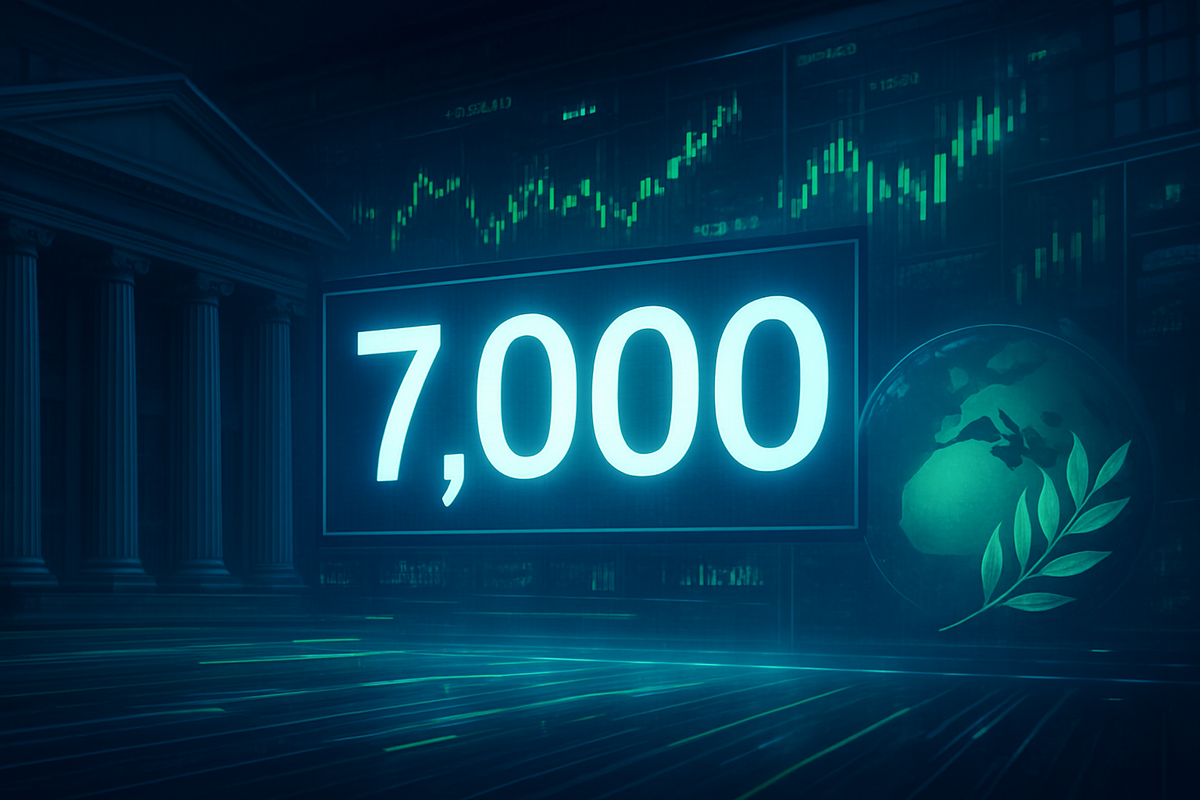
Equity markets are bracing for a potential historic breakthrough as the S&P 500 edges within striking distance of its all-time closing high. As of midday on April 15, 2026, the index is hovering near 6,979, less than 0.5% away from the psychological and technical barrier of 7,000. This rally comes after a volatile first quarter, fueled by a dual engine of de-escalating global tensions and a blockbuster start to the corporate earnings season, particularly within the financial sector.
The resurgence in investor confidence marks a dramatic pivot from the "spring slump" witnessed just weeks ago. With the January record of 7,002.28 now in clear view, market participants are weighing whether this momentum represents a sustainable bull run or a final test of resistance. The confluence of a brokered ceasefire in the Middle East and a string of earnings beats from the nation’s largest lenders has created a "perfect storm" of optimism, driving the index toward a milestone that seemed out of reach only a month ago.
A Turbulent Journey to the Threshold of 7,000
The path to this moment has been anything but linear. The S&P 500 originally breached the 7,000 level on an intraday basis on January 28, 2026, peaking at 7,002.28. That milestone was propelled by "Big Tech Week," where Microsoft Corp. (NASDAQ: MSFT) stunned analysts with a $281 billion backlog in AI-related service contracts. However, the celebration was short-lived. By late February, a sudden escalation of conflict in the Middle East led to the closure of the Strait of Hormuz, sending oil prices toward $120 per barrel and dragging the index down nearly 10% by late March.
The tide began to turn in early April when a two-week ceasefire was brokered via diplomatic efforts in Pakistan. The relief was palpable on trading floors; on April 14, the index surged 1.18% to close at 6,967.38. The immediate catalyst for today’s upward move is the news that a second round of direct peace negotiations is scheduled in Islamabad, aimed at permanently reopening the Strait. This geopolitical de-escalation, combined with trilateral talks in Geneva regarding Eastern European stability, has effectively stripped the "war premium" out of equity valuations, allowing fundamental growth stories to take center stage once again.
Financial Titans Lead the Charge
The banking sector has emerged as the primary architect of the April rally. Goldman Sachs Group Inc. (NYSE: GS) kicked off the reporting cycle on April 13 with a massive beat, posting earnings per share (EPS) of $17.55 against expectations of $16.47. The firm capitalised on the extreme volatility of Q1, recording a staggering $5.33 billion in equities trading revenue. This performance set a bullish tone for the sector, reassuring investors that major institutions were not only weathering the geopolitical storm but thriving within it.
The momentum continued with JPMorgan Chase & Co. (NYSE: JPM) and Wells Fargo & Co. (NYSE: WFC). JPMorgan reported a net income of $16.5 billion, with CEO Jamie Dimon highlighting a resilient consumer base and record markets revenue of $11.6 billion. Meanwhile, Bank of America Corp. (NYSE: BAC) and Morgan Stanley (NYSE: MS) delivered their results this morning, April 15. Bank of America beat expectations with an EPS of $1.11, driven by a 21% surge in investment banking fees, while Morgan Stanley shares jumped over 5% in early trading following a significant revenue beat. These results suggest that the "higher-for-longer" interest rate environment has finally reached a sweet spot where net interest margins are robust without yet stifling corporate borrowing.
The 7,000 Level: More Than Just a Number
In the broader context of market history, the 7,000 level for the S&P 500 represents a significant psychological "pivot point." Breaking this barrier would signal that the market has successfully absorbed the shocks of the 2026 geopolitical crisis and is looking forward to a period of "normalization." This trend fits into a larger industrial shift where the "industrialization of AI" is no longer just a speculative theme but a tangible contributor to corporate balance sheets, as seen in the January peak.
Comparisons are already being drawn to the market’s behavior in 2021 and late 2024, where major round-number milestones often acted as a "launchpad" for further gains once breached. However, the current environment is unique due to the "double war" scenario that has loomed over the first half of the year. The ripple effects of a potential peace agreement in both the Middle East and Eastern Europe would likely lead to a sustained drop in energy costs, providing a secondary tailwind for non-financial sectors like transportation and manufacturing, which have lagged behind the broader index during the recent rally.
The Road Ahead: Breakthrough or Double Top?
The short-term outlook remains tethered to the outcome of the Islamabad peace talks. If a permanent extension of the ceasefire is reached by the April 21 deadline, analysts expect the S&P 500 to not only break 7,002.28 but potentially establish a new floor above 7,100. However, the risk of a "double top"—a technical pattern where the market hits a peak, retreats, and fails to break it on the second attempt—remains a concern for more cautious traders. A failure to move past the January record could trigger a wave of profit-taking.
Strategically, the market is shifting its gaze toward the upcoming tech earnings cycle. While the banks have provided the foundation, companies like Microsoft and its peers will need to prove that the massive AI backlogs reported in January are translating into realized revenue. Investors should also keep a close eye on the Federal Reserve’s reaction to the rally; if the easing of geopolitical tensions leads to a resurgence in consumer spending that threatens to reignite inflation, the central bank may be forced to maintain a hawkish stance, potentially capping the market's upside in the second half of the year.
Market Outlook and Final Thoughts
The S&P 500's return to the doorstep of 7,000 is a testament to the resilience of the American corporate sector and the high-stakes diplomacy currently unfolding on the world stage. The key takeaways from this rally are two-fold: first, the fundamental strength of the U.S. banking system continues to provide a safety net for the broader economy; and second, the market is increasingly "geopolitically sensitive," with sentiment swinging violently based on the prospects of global peace.
As we move forward, the 7,002.28 level will be the most-watched number on Wall Street. A decisive close above this mark would confirm the start of a new phase of the bull market. Investors should remain vigilant, watching for any signs of friction in the Islamabad negotiations or unexpected spikes in core inflation data. For now, the bulls are in control, and a historic record is within their grasp.
This content is intended for informational purposes only and is not financial advice.