BENTONVILLE, AR — In a move that signals the definitive end of the "generic" era in American retail, Walmart Inc. (NYSE: WMT) has officially unveiled a comprehensive redesign of its flagship private-label brand, Great Value. Announced on April 15, 2026, the overhaul is more than just a fresh coat of paint; it is a calculated strike at the premium market, aimed squarely at the high-income shoppers who have increasingly flocked to the retail giant’s aisles over the last two years.
The redesign, which spans nearly 10,000 items, seeks to shed the "budget-only" perception that has trailed the brand since its inception. By modernizing packaging and emphasizing quality-led visual storytelling, Walmart is betting that its most loyal customers—and its newest affluent ones—will no longer feel the need to hide store-brand boxes at the back of the pantry. The immediate implications are clear: Walmart is no longer content being the price leader; it wants to be the brand leader.
The Great Value Glow-Up: Aesthetics Meet Strategy
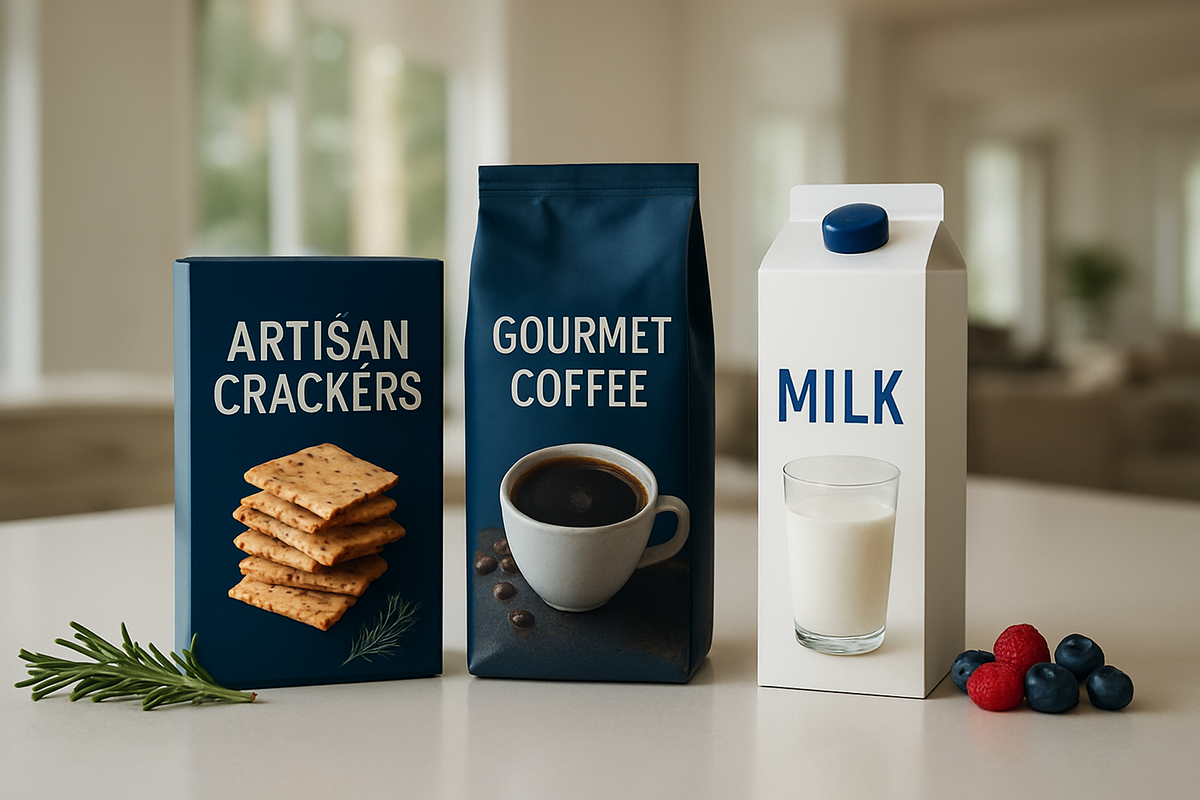
The redesign represents the first full visual identity shift for Great Value in over a decade. Moving away from the utilitarian white backgrounds and blocky blue text that defined the brand’s "no-frills" identity, the new packaging features rich, "editorial-style" food photography. For example, a box of Great Value frozen lasagna, once depicted in a sterile product shot, is now shown on a rustic, red-checkered tablecloth adorned with fresh basil leaves. The iconic logo has also been refined with a bespoke typeface and a deeper "heritage blue" intended to convey premium quality.
This visual pivot follows the massive success of Walmart’s 2024 launch of bettergoods, a trend-forward, premium brand that served as a laboratory for this broader strategy. While bettergoods focused on "shoppy shop" trends like pistachio gelato and bronze-cut pasta, the Great Value redesign applies those same high-end design principles to daily essentials like flour, milk, and snacks. Key stakeholders, including Walmart’s Chief Merchandising Officer, have noted that the change was also driven by the logistics of the digital age; the new packaging features standardized nutritional "call-out" boxes in the upper right-hand corner, making it easier for Walmart+ gig workers and AI-assisted shoppers to identify dietary attributes quickly.
Market reaction has been swift and largely positive. Industry analysts note that this rollout—which begins with salty snacks in May 2026 before expanding to dairy and cereal—comes at a time when Walmart has reported that the majority of its recent market share gains are coming from households earning over $100,000 annually. By "closing the sentiment gap," Walmart is ensuring these high-value customers stay within its ecosystem even as inflationary pressures begin to normalize.
The Shifting Leaderboard: Winners and Losers in the Private Label Era
The primary winner in this brand evolution is, undoubtedly, Walmart (NYSE: WMT). With fiscal year 2026 revenue hitting a staggering $713.2 billion, the company is leveraging its scale to dictate new standards for "clean" labels, including a commitment to remove all synthetic dyes from its private brands by 2027. This move forces national brands to choose between expensive reformulations or losing shelf space to Walmart's increasingly attractive in-house options.
Conversely, traditional "Big Food" giants are feeling the heat. The Kraft Heinz Company (NASDAQ: KHC) has struggled to justify its premium pricing as Walmart’s store brands achieve quality parity. This pressure culminated in the widely reported split of Kraft Heinz into two distinct entities in late 2025, a defensive maneuver intended to separate its slower-growth commodities from its innovation-led brands. Similarly, PepsiCo (NASDAQ: PEP) has been forced into aggressive defensive marketing and "live sampling" campaigns to protect its Frito-Lay dominance against the newly aesthetically pleasing Great Value snack line.
Target Corporation (NYSE: TGT), once the undisputed king of the "affluent-value" shopper, has seen its lead evaporate. While Target responded by launching its own low-cost line, Dealworthy, and revamping its Good & Gather brand in 2025, it is now playing catch-up to Walmart’s massive logistics and digital infrastructure. Meanwhile, private-label manufacturers like TreeHouse Foods (NYSE: THS) stand to gain as the demand for high-quality, store-brand production continues to surge across the retail landscape.
The Rise of the 'Dupe' Economy and Quality Parity
Walmart’s strategy fits into a broader industry trend known as the "dupe" economy, where consumers—particularly Gen Z and Millennials—take pride in finding affordable alternatives to premium products. This cultural shift has stripped away the social stigma once associated with buying store brands. In the 2020s, private label is no longer about settling for less; it’s about "beating the system."
Historically, this mirrors the trajectory of retailers like Trader Joe's or Costco Wholesale (NASDAQ: COST) with its Kirkland Signature brand. By elevating Great Value, Walmart is moving away from the "national brand equivalent" (NBE) model and toward a "proprietary brand" model. The ripple effect on competitors is significant: if a retailer’s own brand is as attractive and reliable as a national brand, the retailer gains immense leverage in price negotiations with CPG partners.
Furthermore, this trend has regulatory implications. As Walmart and other major retailers gain more power through their private labels, antitrust regulators have begun to look more closely at how these "house brands" are positioned on digital platforms. However, for the average consumer, the immediate impact is a higher floor for quality across the entire grocery store.
The Next Frontier: AI Integration and the Path to $1 Trillion
Looking ahead, the redesign of Great Value is the precursor to a much larger digital integration. Short-term, the new packaging is designed to be "machine-readable" for Walmart’s upcoming drone delivery expansion and its AI shopping assistant, "Sparky." In the long term, Walmart is expected to use its private-label dominance to fuel its advertising arm, Walmart Connect, by offering CPG companies "sponsored" shelf space to compete with the now-formidable Great Value brand.
Strategic pivots may still be required. If commodity prices fluctuate wildly, maintaining the "Great Value" price point while keeping the "Premium" look will challenge margins. However, the potential scenarios favor Walmart; as they capture more data on affluent shopping habits, they can refine their bettergoods and Great Value lines with surgical precision. Market opportunities in high-margin categories like beauty, health, and wellness—where brand perception is everything—are likely the next targets for a similar overhaul.
Market Outlook and Final Thoughts
Walmart's transformation of Great Value marks a seminal moment in retail history. The company has successfully navigated the transition from being a "discount bin" for the price-conscious to a curated destination for the quality-conscious. For investors, the key takeaways are Walmart’s unprecedented hold on the $100k+ demographic and its ability to maintain a 26% dollar share of the mass retail segment.
As we look toward the remainder of 2026, the market will be watching to see if the "Great Value Glow-Up" results in sustained margin expansion and whether traditional CPG companies can find a way to reclaim their "value-add" status. For now, the "sentiment gap" is closing, and the Walmart logo is increasingly finding a permanent home on the granite countertops of America’s affluent suburbs. Investors should keep a close eye on quarterly grocery market share data; if Walmart continues to erode the lead of specialty grocers, its path to a trillion-dollar valuation may be shorter than anyone anticipated.
This content is intended for informational purposes only and is not financial advice.