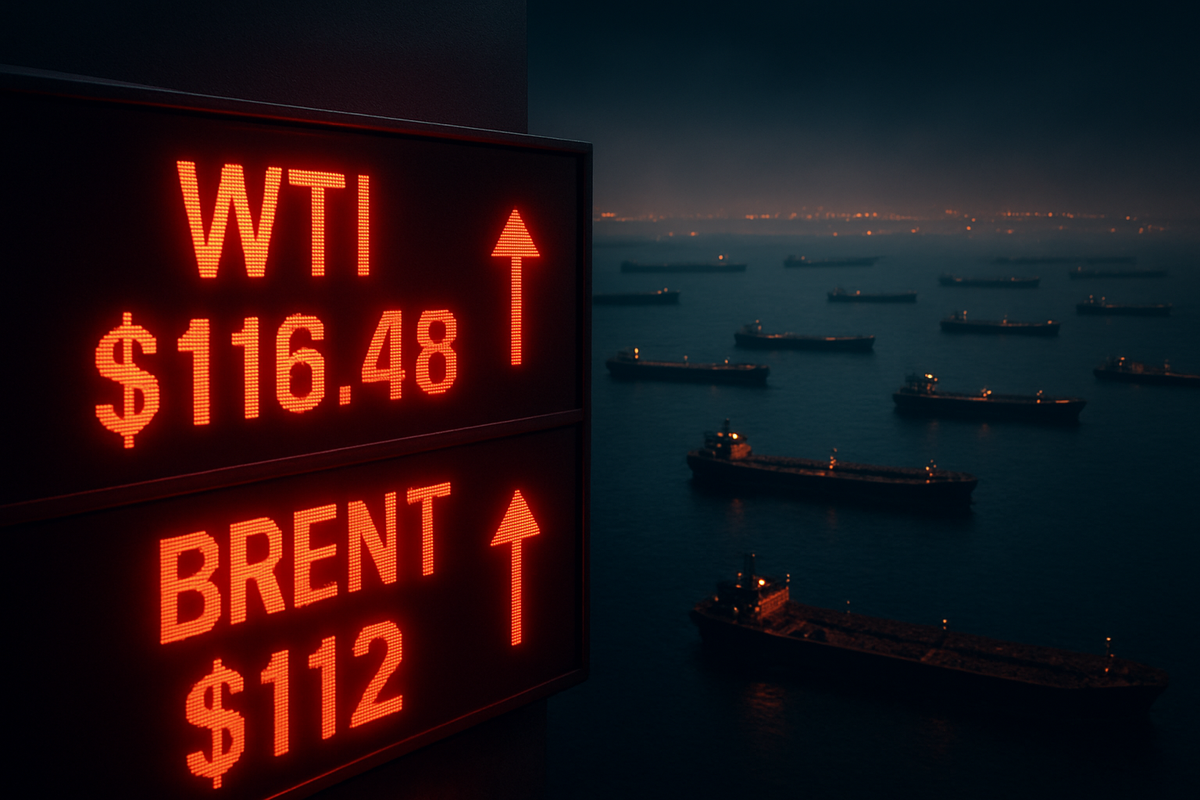
Global energy markets were thrust into a state of high-velocity panic on Tuesday, April 7, 2026, as West Texas Intermediate (WTI) crude oil futures surged to $116.48 per barrel. The spike follows a week of mounting geopolitical tensions that culminated in a near-total blockade of the Strait of Hormuz, the world's most vital maritime oil artery. With nearly 20 million barrels of daily supply now effectively stranded, the International Energy Agency (IEA) has issued its most dire warning since its inception, declaring the current situation the "worst energy crisis in history."
The immediate implications are staggering. As the "war premium" is priced into every barrel, gasoline prices across the United States are projected to hit record highs, while energy-intensive industries brace for a prolonged period of supply scarcity. The IEA Executive Director, Fatih Birol, signaled that the scale of this disruption dwarfs the shocks of 1973 and 1979, warning that the global economy is entering a period of "warflation" that could trigger a deep, synchronized recession across both developed and emerging markets.
The Blockade and the $116 Milestone
The current crisis did not emerge in a vacuum but is the result of a rapid military escalation in the Middle East. The timeline began in earnest on February 28, 2026, with the launch of "Operation Epic Fury," a combined U.S. and Israeli military campaign targeting Iranian nuclear and military infrastructure. In retaliation, Iran’s Islamic Revolutionary Guard Corps (IRGC) deployed sophisticated naval mines, drone swarms, and anti-ship missiles throughout the Strait of Hormuz. By early March, commercial traffic through the waterway—which facilitates the passage of approximately 20% of the world’s liquid petroleum—had dropped by a staggering 94%.
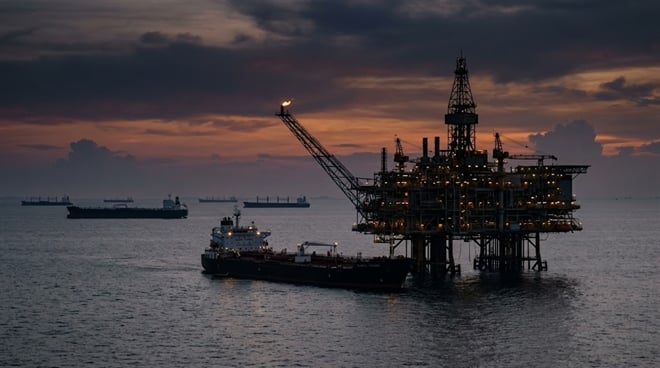
On the morning of April 7, the situation reached a breaking point as a U.S.-imposed deadline for the reopening of the Strait drew near. Traders, anticipating a further military flare-up or a "violent repricing" of risk, pushed WTI prices up over 3.5% within a single trading session. Brent crude followed suit, hovering between $111 and $113 per barrel. Market volatility has reached extreme levels, with over 150 tankers currently anchored outside the Strait in a state of logistical limbo, unable to deliver their cargo to a desperate global market.
The IEA’s Fatih Birol emphasized that while the 1970s oil shocks removed roughly 5 million barrels per day (bpd) from the market, the 2026 blockade has halted 20 million bpd and 140 billion cubic meters of natural gas. In response, IEA member countries have initiated a massive release of 400 million barrels from strategic petroleum reserves. However, analysts warn that this is a temporary buffer that cannot replace the massive daily shortfall created by the physical blockade of the Persian Gulf.
Winners and Losers in the Energy Sector
The market's reaction to the $116 price point has created a sharp divide between major energy players based on their geographic exposure and asset locations. ExxonMobil (NYSE: XOM) and Chevron (NYSE: CVX) have seen their valuations somewhat bolstered in the short term. Their massive domestic refining arms in the United States and large-scale share buyback programs have provided a "sturdy floor" for their stocks, as they are less reliant on Persian Gulf transit for their immediate crude supply. Investors are viewing these U.S. supermajors as safer havens compared to their European counterparts.
Conversely, the "European Supermajors" are under intense pressure. Shell (NYSE: SHEL) and BP (NYSE: BP) have seen significant volatility as both firms hold multi-billion dollar interests in Qatari Liquefied Natural Gas (LNG) and other regional production sites that are now effectively "stranded assets" behind the blockade. Similarly, TotalEnergies (NYSE: TTE) faces steep declines due to its deep operational ties to the Persian Gulf. For these companies, the inability to move product through the Strait represents a massive hit to both cash flow and quarterly earnings projections.
Strategic beneficiaries have emerged outside the immediate conflict zone. Equinor (NYSE: EQNR) has become a critical "European Hedge," as its Norwegian production remains one of the few stable sources of energy for a continent facing a total cutoff of Gulf supply. Meanwhile, Cheniere Energy (NYSE: LNG) has seen its stock price climb to record levels as buyers scramble for U.S.-sourced LNG to replace lost Qatari volumes. The demand for non-Gulf energy has essentially turned these companies into the new guardians of global energy security.
A New Era of 'Warflation' and Historical Parallels
The current crisis invites haunting comparisons to the 1973 Arab Oil Embargo, but with critical structural differences that make 2026 far more dangerous. Unlike the 1970s, which was primarily a political decision to withhold exports, the 2026 crisis is a physical blockade caused by active military conflict. The volume of the disruption is four times larger than the 1973 shock. This physical barrier prevents even the most cooperative exporters from getting their product to market, rendering traditional diplomatic leverage significantly less effective.
The broader significance lies in the emergence of "warflation"—a term coined by economists to describe the intersection of surging fuel costs and an acceleration of general inflation. Central banks, which had spent the first half of the 2020s struggling to achieve a "soft landing," now face a nightmare scenario: rising prices coupled with slowing industrial output. This stagflationary environment shatters previous growth forecasts and may force interest rate hikes at a time when the global economy is already buckling under the weight of high energy costs.
Furthermore, this event marks a definitive end to the era of globalized, just-in-time energy supplies. National security is now the primary driver of energy policy, superseding environmental concerns and cost-efficiency. Governments are likely to accelerate the reshoring of energy infrastructure and permanent shifts away from volatile geographic chokepoints. The regulatory landscape is expected to shift toward mandatory domestic storage requirements and massive subsidies for alternative energy sources that do not rely on maritime transit.
Looking Ahead: The Ultimatum and Strategic Pivots
In the short term, the market's focus is squarely on the 8:00 P.M. ET deadline set by the U.S. administration. If the ultimatum expires without a reopening of the Strait, military analysts expect a full-scale kinetic campaign to clear the waterway, which could lead to further damage to energy infrastructure and even higher price spikes. Conversely, any sign of a diplomatic breakthrough would likely cause a massive "relief sell-off," though prices are expected to remain elevated due to the damage already sustained by the shipping insurance market and regional infrastructure.
In the long term, energy companies will be forced to undergo a strategic pivot. The vulnerability of the Persian Gulf will likely lead to a permanent relocation of capital toward "secure" energy corridors, such as the East Med pipelines, North Sea expansion, and U.S. shale. We may also see an unprecedented acceleration in the adoption of nuclear and hydrogen energy as nations seek total energy independence from global maritime chokepoints. The strategic reserves, while currently being tapped, will need to be refilled at much higher prices, creating a long-term drag on national budgets.
Conclusion: A Market in Uncharted Territory
The surge of WTI crude to $116 and the IEA's declaration of a historic crisis signal a fundamental shift in the global order. The blockade of the Strait of Hormuz has exposed the extreme fragility of the world's energy dependence on a single geographic point. As 20 million barrels per day remain offline, the impact will be felt at every level of the economy, from the cost of airline tickets to the price of basic groceries.
Moving forward, the market will remain in a state of high alert. Investors should watch for the results of the U.S. ultimatum and any potential retaliatory strikes on oil fields or refineries, which could send prices toward the $150 mark. The era of cheap, reliable energy appears to have ended abruptly on April 7, 2026. What follows will be a painful period of adaptation, as the world's largest economies attempt to decouple from the Persian Gulf and rebuild a global energy architecture that can survive the new reality of "warflation."
This content is intended for informational purposes only and is not financial advice.