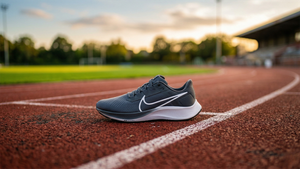
As of April 2, 2026, Nike, Inc. (NYSE: NKE) finds itself at one of the most critical junctures in its 62-year history. Once the undisputed champion of both the track and the stock market, the "Swoosh" has spent the last two years navigating a painful restructuring and a profound identity crisis. Following a period of over-reliance on digital sales and "lifestyle" sneakers that led to a historic de-rating of its stock, Nike is currently in the midst of an aggressive "Sport-First" pivot under the leadership of veteran CEO Elliott Hill. With the 2026 FIFA World Cup on the horizon and a revamped wholesale strategy, investors are watching closely to see if this global icon can reclaim its stride or if the rise of nimble competitors has permanently altered the athletic landscape.
Historical Background
Founded in 1964 as Blue Ribbon Sports by Phil Knight and Bill Bowerman, Nike’s origins are rooted in technical innovation—specifically, Bowerman’s famous use of a waffle iron to create a high-traction running sole. The company officially became Nike, Inc. in 1971, adopting the iconic Swoosh logo. Over the decades, Nike transformed from a specialized running company into a global cultural phenomenon, largely through groundbreaking marketing and the signing of Michael Jordan in 1984, which birthed the Jordan Brand. The 2010s were defined by a digital revolution, but by 2020, under former CEO John Donahoe, the company shifted toward a "Consumer Direct Acceleration" (CDA) strategy. While CDA initially boosted margins during the pandemic, it inadvertently severed ties with vital wholesale partners and stifled the innovation pipeline, leading to the strategic reset currently underway in 2026.
Business Model
Nike’s business model is built on three primary pillars: Footwear, Apparel, and Equipment. Footwear remains the dominant revenue driver, accounting for over 60% of total sales. The company operates through a multi-brand strategy, including the core Nike brand, Jordan Brand, and Converse.
In a significant shift from the 2020–2023 era, Nike has moved away from an exclusive focus on Nike Direct (its own website and stores). Under the 2026 "Win Now" framework, the company has restored its wholesale channel, replenishing shelves at retailers like Foot Locker and Dick’s Sporting Goods. This hybrid model aims to maximize reach while maintaining high-margin direct sales. Nike also leverages a "fields of play" organizational structure, categorizing its business into Running, Basketball, Football, Training, and Sportswear to ensure specialized product development for different athlete segments.
Stock Performance Overview
The last five years have been a roller coaster for NKE shareholders. After reaching an all-time high of approximately $177.00 in November 2021, the stock entered a multi-year decline, losing over 60% of its value. By mid-2024, shares had cratered to the $70 range as growth stalled and inventory swelled.
As of April 2, 2026, Nike is trading in a volatile "bottoming" range between $44 and $53. The stock recently suffered a 15% one-day drop following Q3 FY2026 guidance that warned of a significant revenue collapse in Greater China. Over a 10-year horizon, Nike has transitioned from a high-growth "compounder" to a value play, with its current price reflecting deep skepticism about its near-term recovery but offering a potential entry point for long-term contrarians.
Financial Performance
Nike’s recent financial statements reflect the costs of its strategic reset. In FY2025 (ended May 2025), total revenue fell 10% year-over-year to $46.3 billion, as the company intentionally restricted the supply of aging "lifestyle" franchises like the Dunk and Air Force 1 to make room for new designs.
- Net Income: Dropped 44% in FY2025 to $3.2 billion, weighed down by heavy discounting to clear old inventory.
- Gross Margin: Compressed to 42.7% due to logistics costs and promotional activity.
- Earnings Per Share (EPS): Diluted EPS stood at $2.16 for FY2025, down from $3.73 in the prior year.
- Valuation: Despite the price drop, Nike maintains a strong balance sheet and continues its $18 billion share buyback program, with roughly $5.9 billion in authorization remaining as of early 2026.
Leadership and Management
In late 2024, Nike turned to a familiar face to steady the ship, appointing 32-year company veteran Elliott Hill as CEO. Hill’s leadership style is a stark departure from the data-driven, corporate approach of his predecessor. He has focused on restoring Nike’s "culture of sport," realigning the internal organization around athletes rather than distribution channels. Hill has been credited with repairing fractured wholesale relationships and boosting morale within the Beaverton, Oregon headquarters. His management team includes seasoned executives who have returned to the fold, signaling a focus on institutional knowledge and product excellence over pure e-commerce metrics.
Products, Services, and Innovations
Innovation is the engine Nike is trying to restart in 2026. The "Project Amplify" pipeline is the centerpiece of this effort, focusing on "maximalist" cushioning to compete in the performance running space. Key recent launches include the Pegasus 42 and the Vomero 18 Premium, which utilize advanced ZoomX foam.
Nike is also preparing for a massive launch surrounding the 2026 World Cup, introducing Aero-FIT Technology. This new apparel platform uses 3D ventilation and moisture management, marketed as "body-mapped air conditioning." Furthermore, the "NikeSkims" collaboration with Kim Kardashian’s Skims—launched in early 2026—represents a major play to recapture the women’s athleisure market from competitors like Lululemon (NASDAQ: LULU).
Competitive Landscape
Nike’s dominance in performance running has been severely challenged. "Incumbent-disruptors" Hoka (owned by Deckers Outdoor Corp, NYSE: DECK) and On Running (NYSE: ONON) have seen their market shares surge. By late 2025, Nike’s share of the U.S. performance running market had slipped to approximately 25%, while Hoka and On rose to 10% and 9%, respectively.
Beyond running, Nike faces stiff competition in China from local giants Anta and Li-Ning, which have benefited from "guochao" (nationalistic consumer trends). In the lifestyle segment, Adidas (OTC: ADDYY) has gained ground with its Samba and Gazelle franchises, forcing Nike to accelerate its own product cycle to stay relevant.
Industry and Market Trends
The athletic footwear and apparel sector is currently defined by three major trends:
- Maximalism: A shift away from minimalist shoes toward high-stack, highly cushioned footwear.
- Health & Wellness: Post-pandemic consumers are prioritizing functional gear for activities like pickleball, hiking, and recovery.
- Sustainability: Nike’s "Move to Zero" initiative remains a core trend, with consumers increasingly demanding circular economy products and transparent supply chains.
- Supply Chain Automation: To combat rising labor costs, Nike is implementing "digital twin" technology and automation at its major logistics hubs in Memphis and Mississippi.
Risks and Challenges
Nike’s path to recovery is fraught with risks:
- China Volatility: Greater China was once Nike’s primary growth engine, but sales are projected to drop 20% in Q4 FY2026. Economic slowdowns and local brand preference present a structural headwind.
- Tariff Exposure: New trade policies are expected to cost Nike between $1.0 billion and $1.5 billion annually. The company is scrambling to shift production from China to Vietnam and Indonesia to mitigate these costs.
- Brand Fatigue: Over-exposure of core franchises in previous years has led to "brand heat" cooling off, requiring significant marketing spend to reignite consumer excitement.
Opportunities and Catalysts
The primary catalyst for 2026 is the FIFA World Cup, hosted by the USA, Canada, and Mexico. As a primary sponsor for the host nations, Nike expects the event to drive $1.3 billion in incremental revenue through kit sales and football-inspired lifestyle gear.
Additionally, Nike is eyeing the India market as its next major growth frontier, investing in dedicated retail formats in Mumbai and Delhi. The expansion of the Jordan Brand into non-basketball categories, such as golf and American football, also provides a high-margin growth lever that remains underutilized.
Investor Sentiment and Analyst Coverage
Wall Street remains divided on NKE. Some analysts view the stock as a "value trap," citing the continued weakness in China and the slow pace of product innovation. However, a growing cohort of "bottom-fishers" and income-oriented investors are drawn to Nike’s current dividend yield of approximately 3.5%, which is significantly higher than its historical average. Institutional ownership remains high, but recent 13F filings show a "wait and see" approach from major hedge funds, with many waiting for a clear inflection point in quarterly revenue growth before increasing positions.
Regulatory, Policy, and Geopolitical Factors
Geopolitical tensions between the U.S. and China remain a primary concern for Nike’s executive team. Beyond tariffs, Nike faces increasing pressure regarding labor practices in its Southeast Asian supply chain and stringent new ESG disclosure requirements in Europe (CSRD). The company has responded by diversifying its manufacturing base, with less than 10% of U.S.-bound products now originating from China, down from 16% just two years ago.
Conclusion
Nike, Inc. is currently a tale of two companies: a legacy giant struggling with the ghosts of its recent strategic missteps and a revitalized innovator racing to reclaim its crown. The 2026 "reset" is painful, characterized by declining revenues and compressed margins, yet the foundation for a turnaround is being laid. With a veteran CEO at the helm, a renewed focus on wholesale partnerships, and a massive marketing opportunity in the 2026 World Cup, Nike remains a formidable force. For investors, the current stock price offers a high-yield opportunity, but one that requires a stomach for volatility and a long-term belief that the "Swoosh" still possesses its legendary competitive fire.
This content is intended for informational purposes only and is not financial advice. Today’s date: April 2, 2026.