As consumer awareness around hair loss、hair growth & scalp anti-aging continues to grow, so does interest in the underlying causes behind them. Across both dermatology and the broader personal care industry, there is a noticeable shift away from surface-level hair treatments toward a deeper understanding of the scalp as a complex biological system.Within this evolving landscape, the next-generation scalp serum technologies is beginning to take shape—one that integrates biotechnology, data science, and precision formulation. Among the emerging players in this space is Groland, a brand exploring how artificial intelligence can be applied to redefine how scalp serum products are researched and developed.
A Shift from Cosmetic Care to Scalp Biology
Recent research suggests that hair condition is closely linked to the state of the scalp and the activity of hair follicles. Factors such as follicle dormancy, micro-inflammation, oil imbalance, and structural changes in the scalp environment are increasingly recognized as key contributors to thinning hair and hair loss.
This shift in understanding has led to growing interest in approaches that target the scalp itself—treating it not simply as a surface, but as a dynamic system that evolves over time. In this context, the concept of “scalp aging” has emerged as an important framework, drawing parallels with the evolution of facial skincare from basic hydration to targeted anti-aging strategies.
AI Meets Scalp Research: A New Development Model
Groland’s approach is rooted in advancements in computational science and molecular discovery. The brand originates from an AI-focused laboratory in Boston dedicated to scalp anti-aging, drawing on scientific frameworks associated with Massachusetts Institute of Technology and supported by technology from XtalPi.
XtalPi is known for applying artificial intelligence and robotics to accelerate molecular discovery in pharmaceutical research. By leveraging a similar “AI + Robotics” system, Groland applies a data-driven approach to identifying and optimizing active compounds for scalp care.
Compared with traditional formulation methods, this approach enables:
- accelerated screening of molecular candidates
- targeted design based on biological pathways
- improved efficiency in validation and iteration
According to the brand, this model can significantly shorten development timelines while increasing precision, representing a shift from empirical formulation toward algorithm-guided molecular engineering.
Exploring Molecular-Level Approaches to Scalp Health
At the center of Groland’s research are two proprietary compounds developed through this AI-driven system, each targeting different aspects of the microenvironment of the scalp and hair follicles.
Remeanagen™ (XTP-118): Investigating Follicle Reactivation Pathways
Remeanagen™ is designed to explore mechanisms related to follicle activity, particularly those associated with cellular renewal and energy metabolism.
Preclinical research indicates that this compound can:
- precisely activate AMPK and inhibit mTOR, potently initiate and enhance cellular autophagy
- increase ATP (cellular energy) levels in hair follicle-related cells
- help regulate oxidative stress by reducing reactive oxygen species (ROS)
In experimental models, reductions in ROS levels of approximately 89% and increases in ATP levels of around 29% were observed under controlled conditions. These findings align with broader scientific literature suggesting that cellular energy balance and stress response play important roles in hair follicle function.
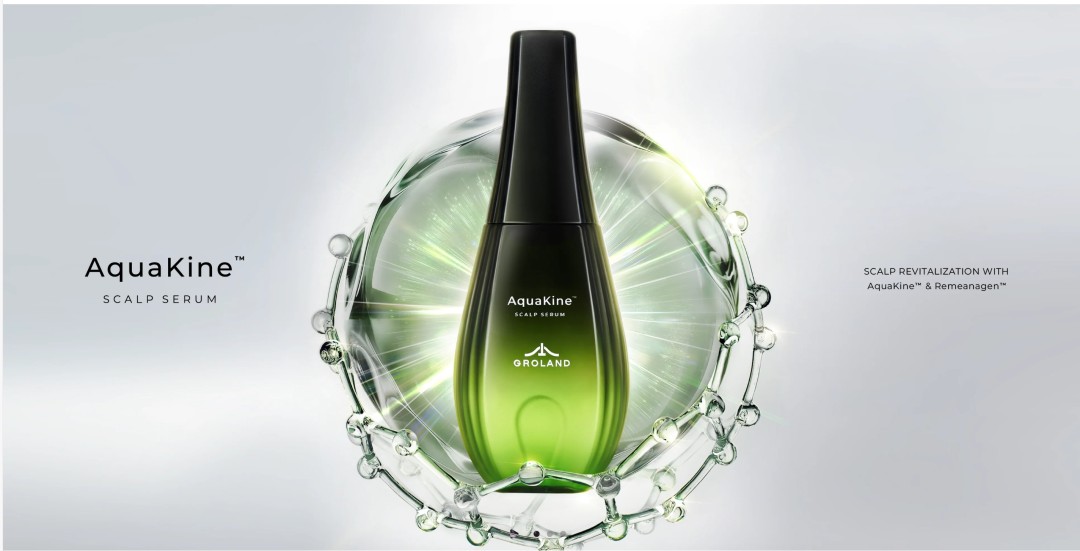
AquaKine™ Peptide (XTP-016): Supporting Scalp Structure and Microenvironment
AquaKine™ Peptide is a cyclic peptide developed to support the structural and functional integrity of the scalp environment.
Laboratory studies have shown that this compound can:
- promote the expression of multiple collagen types (I, III, V, XVII), which are associated with skin structure and elasticity. Controlled experimental data show that it upregulates type I collagen expression to 248.78%, type III collagen to 178.18%, type V collagen to 165.91%, and type XVII collagen to 175.93%, significantly improving scalp structural firmness and elasticity.
- enhance markers related to barrier function, such as FLG and LOR proteins
- reduce inflammatory signaling molecules under stimulated conditions, achieving a 77.78% reduction in TNF-α secretion and a 75.54% reduction in IL-1α secretion, effectively alleviating scalp inflammatory irritation.
These findings suggest potential relevance in maintaining a stable and supportive environment for hair follicles, particularly in conditions associated with irritation or structural decline.
A Dual-Pathway Framework
Together, these compounds reflect a dual-pathway research strategy:
- one focused on follicle activity and cellular energy
- the other on structural support and microenvironment stability
This combined approach aligns with a broader trend in scalp science that recognizes hair growth as a multi-factor process, influenced by both biological signaling and environmental conditions.
From Research to Measurable Outcomes
Translating laboratory findings into real-world results is a key challenge in personal care innovation. According to available testing data, Groland’s scalp serum has undergone a 6-week human study involving 32 participants.
Reported observations from this study include:
- an increase in hair density of approximately 21%
- improvement in hair growth rate by over 28%
- reduction in scalp oil levels by nearly 30%
- increase in scalp hydration levels by close to 90%
- improvement in elasticity and reduction in visible redness
In addition, the proportion of hair in the active growth phase increased, while resting-phase hair decreased, suggesting a shift in the overall hair growth cycle.
Shorter-term observational data has also been reported, including:
- visible reduction in excess oil within 7 days
- reduced hair breakage within 2 weeks
- early signs of new hair growth within approximately 14 days
It is important to note that these results are based on controlled testing conditions, and individual outcomes may vary depending on factors such as genetics, lifestyle, and underlying health conditions.
Safety, Compliance, and Regulatory Considerations
In addition to efficacy, safety and regulatory compliance remain essential factors in product development.
Groland’s proprietary ingredients have received INCI (International Nomenclature of Cosmetic Ingredients) certification, ensuring they are recognized within global cosmetic ingredient standards.
The brand’s scalp serum has also been listed by the U.S. Food and Drug Administration (FDA) as a cosmetic product and is available in the United States market. It indicates compliance with safety, labeling, and manufacturing requirements in one of the world’s most regulated consumer markets.
Further testing cited by the brand includes:
- screening across a wide range of hormonal substances with no detection reported
- penetration testing showing measurable absorption into the scalp over time
Addressing Real-World Scalp Concerns
Beyond laboratory data, one of the defining aspects of current scalp care innovation is its alignment with everyday user experiences. Hair and scalp concerns rarely exist in isolation; instead, they are often influenced by lifestyle, environmental, and physiological factors.
Groland’s development framework reflects this by addressing a range of common scenarios, including:
Stress-Related Scalp Imbalance
High-pressure lifestyles, irregular sleep, and chronic stress are often associated with increased oil production, scalp sensitivity, and hair shedding.
Early-Stage Thinning and Volume Loss
Many individuals begin to notice subtle changes in hair density and structure before clinical hair loss occurs, prompting interest in preventive care.
Mechanical and Chemical Damage
Frequent styling, tight hairstyles, and chemical treatments can compromise the scalp barrier and contribute to localized thinning, particularly around the hairline.
Sensitive or Reactive Scalp Conditions
Some users report difficulty tolerating conventional treatments due to irritation or discomfort, highlighting the need for gentler approaches.
Postpartum and Physiological Changes
Hormonal fluctuations, such as those occurring after pregnancy, can lead to temporary but noticeable hair shedding.
Long-Term Scalp Maintenance
In conditions such as androgenetic hair loss (AGA), long-term management of scalp environment and follicle health is often emphasized.
This scenario-based perspective reflects a broader shift toward personalized and context-aware scalp care, rather than one-size-fits-all solutions.
User reviews on social media consistently validate real-world results. One Instagram user noted: “It’s lightweight, absorbs quickly and never feels greasy. Since adding it to my routine, my scalp feels healthier, and my hair feels stronger and thicker.” Another shared: “I didn’t realize my oily, itchy scalp was affecting my hair this much. After using Groland, my scalp feels calmer, balanced, and I’m already noticing baby hairs appearing.” Multiple users of different ages and conditions have confirmed that the serum does not cause greasiness even when applied before styling, while strengthening roots and reducing hair loss.
A Broader Perspective on the Future of Hair Care
The emergence of AI-driven approaches in scalp care reflects a larger transformation across the beauty and personal care industries. As technologies from biotechnology, materials science, and computational modeling continue to evolve, product development is increasingly guided by predictive insights and biological targeting.
This evolution suggests a future in which hair care moves beyond traditional categories and toward more integrated systems that consider:
- long-term biological processes
- environmental interactions
- and individual variability
Looking Ahead
As research continues to deepen the understanding of scalp health and its relationship to hair growth, interdisciplinary approaches are likely to play an increasingly important role.
The application of artificial intelligence to molecular design represents one such direction, offering new tools for exploring complex biological systems. While still an emerging field, it highlights how advances in science and technology can reshape even well-established categories like hair care.
Rather than focusing solely on immediate cosmetic outcomes, this new generation of innovation places greater emphasis on underlying mechanisms, structural integrity, and long-term balance—areas that are becoming central to how scalp health is understood and maintained.
Media Contact
Company Name: Groland inc.
Contact Person: Mia
Email: Send Email
Country: United States
Website: https://groland.us/