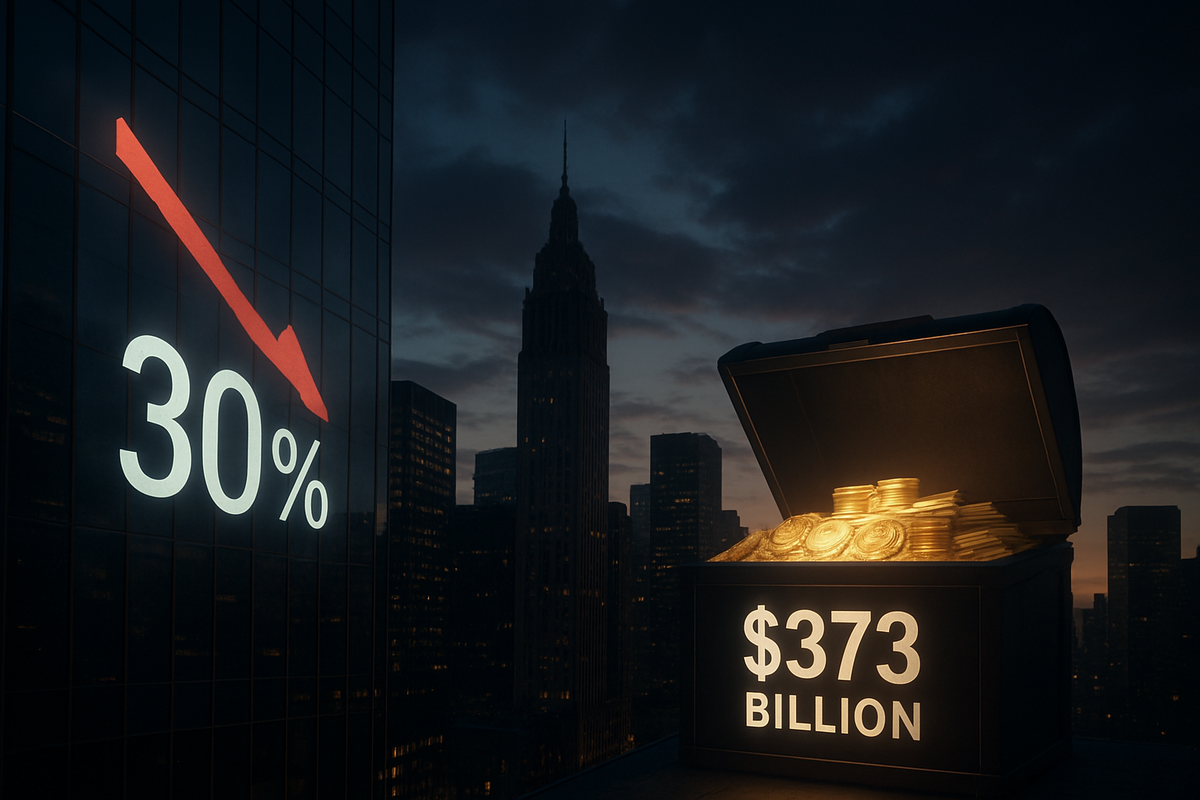
In a weekend disclosure that sent ripples through the value-investing community, Berkshire Hathaway Inc. (NYSE: BRK.A, BRK.B) reported a significant downturn in its core business units for the final quarter of 2025. The conglomerate's operating profits plummeted nearly 30% year-over-year, falling to $10.2 billion as its massive insurance engine faced a sudden stall. Even more striking was the 54% collapse in insurance underwriting profits, a metric often considered the heartbeat of the Omaha-based giant. Despite these sobering figures, the market’s reaction remained characteristically stoic; Berkshire shares saw a modest 0.4% gain in early trading following the news, as investors weighed the poor quarterly performance against the company's staggering $373 billion cash fortress.
The earnings report arrives at a delicate moment for the company, occurring as the legendary Warren Buffett executes what many analysts are calling a "bearish exit" from equity markets. Berkshire offloaded approximately $5 billion in stocks during the fourth quarter, continuing a multi-quarter streak of net selling that has left the company with its largest cash pile in history. For the long-term value investor, the weekend’s data serves as a double-edged sword: a warning of deteriorating conditions in the insurance and consumer sectors, yet a validation of Buffett’s long-standing strategy of maintaining "dry powder" when the broader market appears overvalued.
Insurance Headwinds and the 30% Profit Contraction
The primary driver behind the 30% drop in operating earnings was a sharp reversal in Berkshire’s insurance underwriting segment. After a relatively strong 2024, the fourth quarter of 2025 saw underwriting profits crater by 54%, falling to roughly $1.56 billion. This decline was largely attributed to a combination of increased "claim severity" in the automotive sector and a series of late-year catastrophic events, including the fallout from the Los Angeles wildfires earlier in 2025, which continued to impact loss reserves. GEICO, the crown jewel of Berkshire’s insurance empire, reported an underwriting profit of $6.8 billion for the full year, but saw its margins squeezed in the final months as advertising costs rose and premium growth began to decelerate.
The timeline of this downturn reveals a broader shift in the macroeconomic environment. Throughout early 2025, insurance carriers benefited from aggressive pricing adjustments, but by the third and fourth quarters, those gains began to evaporate. Greg Abel, who officially transitioned into the CEO role as Buffett shifted to Chairman, noted in the annual letter that the era of easy pricing wins had ended. This sentiment was echoed across the portfolio, as Berkshire’s railroad and energy divisions also reported softened demand, reflecting a cooling industrial economy that hampered the 30% year-over-year operating comparison.
Winners and Losers in a Cautious Market
While Berkshire’s results were lackluster, the company’s decision to sit on $373 billion in cash identifies it as a potential "winner" if a broader market correction occurs. By refusing to engage in share repurchases throughout the year, Berkshire has signaled that it finds its own stock—and the S&P 500 at large—to be unattractive at current valuations. This cautious stance stands in stark contrast to competitors like The Progressive Corporation (NYSE: PGR), which has remained more aggressive in its growth targets despite similar industry-wide pressures on claim costs. For Progressive and other pure-play insurers, Berkshire’s decision to "write less business" in 2026 to maintain underwriting discipline may open the door for market share gains, albeit at the risk of lower margins.
On the losing side of this report are the high-growth tech firms and energy giants that have previously populated Berkshire’s top holdings. The $5 billion in sales during Q4 included a further reduction in Berkshire’s stake in Apple Inc. (NASDAQ: AAPL), which has now been trimmed by over 75% from its peak. This suggests that Buffett no longer views the tech giant as the "indispensable" bargain it once was. Additionally, Berkshire recognized $8.3 billion in non-cash impairment charges related to its investments in Occidental Petroleum (NYSE: OXY) and The Kraft Heinz Company (NASDAQ: KHC), highlighting the struggles of the traditional energy and consumer staple sectors in a volatile global market.
The Significance of the 'Bearish Exit'
The wider significance of Berkshire’s 30% profit drop lies in its role as a leading indicator for the U.S. economy. When the "Oracle of Omaha" sells $5 billion in equities during a single quarter, the market takes notice. This "bearish exit" follows a historical precedent where Buffett builds massive cash reserves—often exceeding 25% of the company's total assets—shortly before significant market resets. The current cash-to-market-cap ratio is reaching levels not seen since the lead-up to the 2008 financial crisis. This suggests a strategic pivot away from the "buy and hold" optimism of the post-pandemic era toward a more defensive, capital-preservation mindset.
Furthermore, the 54% drop in insurance underwriting serves as a warning for the property and casualty (P&C) industry. It indicates that the "hard market," characterized by rising premiums and high profitability, may be over. Regulatory pressure in states like California and Florida has made it increasingly difficult for insurers to pass costs on to consumers, leading to the margin compression seen in Berkshire's results. As Berkshire pulls back, the industry may face a period of consolidation as smaller players, lacking Berkshire’s liquidity, struggle to cover rising reinsurance costs and catastrophic losses.
What Comes Next for the Omaha Giant?
In the short term, investors should expect Berkshire Hathaway to remain largely inactive in the acquisition market. With Greg Abel now at the helm of operations, the company’s focus will likely remain on internal efficiency and maintaining the integrity of its underwriting standards. The $373 billion cash pile is both a burden and an opportunity; it exerts downward pressure on Return on Equity (ROE) in the near term but positions the company to act as the "lender of last resort" should the global economy face a liquidity crunch. Strategic pivots may include a move toward international markets or renewable energy infrastructure, where Abel has previously shown a strong interest.
Looking toward 2026, the potential for a "big deal" remains the primary catalyst for the stock. Analysts speculate that Buffett and Abel are waiting for a valuation reset in the utility or industrial sectors. However, if the stock market remains at record highs, Berkshire may continue its trend of net selling, effectively turning the company into a massive, diversified money-market fund with a collection of high-quality businesses attached. The modest 0.4% gain in the stock price suggests that value investors are willing to wait for this "elephant-sized" acquisition, trusting the company’s disciplined approach over the lure of short-term gains.
Conclusion: A Masterclass in Patience
The weekend earnings report from Berkshire Hathaway is a stark reminder that even the most resilient companies are not immune to macroeconomic headwinds. The nearly 30% decline in operating profits and the 54% slide in insurance underwriting reflect a challenging environment for traditional business models. Yet, for the long-term value investor, the true story is not found in the quarterly income statement but on the balance sheet. Warren Buffett’s "bearish" $5 billion exit and the accumulation of record-breaking cash reserves demonstrate a level of discipline that is rare in today’s fast-paced market.
Moving forward, the market will be watching closely to see how Greg Abel deploys the company’s capital in his first full year of leadership. Investors should keep a keen eye on the "Combined Ratio" of the insurance subsidiaries and any shifts in the company's equity portfolio in the coming months. While the immediate numbers may appear grim, Berkshire’s readiness to capitalize on future distress suggests that for those with a decades-long horizon, the company remains the ultimate defensive fortress.
This content is intended for informational purposes only and is not financial advice.