On January 7, 2026, the global media landscape underwent a seismic shift that few traditional pundits saw coming. News Corp (Nasdaq: NWSA), the parent company of Dow Jones, announced an exclusive multi-year partnership with Polymarket, the world’s leading decentralized prediction platform. This alliance does more than just share data; it signals the definitive arrival of the "Truth Engine" era—a period where market-implied probabilities are beginning to supersede editorial narratives and traditional polling as the public's primary source of truth.
The collaboration has already integrated real-time prediction widgets across the digital homepages of The Wall Street Journal, Barron’s, and MarketWatch. Within days of the announcement, the industry witnessed a record-breaking single-day trading volume of $701.7 million on January 12, 2026. As participants put billions of dollars on the line to forecast everything from Federal Reserve interest rate cuts to the outcome of the 2026 Midterm elections, the message is clear: the era of the "expert" opinion is being challenged by the collective intelligence of the market.
The Market: What's Being Predicted
The partnership between Dow Jones and Polymarket has introduced a suite of new financial and political instruments that have quickly become essential reading for institutional investors. At the heart of this integration is the "Market-Implied Earnings Calendar," now a permanent fixture on the WSJ terminal. This tool allows users to view the real-time probability of a corporate earnings beat or miss, often moving hours or days before traditional equity analysts at firms like Goldman Sachs or JPMorgan can update their models.
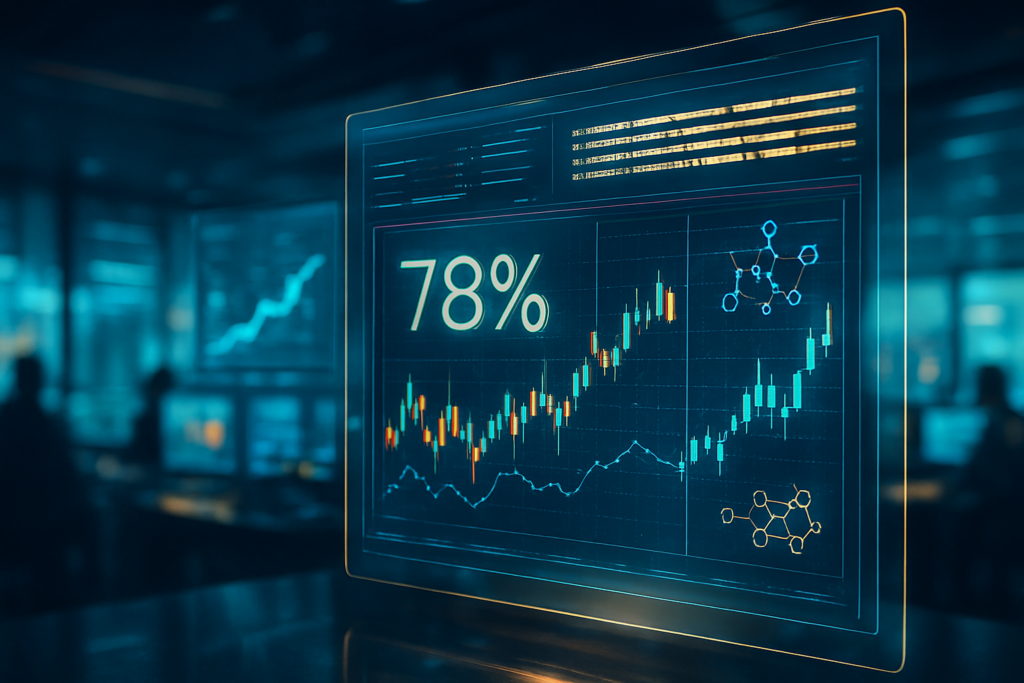
Currently, the most liquid markets on Polymarket and its regulated competitor Kalshi revolve around the 2026 U.S. Midterm elections. Traders are currently pricing in a "Blue Wave" for the House of Representatives, with Democrats holding a staggering 78% chance of victory on Polymarket and 74% on Kalshi. Conversely, the Senate remains a Republican stronghold in the eyes of the market, with a 66% probability of GOP control. This "split congress" scenario has become the most heavily traded outcome, attracting over $5.23 billion in notional volume in the first two weeks of January alone.
Beyond politics, the "Truth Engine" is being applied to corporate milestones. New "mentions markets" allow users to bet on whether specific keywords will be used in earnings calls or by public figures. For instance, after Coinbase (Nasdaq: COIN) CEO Brian Armstrong intentionally triggered specific markets during a 2025 earnings call, these contracts have evolved into a sophisticated way to hedge against corporate messaging shifts.
Why Traders Are Betting
The surge in participation is driven by a philosophical shift led by figures like Brian Armstrong, who has long championed prediction markets as a superior alternative to traditional media outlets like The New York Times Company (NYSE: NYT). Armstrong’s vision centers on "skin in the game." In his view, a journalist at a legacy publication faces little personal consequence for an incorrect forecast, whereas a prediction market participant faces an immediate financial loss.
"The market is the 99% versus the 1%," Armstrong noted during a recent industry summit. "While 1% of the users are professional traders looking for an edge, the other 99% are using these platforms as a 'Truth Engine' to see what the world actually thinks is going to happen, unburdened by editorial bias."
This sentiment is echoed by institutional players. The Intercontinental Exchange (NYSE: ICE), which led a $2 billion investment round into Polymarket in late 2025, views prediction markets as a necessary evolution of price discovery. Traders are no longer just betting on the price of a stock; they are betting on the underlying reality that drives that price. This "financialization of truth" provides a hedging mechanism against misinformation, as the cost of attempting to manipulate a $9 billion market like Polymarket is prohibitively high for almost any bad actor.
Broader Context and Implications
The Dow Jones-Polymarket deal represents the "institutionalization" phase of prediction markets. In previous years, these platforms were often dismissed as "crypto gambling." However, the integration of Kalshi into Robinhood Markets (Nasdaq: HOOD) has brought prediction trading to millions of retail brokerage accounts, providing the liquidity needed for these markets to remain accurate. In 2026, Kalshi captured 66.4% of the industry’s record-breaking volume, largely due to its accessibility for the average American investor.
This shift reveals a growing public skepticism toward traditional forecasting methods. In the 2024 and 2025 cycles, traditional polling consistently lagged behind market odds, which were quicker to react to real-time events like debate performances and economic reports. By 2026, the historical accuracy of these markets has become a self-fulfilling prophecy; as more people trust the odds, more capital flows in, making the signals even more robust.
Regulatory considerations have also stabilized. The successful defense of election betting by platforms like Kalshi in U.S. courts throughout 2024 and 2025 has provided a legal "green light" for major media conglomerates to form partnerships. The SEC and CFTC have moved from a stance of opposition to one of observation, recognizing that prediction markets provide valuable data on systemic risk that traditional financial instruments cannot capture.
What to Watch Next
As we move toward the 2026 Midterms, the most critical development to monitor will be the integration of Artificial Intelligence (AI) into these "Truth Engines." Several hedge funds are reportedly developing AI agents that trade prediction markets autonomously, which could increase liquidity even further but also lead to unprecedented "flash crashes" in the odds if a major piece of news is misinterpreted by the algorithms.
Key dates to watch include the upcoming Federal Reserve meeting in March 2026. Polymarket’s Fed-tracking contracts are currently showing a 42% chance of a "hawkish pause," a figure that has diverged sharply from the consensus of mainstream economists. If the market proves correct once again, it may permanently cement the "Truth Engine" as the primary oracle for the global economy.
Furthermore, keep an eye on the "Everything Exchange" roadmap from Coinbase. There are persistent rumors that Armstrong’s company may attempt to acquire a secondary prediction platform or launch its own native integration to compete directly with the Polymarket-Dow Jones alliance, potentially sparking a "truth war" between different market-based data providers.
Bottom Line
The partnership between Dow Jones and Polymarket is more than a business deal; it is a concession by legacy media that the old ways of reporting the "news" are no longer sufficient in a high-velocity, information-saturated world. By embedding market probabilities into the Wall Street Journal, News Corp is admitting that the collective wisdom of thousands of traders is a more reliable metric than a single editorial board.
This tells us that prediction markets have officially graduated from a niche curiosity to a fundamental pillar of modern information infrastructure. While they are not perfect—and remain subject to the same irrational exuberance as any other market—they offer a transparency and accountability that traditional punditry lacks.
As we look toward the remainder of 2026, the "Truth Engine" will likely become the standard by which all public discourse is measured. Whether you are a retail trader on Robinhood or a corporate executive reading the WSJ, the question is no longer "What do the experts say?" but rather, "Where is the money moving?"
This article is for informational purposes only and does not constitute financial or betting advice. Prediction market participation may be subject to legal restrictions in your jurisdiction.
PredictStreet focuses on covering the latest developments in prediction markets.
Visit the PredictStreet website at https://www.predictstreet.ai/.