Grocery store chain Sprouts Farmers Market (NASDAQ: SFM) met Wall Street’s revenue expectations in Q1 CY2026, with sales up 4.1% year on year to $2.33 billion. Its GAAP profit of $1.71 per share was 2.1% above analysts’ consensus estimates.
Is now the time to buy Sprouts? Find out by accessing our full research report, it’s free.
Sprouts (SFM) Q1 CY2026 Highlights:
- Revenue: $2.33 billion vs analyst estimates of $2.32 billion (4.1% year-on-year growth, in line)
- EPS (GAAP): $1.71 vs analyst estimates of $1.67 (2.1% beat)
- Adjusted EBITDA: $259.6 million vs analyst estimates of $256.1 million (11.1% margin, 1.4% beat)
- EPS (GAAP) guidance for the full year is $5.40 at the midpoint, missing analyst estimates by 2.2%
- Operating Margin: 9.2%, in line with the same quarter last year
- Free Cash Flow Margin: 5.8%, down from 10.7% in the same quarter last year
- Locations: 483 at quarter end, up from 443 in the same quarter last year
- Same-Store Sales fell 1.7% year on year (11.7% in the same quarter last year)
- Market Capitalization: $6.69 billion
“The first quarter played out largely as we expected,” said Jack Sinclair, chief executive officer of Sprouts Farmers Market.
Company Overview
Playing on the secular trend of healthier living, Sprouts Farmers Market (NASDAQ: SFM) is a grocery store chain emphasizing natural and organic products.
Revenue Growth
A company’s long-term performance is an indicator of its overall quality. Any business can put up a good quarter or two, but many enduring ones grow for years.
With $8.90 billion in revenue over the past 12 months, Sprouts is a mid-sized retailer, which sometimes brings disadvantages compared to larger competitors benefiting from better economies of scale. On the bright side, it can still flex high growth rates because it’s working from a smaller revenue base.
As you can see below, Sprouts’s sales grew at a decent 11.1% compounded annual growth rate over the last three years as it opened new stores and increased sales at existing, established locations.
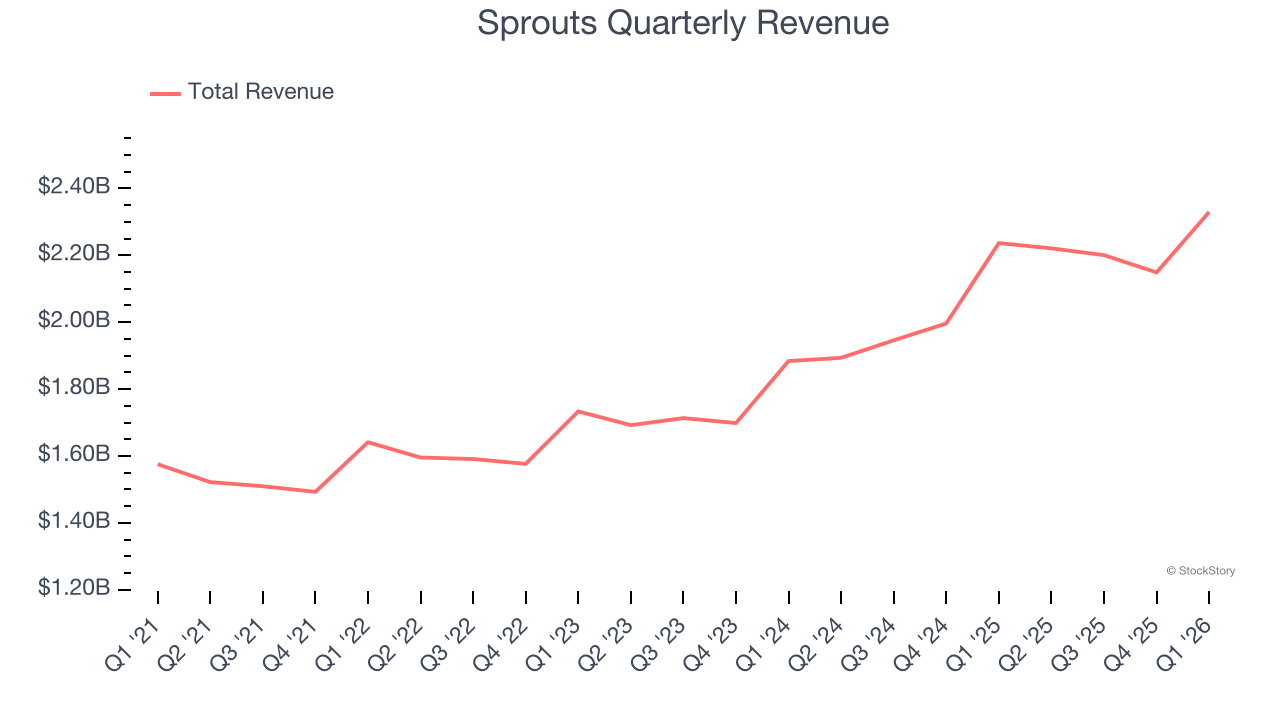
This quarter, Sprouts grew its revenue by 4.1% year on year, and its $2.33 billion of revenue was in line with Wall Street’s estimates.
Looking ahead, sell-side analysts expect revenue to grow 9.2% over the next 12 months, a slight deceleration versus the last three years. Still, this projection is healthy and suggests the market sees success for its products.
ONE MORE THING: The $21 AI Application Stock Wall Street Forgot. While Wall Street obsesses over who’s building AI, one company is already using it to print money. And nobody’s paying attention.
AI chip stocks trade at ridiculous valuations. This company processes a trillion consumer signals monthly using AI and trades at a third of the price. The gap won’t last. The institutions will figure it out. You need to see this first. Read the FREE Report Before They Notice.
Store Performance
Number of Stores
The number of stores a retailer operates is a critical driver of how quickly company-level sales can grow.
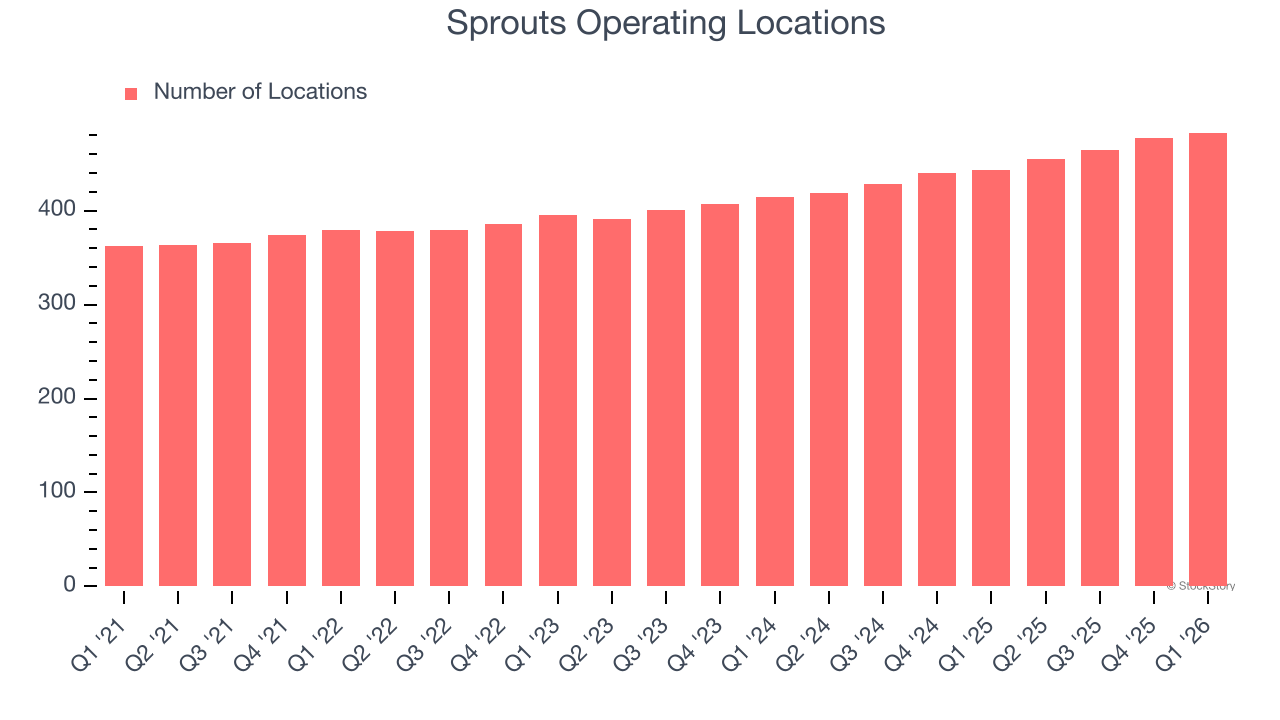
Sprouts operated 483 locations in the latest quarter. It has opened new stores at a rapid clip over the last two years, averaging 7.9% annual growth, much faster than the broader consumer retail sector. This gives it a chance to become a large, scaled business over time.
When a retailer opens new stores, it usually means it’s investing for growth because demand is greater than supply, especially in areas where consumers may not have a store within reasonable driving distance.
Same-Store Sales
A company's store base only paints one part of the picture. When demand is high, it makes sense to open more. But when demand is low, it’s prudent to close some locations and use the money in other ways. Same-store sales provides a deeper understanding of this issue because it measures organic growth at brick-and-mortar shops for at least a year.
Sprouts has been one of the most successful retailers over the last two years thanks to skyrocketing demand within its existing locations. On average, the company has posted exceptional year-on-year same-store sales growth of 6.8%. This performance suggests its rollout of new stores is beneficial for shareholders. We like this backdrop because it gives Sprouts multiple ways to win: revenue growth can come from new stores, e-commerce, or increased foot traffic and higher sales per customer at existing locations.
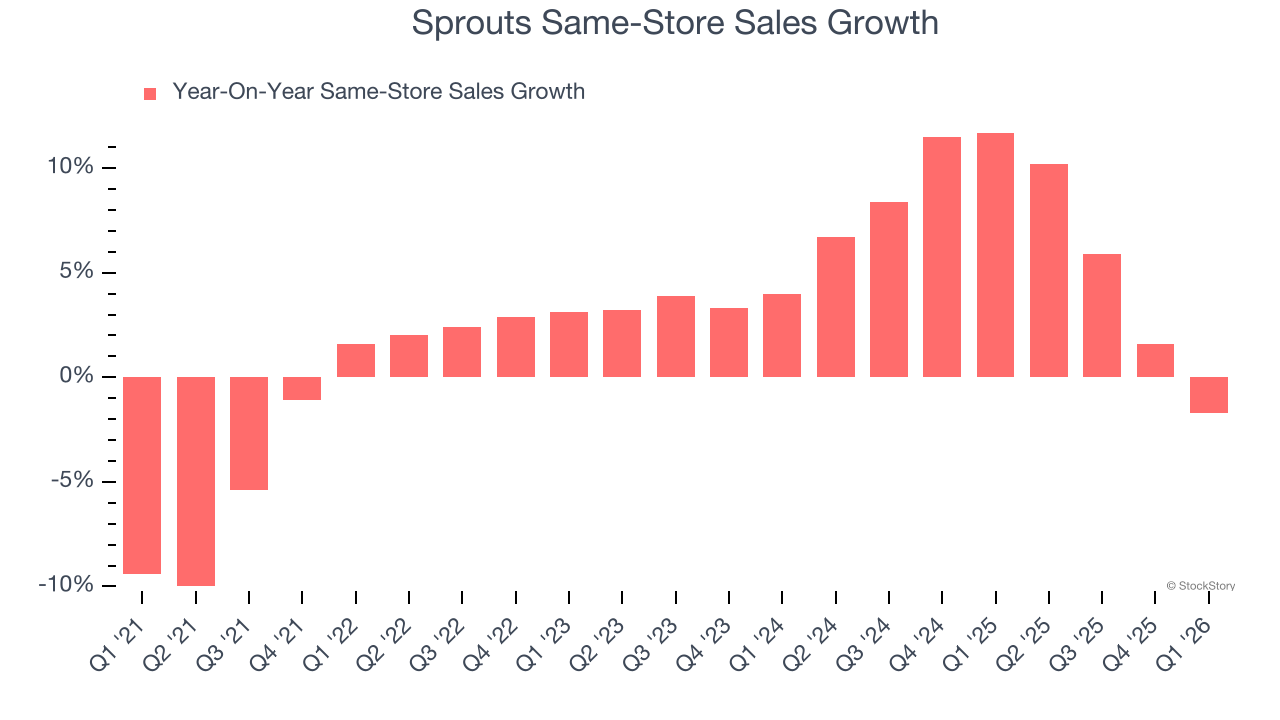
In the latest quarter, Sprouts’s same-store sales fell by 1.7% year on year. This decline was a reversal from its historical levels. A one quarter hiccup shouldn’t deter you from investing in a business, and we’ll be monitoring the company to see how things progress.
Key Takeaways from Sprouts’s Q1 Results
It was good to see Sprouts narrowly top analysts’ EBITDA expectations this quarter. On the other hand, its full-year EPS guidance missed. Overall, this quarter could have been better. The stock traded up 4.5% to $74.32 immediately after reporting.
So do we think Sprouts is an attractive buy at the current price? If you’re making that decision, you should consider the bigger picture of valuation, business qualities, as well as the latest earnings. We cover that in our actionable full research report which you can read here (it’s free).